CVI: Causes, diagnosis and modern treatment options
Chronic venous insufficiency (CVI) is a widespread condition of the venous system that affects millions of people worldwide. It arises from inadequate function of the venous valves, which normally prevent the backflow of blood from the legs to the heart. However, if these valves fail, blood pools in the veins of the legs, leading to increased pressure, swelling, and long-term damage such as varicose veins (varicosis), skin changes, and even venous ulcers.
CVI develops insidiously and is often only recognized in later stages, when symptoms such as swelling, pain or visible varicose veins have already appeared. People who lead a sedentary lifestyle or have to stand for long periods at work are particularly affected. As the disease is chronic, its course steadily worsens without treatment. Early diagnosis and the right treatment are crucial to improving the quality of life of those affected and preventing serious complications.

Medically tested by:
Dr. Hamidreza Mahoozi, FEBTS, FCCP
First publication:
October 10, 2024
Updated:
August 25, 2025
This article explains how CVI is diagnosed, what treatment options are available, and why modern methods such as VenaSeal (vein glue) play an important role in phlebology. It also explains how the condition is related to varicose veins (varicosis) and what preventive measures those affected can take.
Causes of chronic venous insufficiency (CVI)
The causes of CVI are varied and usually result from a combination of genetic factors and external influences. The most important risk factors include
- Genetic predisposition: A family history increases the risk of developing CVI. Individuals with first-degree relatives who suffer from varicose veins or other venous diseases have a significantly higher risk of being affected as well.
- Standing or sitting for long periods: Occupations that require prolonged standing or sitting promote the backflow of blood in the legs. Venous return is made more difficult, leading to chronic strain on the veins.
- Overweight: Being overweight puts additional pressure on the veins in the legs and promotes the development of chronic venous insufficiency.
- Pregnancy: During pregnancy, hormonal changes and the pressure of the growing fetus on the veins lead to increased stress on the venous system. This can lead to CVI temporarily or in the long term.
- Age: With increasing age, the elasticity of the vein walls deteriorates, which leads to an increased likelihood of venous valve insufficiency and thus to CVI.
Connection between CVI and varicosis (varicose veins)
There is a close connection between CVI and the development of varicose veins, also known as varicosis. Varicose veins are caused by the backflow of blood in the superficial veins, which leads to their enlargement. In truncal varicosis, larger veins are affected, especially the great saphenous vein or the small saphenous vein. These veins play a crucial role in returning blood to the heart. Untreated varicosis can worsen CVI and lead to more serious complications, such as skin changes, venous ulcers, or deep vein thrombosis.
Classification of CVI according to CEAP
The CEAP classification is used to better classify the severity of CVI and the affected anatomical structures. It is based on four criteria: clinical presentation (C), etiology (E), anatomy (A), and pathophysiology (P). This classification helps to accurately document the condition of the veins and the course of the disease.
C – Clinical presentation (Clinical)
- C0: No visible or palpable signs of venous disease.
- C1: Spider veins (telangiectasia) and reticular veins.
- C2: Varicose veins (varicosis), visibly tortuous veins.
- C3: Edema (swelling), which indicates impaired venous function.
- C4a: Skin changes such as pigmentation and eczema.
- C4b: Advanced skin changes, including lipodermatosclerosis and atrophie blanche.
- C5: Healed venous ulcers.
- C6: Active, open venous ulcers (ulcers).
E – Etiology (Etiological)
- Ep: Primary venous insufficiency without recognizable cause.
- It: Secondary venous insufficiency due to previous deep vein thrombosis or other venous diseases.
- Ec: Congenital venous disease.
A – Anatomy (Anatomical)
- As: Superficial veins are affected.
- Ad: Deep veins are affected.
- Ap: Perforating veins (connection between deep and superficial veins) are affected.
P – Pathophysiology (Pathophysiological)
- Pr: Reflux (backflow of blood due to defective venous valves).
- Buttocks: Obstruction (narrowing or blockage of the veins).
The CEAP classification makes it possible to systematically record the disease and select the right therapy for the respective degree of severity of the CVI.
Diagnosis of CVI
A comprehensive diagnosis of chronic venous insufficiency is essential to accurately determine the extent of the disease and plan appropriate therapy. Modern phlebology offers various diagnostic procedures that enable a precise assessment of venous function.
1. clinical examination and medical history
The first step in diagnosing CVI is a detailed medical history, in which the phlebologist asks the patient about symptoms, family history, and possible risk factors. Particular attention is paid to typical complaints such as swelling, a feeling of heaviness in the legs, pain, cramps, or skin changes. This is followed by a clinical examination, in which the doctor assesses visible signs such as varicose veins, skin changes, or ulcers.
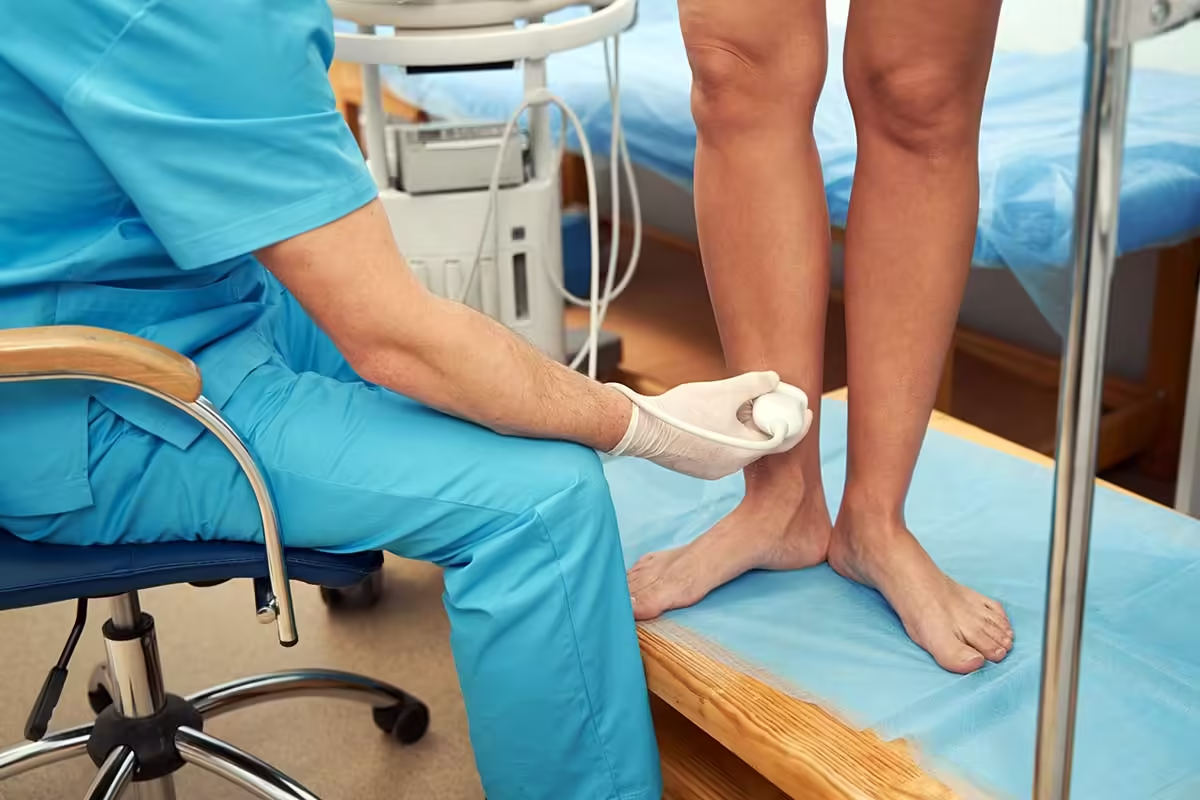
2. duplex sonography (ultrasound)
Duplex sonography is the most important diagnostic tool in CVI diagnosis. It is a combination of ultrasound and Doppler technology that allows the structure of the veins and blood flow to be visualized in real time. Sonography enables the precise assessment of the venous valves and shows whether there is backflow of blood (reflux). This method is non-invasive, painless and enables a detailed analysis of the superficial and deep veins.
3. light reflection rheography (LRR)
Light reflection rheography is a method for measuring venous return in the legs. Infrared light is directed onto the skin to record blood flow in the superficial veins. This method is particularly helpful in assessing the functional status of the venous valves and determining the severity of CVI.
4. phlebography
Phlebography is used in more complex cases of CVI, especially when deep vein thrombosis is suspected. In this procedure, a contrast agent is injected into the veins to visualize their course and any constrictions or blockages on X-rays. This method is used less frequently because duplex sonography provides sufficient information in most cases.
5. venous pressure measurement
Venous pressure measurement is another method for assessing the severity of CVI. The pressure in the veins is measured before and after compression to determine how well the venous valves are functioning and whether venous return is normal.
Modern treatment methods for CVI
The treatment of chronic venous insufficiency has developed rapidly in recent years. Thanks to modern, minimally invasive procedures, it is now possible to treat CVI effectively without the need for complex operations. The most important treatment methods are:
1. compression therapy
Compression therapy is the cornerstone of any CVI treatment. It works by wearing compression stockings or bandages that exert pressure on the veins and support the return of blood to the heart. Compression therapy is particularly effective in the early stages of CVI, but can also be used in combination with other treatment methods in advanced stages.
2. VenaSeal (vein glue)
VenaSeal is an innovative, minimally invasive procedure for the treatment of CVI and truncal varicosis based on the application of a special medical adhesive. In this method, the vein glue is injected into the diseased vein using a thin catheter probe, where it sticks the vein walls together and closes the vein. The blood flow is then redirected via healthy veins. VenaSeal is particularly gentle, as no heat or chemicals are used and no compression stockings are required after the procedure. Patients can usually return to their normal activities on the same day. The method is considered one of the most effective and comfortable treatments for CVI.
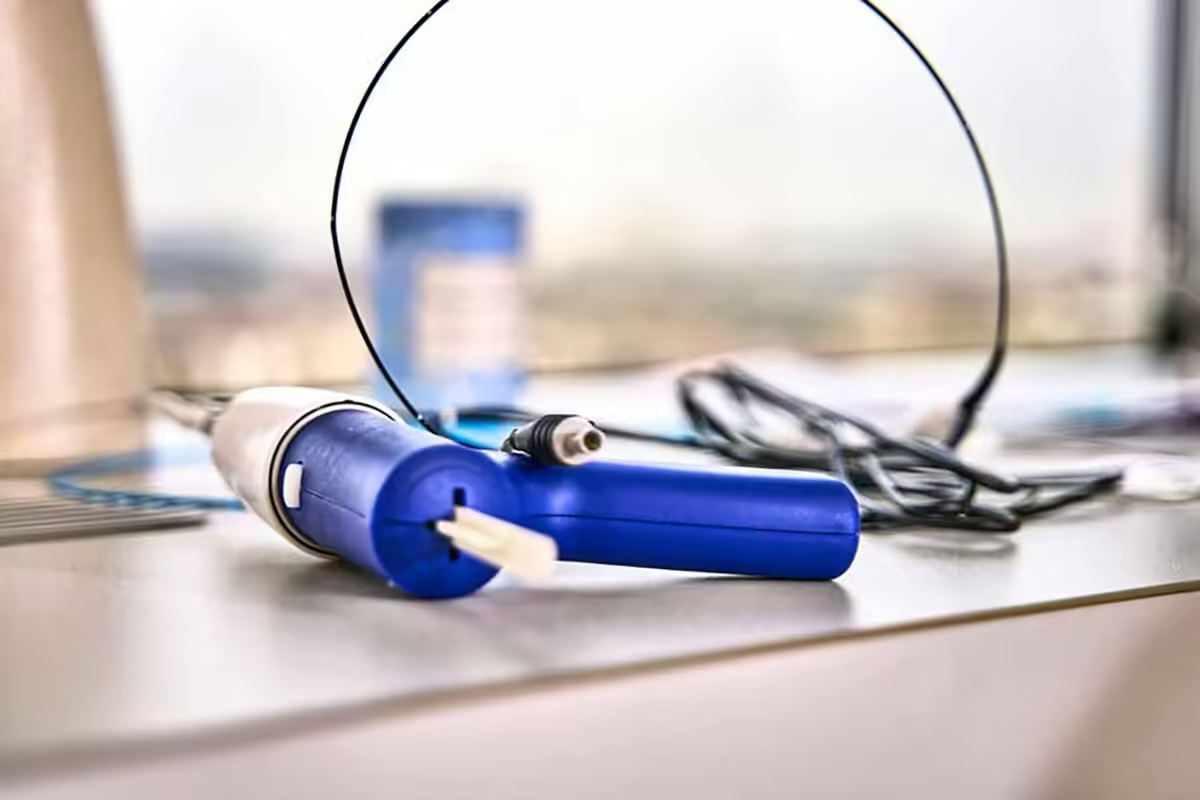
3. radiofrequency ablation (RFA)
Radiofrequency ablation is a minimally invasive procedure in which a catheter probe is inserted into the affected vein. High-frequency waves heat the vein from the inside, leading to a controlled closure. Radiofrequency ablation is particularly gentle because it is less painful than laser therapy and allows for a quick recovery time. The method is suitable for patients with varicosis and chronic venous insufficiency.
4. endovenous laser therapy (EVLT)
Endovenous laser therapy is another minimally invasive method for treating varicose veins and CVI. Here, a laser is inserted into the affected vein, which closes the vein by heat. The advantage of this method lies in its precision and the rapid recovery of patients. It is often used in combination with other procedures, especially when larger veins are affected.
5. sclerotherapy
Sclerotherapy is often used to treat smaller veins or spider veins. In this procedure, a special solution is injected into the affected vein, which triggers an inflammation of the vein wall. This closes the vein and redirects the blood flow via healthy veins. Sclerotherapy is particularly effective in the treatment of smaller veins and can be used in combination with other procedures to treat larger varicose veins.
Prevention and lifestyle changes
Prevention plays a crucial role in preventing or slowing the progression of chronic venous insufficiency. People with a genetic predisposition or risk factors in particular should pay attention to their veins and make certain lifestyle changes.
1. regular exercise
Regular exercise promotes blood circulation and prevents blood from pooling in the legs. Endurance sports such as walking, swimming or cycling are particularly effective because they activate the calf muscles and support venous return. People who have to sit or stand for long periods should take regular breaks to move around.
2. weight management
Being overweight increases the pressure on the veins and promotes the development of CVI. A healthy body weight helps to reduce the pressure on the venous system and reduce the risk of complications.
3. leg movements during long periods of sitting or standing
If prolonged sitting or standing cannot be avoided, simple leg exercises should be performed to promote blood flow. Elevating the legs during breaks or circling the feet helps to avoid swelling and improve venous return.
4. avoid tight clothing
Tight clothing in the area of the legs or waist can impede blood flow and should be avoided. Loose-fitting clothing supports blood circulation and reduces the risk of swelling and discomfort.
5. stop smoking
Smoking not only affects lung and heart health, but also worsens blood circulation and increases the risk of thrombosis. Quitting smoking can slow the progression of CVI and reduce the risk of serious complications.
Conclusion
Chronic venous insufficiency is a widespread and often underestimated disease that, if left untreated, can lead to serious complications such as venous ulcers. Thanks to modern treatment methods such as VenaSeal (vein glue), radiofrequency ablation and endovenous laser therapy, patients can now be treated effectively and gently. Early diagnosis and therapy are crucial to stop the progression of the disease and improve the quality of life. VenaZiel offers innovative and tailored treatment options to provide optimal care for patients with CVI and varicosis.