Proctology · Kreuzberg · Mitte
Treating anal eczema in Berlin — first the cause, then the skin
Proctology clinic in Berlin-Kreuzberg, on the border with Mitte. Anal eczema is rarely the whole condition. Most of the time it is the skin’s response to something underneath — and as long as that remains, the eczema comes back.
First, see what’s behind it
The quieter way: no waiting loop, and you have our answer in writing.
For urgent and hard-to-plan matters. Usually staffed 9:00 AM – 3:00 PM, Fridays until 1:00 PM.
Fri. 8:00 AM–2:00 PM
The examination is brief and gentle. A swab doesn’t hurt, and it answers the one question you can’t answer from the outside: fungus or eczema.
Book an appointment online
Why it happens
The skin is the site, not the cause
Anal eczema — technically, perianal dermatitis — is inflammation of the skin around the anus. It is red and irritated, often scaly or weeping, and it itches. Sometimes so severely that sleep becomes impossible.
The underlying process is essentially always the same. The skin in this fold is thin, it sits in moisture, and it moves. If its protective barrier breaks down, very little is enough — moisture, friction, a trace of stool — to inflame it. Then it itches, you scratch, and scratching destroys what is left of the protective barrier. The cycle keeps turning until someone breaks it.
But: why the protective barrier breaks down can have very different causes. And that is exactly what the treatment depends on.
Irritant
The most common form. Constant moisture, stool residue, too much or too little cleaning. Very often there is a proctological finding behind it that causes the weeping.
Allergic
The skin reacts to something that touches it: wet wipes, preservatives and fragrances, ingredients in ointments. Often, ironically, the very products bought to relieve the itching.
Brought along
Atopic dermatitis, psoriasis or lichen sclerosus can show up here too. Then the anus is not the starting point, but one of several affected areas.
In the first and most common form, the eczema is secondary damage. What makes the skin weep is usually located in the anal canal:
- Hemorrhoids — enlarged tissue no longer seals the anal canal properly. It weeps, and the skin stays permanently moist
- An anal fissure — the tear and the fear of the next bowel movement change hygiene and bowel habits at the same time
- An anal fistula — it discharges, and that discharge irritates the skin continuously
- Skin tags — soft folds of skin at the anal margin. Harmless, but they make cleaning harder and retain moisture
- Fecal smearing — when small amounts leave the anal canal without being noticed. Many people are not aware of this until someone says it out loud
That’s why treating anal eczema rarely ends with an ointment. The ointment soothes the skin. What is irritating it has to be found alongside that.
Then the question is not which cream is still missing — but what is irritating the skin.
Book an appointment online Enquire by emailEczema, fungus or hemorrhoids?
Four findings, one feeling
Itching and burning at the anus feel very similar, no matter what causes them. From the outside — and certainly with a hand mirror — they cannot be reliably told apart. That is why the same pharmacy cream helps some people and makes everything worse for others.
| What it could be | What stands out | What brings clarity |
|---|---|---|
Anal eczema perianal dermatitis | Red, scaly or weeping skin, nothing you can feel. Itching is the main symptom, often worst at night | Visual inspection, and the search for what is irritating the skin |
Fungal infection usually yeast | Whitish coating, a sharply defined border, small satellite lesions nearby. More common after antibiotic treatment or with diabetes | A swab. Only it reliably distinguishes fungus from eczema |
Hemorrhoids enlarged vascular cushions | Weeping, foreign-body sensation, bright red blood on the paper. Prolapsed tissue can be felt; internal tissue cannot | Proctoscopy — internal hemorrhoids are invisible from the outside |
Anal fissure Tear in the anal canal | Sharp pain during a bowel movement that continues to burn afterward. A small amount of bright red blood | A careful look; it is often enough |
And often it’s not either-or. Eczema on the basis of enlarged hemorrhoids, plus a yeast infection in the moist fold — that is more the rule than the exception. Then everything is treated, but not all at once at random.
If you mainly want to classify the itching and don’t yet have a suspicion: Itching and burning at the anus — an overview of possible causes
The appointment
What happens at the appointment
The appointment almost everyone puts off. It takes just a few minutes, requires no preparation and no referral, and afterward you know what you’re dealing with.
You arrive at a normal reception desk. It doesn’t say why you’re there, and in the waiting room, there are people with varicose veins, hernias, and abdominal pain.
-
The Consultation
First we talk, not examine. Since when has it been itching, when is it worst, what have you already applied, what do you use to clean. The question about care products is not a side issue — it leads to the cause more often than anything else. You sit fully dressed at the desk.
-
The Visual Inspection
You lie on your left side, knees drawn up, covered. Only the area in question is visible. How the skin is reddened, where it scales or weeps, how sharply the border runs: a large part of the answer already comes from that.
-
The swab
A cotton swab over the skin — that’s all it is. It answers what you can’t see: whether fungi or bacteria are involved. Without this result, any ointment against pathogens would be guesswork.
-
The Proctoscopy
A short tube, about finger-thick, shows the anal canal from the inside. Only then do internal hemorrhoids and fine tears become visible — exactly the findings that keep an eczema going. Unpleasant, but usually not painful, over after a few minutes. No bowel prep is needed.
-
The Findings
Still at the same appointment, you’ll learn what we saw, what is driving it, and what the treatment looks like. If a swab is being processed, you’ll receive the result as soon as it is available.
Detailed, with all questions about preparation: The proctological examination — procedure and preparation
A few minutes, no preparation, no referral — and afterward you know where you stand.
Book an appointment online Enquire by emailWhat helps
Treatment in the order in which it works
Anal eczema heals well when the order is right. It doesn’t start with an ointment.
- Treat what is weeping — hemorrhoids, a tear, a fistula, fecal smearing. As long as the skin lies in moisture, no skin care can keep up
- Do less, not more — plain water, nothing else. No wet wipes, no shower gel, no intimate spray, no disinfectant. Pat dry instead of rubbing
- Cover the skin — a low-irritant zinc paste or barrier care paste forms a protective layer until your own barrier holds again
- Break the itch — briefly and targeted, so the scratching stops. Scratching is not a side issue; it is the engine of the whole thing
- Treat pathogens only with proof — an antifungal helps against fungi and irritates skin that doesn’t have them. That’s why: swab first, prescription second
- Air and cotton — breathable underwear, nothing tight, nothing synthetic. Sounds minor and often decides the last few weeks
The most common reason anal eczema doesn’t heal is too much care — not too little. Wet wipes, daily soap, changing pharmacy creams: every product brings new substances to skin that is already irritated. Those who radically shorten the list often see a difference within a few days.
The order depends on what the findings show. We clarify that at the first appointment.
Book appointment online Inquire via emailOintments and creams
Which ointment for what — and for how long
There isn’t one single ointment for anal eczema. There are four groups that do four different things, and the wrong one at the wrong time prolongs symptoms instead of ending them.
| Group | What it’s for | How long |
|---|---|---|
Zinc and barrier care pastes Protection | Protect the skin from moisture and friction instead of interfering with it. The foundation everything else builds on | As long as the skin needs them |
Cortisone-containing creams Inflammation | Reduce inflammation and with it the itching. Their real purpose is to break the cycle of itching and scratching | Short-term and as directed by a doctor, not long-term |
Antifungal agents Antimycotics | Work against yeast. Useful if the swab shows fungus — and only then | Until the finding has healed |
Antihistamines to take by mouth | Dampen allergy-related itching, especially at night when it costs you sleep | Temporary and supportive |
Cortisone is effective — and that is exactly why it can be misleading. The itching eases quickly, which creates the impression the problem is solved. But used over a longer period, cortisone makes the skin in this area thinner and more sensitive — more prone to exactly the eczema it helped. That’s why: short, targeted, and with a plan for how it will be tapered off again.
And the sentence that explains most relapses: An ointment soothes the skin; it does not remove what is irritating the skin. If everything comes back after stopping, that is not the ointment failing — it is the sign that the cause is still there.
That is decided by the swab — not the pharmacy shelf.
Book an appointment online Enquire by emailWhat you should know
Where treatment can go wrong
None of this is dramatic. But these are the points where a harmless eczema turns into a months-long one.
- Cortisone for weeks — the skin becomes thinner and reacts more sensitively afterward than before. The most common treatment mistake with this finding
- Antifungals without a swab — they don’t work if there is no fungus, but they still irritate and blur the picture for later examination
- Wet wipes and intimate sprays — the most common triggers of contact allergy in this area. Bitter, because they are almost always bought to relieve itching
- Scratching — understandable, especially at night, and the most reliable way to keep the cycle going
- Relapse — as long as what makes the skin weep remains untreated, the eczema comes back. That’s not a setback; it’s a finding
A skin change that does not heal despite correct treatment is looked at and, if necessary, examined. This is the rare but real reason not to keep treating a stubborn eczema on your own for months: there are skin diseases in this area that look like eczema but are not. A small tissue sample clarifies that — and in most cases, it is followed by the all-clear.
When you should not wait for an appointment
A swelling at the anus that increases rapidly and is very painful · fever with chills · bleeding that won’t stop.
Please call us: (030) 2529 9482, usually staffed 9:00 AM – 3:00 PM, Fridays until 1:00 PM. Outside these hours: medical on-call service 116 117, for severe bleeding, emergency services 112.
Costs
What the treatment costs
Examination and treatment of anal eczema are covered by health insurance — statutory and private. You do not need a referral.
Statutory health insurance
Consultation, swab and proctoscopy are covered by statutory health insurance. Prescribed ointments are provided via prescription; the usual co-payment applies.
Privately insured
Reimbursable service, billed according to the German Medical Fee Schedule. You will receive the documents for your insurance from us.
Are you self-paying or not insured in Germany? Then we discuss the costs at the first examination, and you will receive a written cost estimate before anything is decided.
Giving a number in advance would be guesswork: with anal eczema, costs mainly depend on what is behind it. Eczema that heals with skin care and stool regulation is one thing; eczema on the basis of hemorrhoids that also need treatment is another.
Who treats you
Four doctors, one specialization
The doctor who examines you during the consultation will also treat you. For a topic that requires so much overcoming, this is not an organizational matter — you shouldn’t have to tell your story twice.

Dr. med. David Machó

Ahmed Sultan

Aleksandr Parkhomenko

Clarissa Asmussen
No rotating team, no handover. You tell your story once.
Book appointment online Inquire via emailLocation · Kreuzberg · Mitte
Where we treat
Consultation and treatment take place at the same location, on Charlottenstraße — directly at Checkpoint Charlie, on the border between Berlin-Kreuzberg and Mitte.
Reception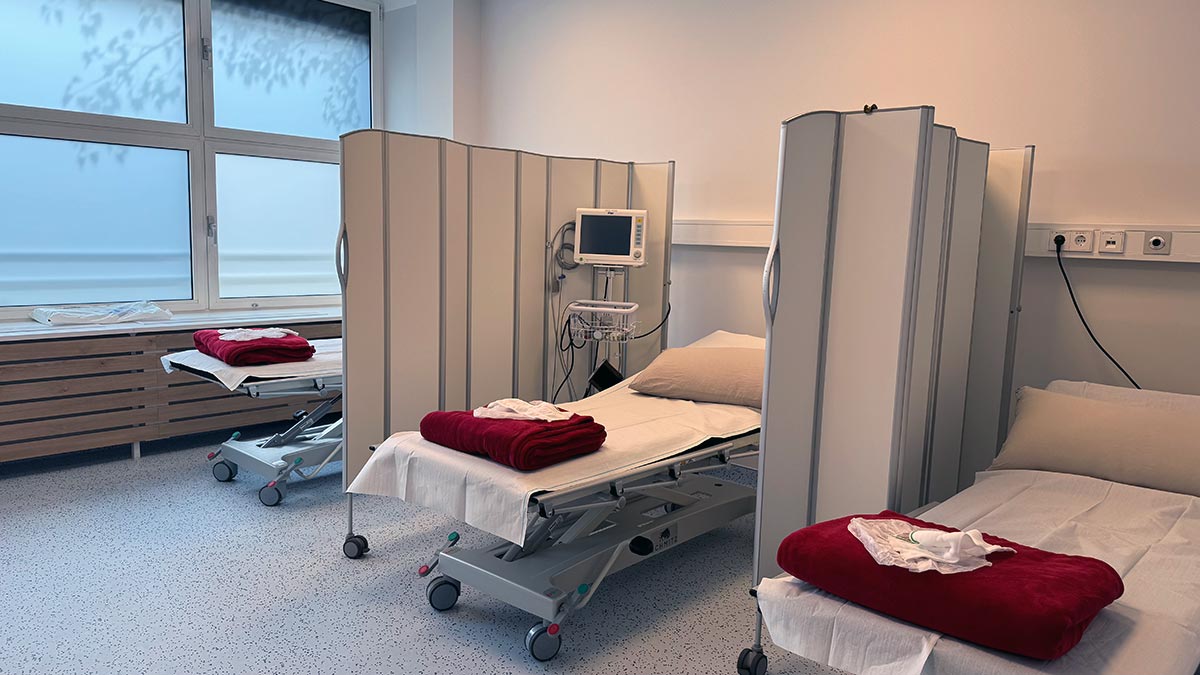 Recovery area
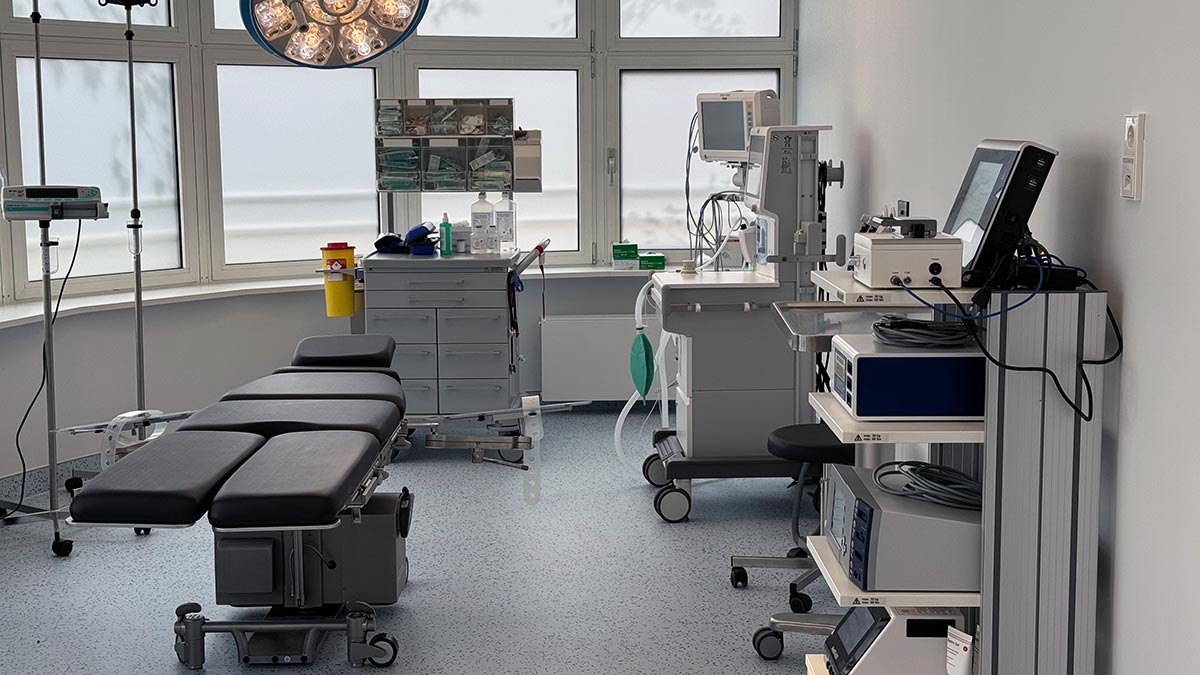 Procedure room
 Exterior view
 Registration
Real photos of our premises — no stock photography.
VenaZiel MVZ
10969 Berlin
Write to us whenever it suits you — no waiting on hold, no lost lunch break. Our team will reply as quickly as possible, and you’ll have the answer in writing for your reference.
For urgent matters and anything that’s difficult to plan.
Usually 9:00 AM – 3:00 PM · Fri until 1:00 PM
Frequently Asked Questions
Frequently asked questions about anal eczema
Is it a fungus or eczema?
You can’t say that reliably with the naked eye — and we don’t guess. A fungal infection often shows a whitish coating, a sharply defined border and small lesions nearby, but an irritated eczema can look the same. A swab brings clarity; it doesn’t hurt and takes a few seconds. Only then does an antifungal make sense — or not.
Which ointment helps with anal eczema?
That depends on what type of eczema it is. Zinc and barrier care pastes protect the skin and are almost always the foundation. Cortisone-containing creams reduce inflammation, but should be used short-term and as directed by a doctor. Antifungals work only if fungus has actually been proven. And antihistamines taken by mouth dampen allergy-related itching, especially at night.
How long does it take for anal eczema to heal?
Once the cause has been found and treated, the skin often calms down noticeably within a few days. Until it truly holds again usually takes a few weeks: the skin in this fold lies in moisture and is moved, so it heals more slowly than elsewhere. If it drags on longer, it is almost never because of the ointment, but because the cause is still there.
What can I do myself?
Above all: less. Clean only with plain water; no wet wipes, no shower gel, no intimate spray, no disinfectant. Pat dry instead of rubbing, breathable underwear, nothing tight. And don’t scratch — as hard as that is at night. The most common reason anal eczema doesn’t heal is too much care — not too little.
Can anal eczema bleed?
Yes. Scratched-open or torn skin bleeds easily, usually a small amount and bright red on the paper. Still, bleeding should be looked at, because the same trace can come from hemorrhoids or a tear in the anal canal — and dark blood or blood mixed with stool should be clarified promptly in any case.
Can it turn into something malignant?
Not from anal eczema itself. But there are skin diseases in this area that look like eczema and are not — and they are only noticed if someone looks. That’s why: a skin change that does not heal despite correct treatment is examined, if necessary with a small tissue sample. In most cases, it is followed by the all-clear.
Will it come back?
If only the skin is treated and not what makes it weep, then yes. That is exactly what many experience: under the cream it gets better, after stopping everything comes back. That’s not a setback, but a sign — usually of hemorrhoids, a tear or a fistula that still need treatment.
As long as the cause remains, the eczema comes back
Most anal eczemas heal well once it’s clear what the skin is reacting to. That’s a matter of one appointment — not the next tube.
Prefer to write? [email protected]
By phone at (030) 2529 9482, usually staffed 9:00 AM – 3:00 PM, Fridays until 1:00 PM
Open Mon.–Thu. 8:00 AM–4:00 PM · Fri. 8:00 AM–2:00 PM