Protection of the great saphenous vein, avoidance of vascular injuries, and prevention of pulmonary embolism – the evidence-based guide from VenaZiel for patients and referring physicians.
A phlebological assessment before liposuction checks your leg veins before suctioning begins – and thus protects against two serious complications: injury to large veins and pulmonary embolism. This guide explains why this examination is important, what happens during it, and for whom it is indispensable.

Briefly summarized:
- Liposuction takes place in exactly the tissue layer in which the great saphenous vein and the superficial venous system run.
- An undetected varicose vein disease increases the risk of vascular injuries and venous thromboembolism (pulmonary embolism).
- The phlebological assessment before liposuction is essentially a painless duplex sonography of the leg veins.
- If diseased veins are treated in advance – for example with the VenaSeal™ vein glue – the risk of complications decreases and the result is improved.
Read on to find out why VenaZiel follows the principle: first assess and treat the veins, then perform liposuction.
In this article:
- Key Points at a Glance
- What actually happens during liposuction
- The great saphenous vein – why it of all things is at risk
- Pulmonary embolism – the most common fatal complication
- Virchow’s triad – why diseased veins multiply the risk of thrombosis
- Lipedema and varicose veins – a particularly common combination
- The phlebological assessment: What exactly is examined
- Risk stratification with the Caprini score
- What phlebological pretreatment specifically achieves
- Special risk constellations
- The recommended procedure at VenaZiel
- Frequently asked questions (FAQ)
Key Points at a Glance
Liposuction is one of the most common aesthetic-plastic procedures worldwide. When correctly indicated and performed, it is generally safe.
Nevertheless, the procedure takes place in exactly that tissue layer in which the superficial leg veins also run – above all the great saphenous vein (vena saphena magna), the longest vein in the body. This is exactly where the phlebological assessment before liposuction comes in.
Anyone who brings an undetected varicose vein disease or chronic venous insufficiency into the operating room has a higher risk of two complications: mechanical injury to these veins during suctioning and venous thromboembolism, the most feared form of which is pulmonary embolism. Pulmonary embolism is also the most common cause of death after liposuction.
A preliminary phlebological examination – essentially a color-coded duplex sonography of the leg veins – identifies these risks early on. It enables the prior treatment of the veins if necessary and thus reduces both dangers.
VenaZiel therefore follows a clear principle: first assess and treat the veins, then perform liposuction.
What actually happens during liposuction
During liposuction, thin, blunt metal tubes (cannulas) are inserted into the subcutaneous fatty tissue through skin incisions only a few millimeters in size. Through rapid forward and backward movements, these cannulas loosen fat cells from the connective tissue, which are then suctioned out with negative pressure.
Modern procedures have made the intervention gentler. These include tumescent local anesthesia, in which large amounts of a diluted anesthetic and adrenaline solution are introduced, as well as water-jet, ultrasound, or laser-assisted techniques.
However, this does not change the fundamental anatomical circumstance. The cannula moves blindly – i.e., without direct vision – through the same fat layer in which nerves, lymphatic vessels, and the superficial veins of the leg are located.
Particularly on the thighs, inner knees, hips, and lower legs – the classic zones for liposuction – the superficial venous system runs directly in the target area of the cannula.
As long as this venous system is healthy and of normal caliber, it usually elastically avoids the blunt cannula. However, if it is pathologically dilated, tortuous (varicose), or under increased pressure due to congestion, the starting situation changes fundamentally. This is exactly where the importance of phlebology comes in.
The great saphenous vein – why it of all things is at risk
The great saphenous vein (vena saphena magna) is the longest vein in the human body. It begins at the inner ankle, runs up the inside of the lower leg and thigh, and opens into the deep thigh vein (femoral vein) in the groin.
Its entire course lies superficially – embedded in exactly the fat layer that is processed during liposuction. This anatomical proximity makes it the most frequently endangered larger vein of the leg.
With healthy veins, the risk of injury is low. It becomes problematic when the great saphenous vein is already diseased.
In varicose vein disease, the venous valves no longer close properly. Blood sinks downwards following gravity (reflux), the vein dilates, its wall becomes thinner and less elastic, and it becomes increasingly tortuous.
Such a dilated, thin-walled, and fixed vein can no longer avoid the blunt cannula. It is more easily nicked, torn, or severed. The consequences range from extensive bruising (hematomas) and significant blood loss to the formation of blood pools and – in rare but documented cases – injuries at the junction of deep veins, which may require vascular surgical care.
Another often overlooked point: If a varicose trunk vein is opened during liposuction, this can trigger superficial vein inflammation (thrombophlebitis).
This can progress via the connecting veins (perforating veins) or the junction region into the deep venous system and transition there into a deep vein thrombosis – the immediate precursor to pulmonary embolism. The injury to the vein is therefore not just a “bleeding problem,” but can be the starting point of a thromboembolic chain.
Clinical Notes (for referring physicians)
The saphenofemoral junction (SFJ) marks the critical transition to the deep system. A varicosely transformed GSV with insufficient SFJ increases the risk that an intraoperative vascular lesion or a triggered thrombophlebitis will ascend via the junction. In the case of palpable or sonographically proven trunk varicose veins in the suction area, preoperative treatment of the reflux section is clearly preferable to “suctioning through the varix.”
Pulmonary embolism – the most common fatal complication
The most important life-threatening complication of liposuction is venous thromboembolism (VTE). This refers to the formation of a blood clot in the deep leg veins (deep vein thrombosis) and its displacement into the pulmonary vessels (pulmonary embolism).
In the landmark survey by Grazer and de Jong (2000), which evaluated 496,245 liposuctions and 95 documented deaths, pulmonary thromboembolism was the most common single cause of death at around 23%. The overall mortality rate at that time was about 1 in 5,000 procedures (19.1 per 100,000).
Modern techniques and better risk management have significantly improved these numbers. Current systematic reviews quantify the risk of thromboembolism for pure liposuction today in the per mille range – pooled in the order of about 0.017%, i.e., around 1.7 cases per 10,000 procedures ([EXT LINK 1: Comerci et al., 2024 → https://pubmed.ncbi.nlm.nih.gov/38563572/]).
However, in large-volume liposuctions and in combination procedures – such as liposuction plus abdominoplasty – the risk of pulmonary embolism increases significantly, sometimes to ten times or more.
These numbers seem small. However, given the large number of procedures performed worldwide, they represent a significant absolute number of avoidable, potentially fatal events.
The decisive factor is: The individual risk is by no means the same for everyone. It depends heavily on pre-existing diseases of the venous system and on the coagulation situation.
Virchow’s triad – why diseased veins multiply the risk of thrombosis
Why exactly does a pre-existing venous disease increase the risk of thrombosis? The answer is provided by a medical principle that has been valid for over 150 years: Virchow’s triad.
It describes three factors that together promote the formation of a blood clot – slowed blood flow (stasis), an increased tendency of the blood to clot (hypercoagulability), and damage to the inner wall of the vessel (endothelial lesion).
Liposuction and pre-existing varicose vein disease work together on all three factors:
- Slowed blood flow: In chronic venous insufficiency and varicose veins, blood pools in the dilated veins; the return flow to the heart is slowed down. After the operation, bed rest, pain, and restricted movement further slow down the venous return.
- Increased tendency to clot: Every surgical procedure activates coagulation. The extensive tissue trauma of liposuction, long operation times, and possible hidden coagulation disorders (thrombophilias) reinforce this effect.
- Damage to the vessel wall: The cannula causes microscopic and sometimes macroscopic injuries to the vein wall. In an already pre-damaged, varicose vein, this endothelial injury is more pronounced – an ideal starting point for a clot.
An undetected, untreated varicose vein disease thus fulfills two of the three Virchow criteria even before the first incision. The operation provides the third.
This is the pathophysiological core of the recommendation to assess and treat the venous system before liposuction instead of leaving it unobserved.
Lipedema and varicose veins – a particularly common combination
A large proportion of patients considering liposuction on the legs do so not for purely aesthetic reasons, but because of lipedema. This is a pathological, painful, and symmetrical increase in fat on the legs (and often arms) that does not respond to diet and exercise.
For lipedema, liposuction using specialized techniques is a recognized therapy option. Especially in this group, the phlebological preliminary assessment is particularly important, because lipedema and chronic venous diseases occur together more frequently than average.
Clinically, lipedema and venous insufficiency can also easily be confused or overlap. Both cause heavy, tense legs, a tendency to swell, and pressure sensitivity.
Studies on patients who presented with suspected venous insufficiency and concurrent lipedema show that a relevant proportion actually has a reflux of the trunk veins that requires treatment.
If the venous reflux is treated first in these patients, symptoms such as heaviness and swelling often improve. The subsequent liposuction becomes safer because the previously congested, dilated veins are then no longer under pressure and no longer run through the target tissue of the cannula.
Read more about diagnosis and stages on our page about the Lipedema Center.
Clinical Notes (for referring physicians)
In advanced lipedema, clinical assessment of the venous status is limited by the increased subcutaneous fatty tissue – duplex sonography is not optional here, but diagnostically leading. The differentiation between edema-related swelling (lipedema) and reflux-related swelling (CVI) changes the treatment sequence. If trunk vein reflux is proven, venous treatment is recommended before liposuction, not vice versa.
The phlebological assessment: What exactly is examined
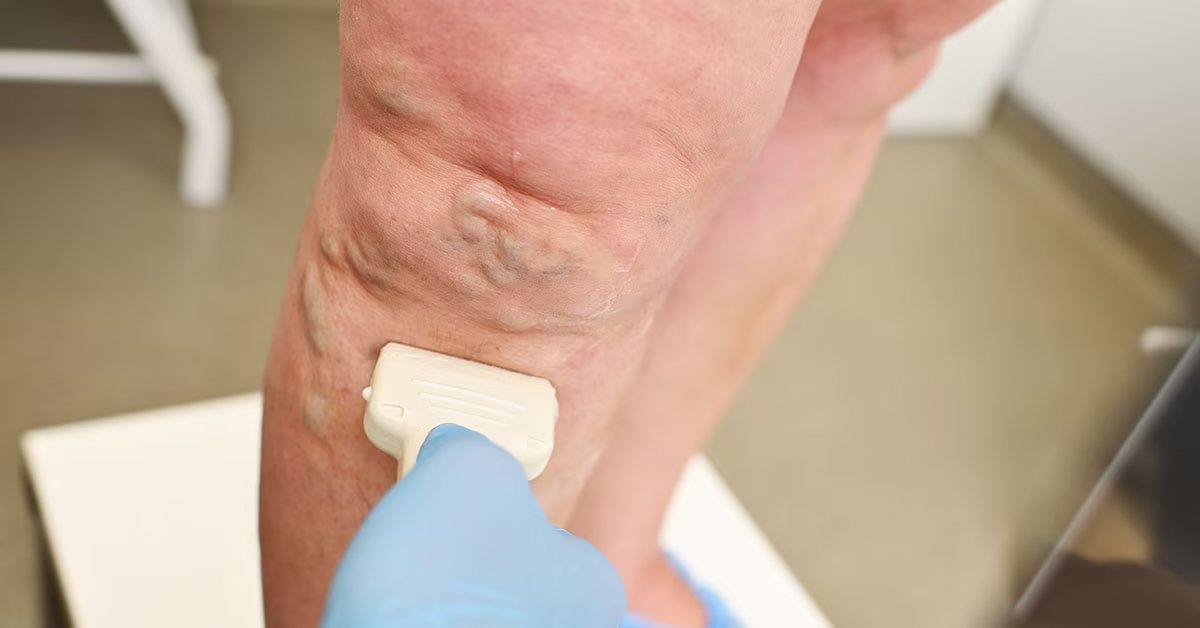
The centerpiece of the phlebological assessment before liposuction is color-coded duplex sonography of the leg veins – a painless, radiation-free ultrasound examination performed while standing and lying down. It is the internationally recognized gold standard for assessing varicose veins and venous insufficiency ([EXT LINK 2: AWMF Guideline Varicosis → https://register.awmf.org/de/leitlinien/detail/037-018]).
Within a few minutes, it provides a complete picture of the superficial and deep venous system. Specifically, the examination clarifies in particular:
- whether the great saphenous vein and the small saphenous vein (vena saphena parva) have healthy, closing valves or show pathological reflux;
- how far the trunk veins are dilated and exactly where they run in the planned suction area – information that helps the operating physician to spare endangered areas;
- whether there are leaking connecting veins (perforating veins) that pathologically connect the deep and superficial systems;
- whether the deep venous system is freely patent or shows signs of a previous, possibly silent thrombosis – a significant risk factor;
- whether an acute clot already exists, which temporarily absolutely prohibits the procedure.

The imaging is supplemented by a thorough medical history. Previous thromboses or pulmonary embolisms, thromboses in the family, known coagulation disorders (thrombophilia, such as Factor V Leiden), the intake of hormone preparations (birth control pill, hormone replacement therapy), smoking, obesity, cancer, and previous operations are recorded. This information is included in the risk assessment.
Risk stratification with the Caprini score
To ensure that the individual risk of thrombosis is not left to gut feeling, it is recorded using a validated point system. In plastic and aesthetic surgery, the Caprini score has become established.
It assigns points for risk factors such as age, body mass index, previous thromboses, cancer, coagulation disorders, hormone intake, duration of surgery, and immobility, and divides patients into risk levels. Studies in plastic surgery have shown that the actual thromboembolism rate increases significantly with an increasing Caprini score.
The practical value lies in the graduated consequence. For low risk, early mobilization and medical compression stockings are sufficient. For medium and high risk, intermittent pneumatic compression and – after careful weighing against the risk of bleeding – medicinal thrombosis prophylaxis are added.
Important and scientifically honest: General medicinal prophylaxis for everyone is not sensible. It can increase the risk of bleeding and hematoma without showing a clear benefit in low-risk patients.
This is exactly why prior risk assessment is needed. The phlebological examination is a central component in correctly assigning patients to a risk level at all.
Clinical Notes (for referring physicians)
The Caprini score (validated by Pannucci et al., 2011, among others, on plastic surgery cohorts) translates into specific prophylaxis levels. The venous findings from duplex sonography provide several score-relevant data points (past DVT, current varicosis, immobility prognosis for large-volume procedures). Without imaging venous status, the score assignment remains incomplete – silent post-thrombotic changes are otherwise not recorded.
What phlebological pretreatment specifically achieves
The previous points show why the sequence “first veins, then fat” is so convincing. The preliminary phlebological diagnostics and, where necessary, treatment achieve several things at once:
- It protects the great saphenous vein. If a pathological reflux of the trunk vein is known, it can be gently treated before liposuction – for example, by endovenous catheter procedures (laser, radiofrequency), sclerotherapy, or the modern VenaSeal™ vein glue. A vein that has already been closed and regressed no longer stands in the way of the cannula as a bulging, vulnerable vessel. You can find an overview of the procedures under Varicose Vein Treatments.
- It lowers the risk of thromboembolism. If the venous congestion is eliminated before the procedure, one of the three Virchow factors (stasis) is eliminated, and the initial risk for deep vein thrombosis decreases.
- It uncovers silent high-risk situations. A past deep thrombosis, a coagulation disorder, or a fresh clot are identified before they lead to catastrophe during the operation.
- It improves the aesthetic and functional result. Untreated varicose veins continue to cause swelling, discoloration, and discomfort that impair the result of the liposuction. Treating the veins in advance creates a cleaner starting point.
- It allows for targeted, sparing prophylaxis. Only those who know their risk can dose the thrombosis prophylaxis correctly – intensive enough for high risk, cautious for low risk, to avoid unnecessary bleeding.
VenaSeal™ (vein glue) is VenaZiel’s flagship procedure: the diseased trunk vein is gently closed via a catheter with a medical adhesive – without heat, without tumescence, and usually without downtime. Details on the procedure can be found on our page on VenaSeal™ / Vein Glue.
Special risk constellations
For certain patient groups, phlebological preliminary assessment is not only sensible but should, in our view, be a binding standard – because several risk factors add up here.
This includes in particular persons with a history of deep vein thrombosis or pulmonary embolism, with a known coagulation disorder (thrombophilia) or corresponding family history, with visible or palpable varicose veins in the planned suction areas, as well as patients with advanced lipedema, in whom the venous system cannot be reliably assessed clinically.
The risk is also increased for women taking estrogen-containing preparations (birth control pill, hormone replacement therapy), for severe obesity (high body mass index), for smokers, for active or recently treated cancer, and for planned large-volume or combined procedures with long operation times.
The more of these factors coincide, the higher the Caprini score – and the greater the benefit of mapping and treating the venous system in advance.
In some cases, the assessment even leads to postponing the planned procedure, reducing the volume, or pausing a hormonal preparation perioperatively. All of these are decisions that can only be made if the venous situation is known beforehand.
The recommended procedure at VenaZiel
For patients, the ideal path to a safe liposuction can be summarized in a few steps:
- Detailed medical history – recording of all thrombosis and coagulation risks.
- Color-coded duplex sonography of the leg veins – assessment of trunk veins, perforating veins, and the deep system.
- Determination of the Caprini score – classification of individual risk on this basis.
- Venous treatment if necessary – if a venous finding requiring treatment is shown, it is treated before liposuction (e.g., with VenaSeal™) and healing is awaited.
- Planning of the liposuction – with a prophylaxis concept tailored to the individual risk consisting of early mobilization, compression, and, where indicated, medicinal prophylaxis.
After the procedure, consistent wearing of compression garments and early movement are crucial. Equally important is knowledge of the warning signs of thrombosis (one-sided leg swelling, pain, redness) and pulmonary embolism (sudden shortness of breath, chest pain, rapid heartbeat).
VenaZiel offers phlebological assessment at the locations Berlin-Mitte (Friedrichstraße), Berlin-Kreuzberg (Charlottenstraße), and Frankfurt am Main. You can arrange your appointment via our appointment page.
Frequently asked questions (FAQ)
Is the phlebological assessment before liposuction painful or time-consuming?
No. Duplex sonography is a painless ultrasound examination without radiation and without contrast media. It is usually completed within 15 to 30 minutes. An invasive procedure is not associated with it.
I have no visible varicose veins – do I still need the examination?
Yes, that is even particularly important. A relevant part of venous damage is not visible from the outside. A pathological reflux of the trunk vein or a past deep thrombosis can exist without visible varicose veins and are only discovered on ultrasound. Especially with lipedema, the increased fatty tissue hides underlying vein problems.
Does the vein assessment delay my liposuction unnecessarily?
The diagnostics themselves cost hardly any time. Only if there is actually a venous finding requiring treatment will it be treated in advance. This gain in safety is out of all proportion to the risk that an overlooked venous disease can mean during the operation.
What does the vein assessment cost and does the health insurance cover the costs?
That depends on the individual case. If there is a medical suspicion of a venous disease, duplex sonography is often a health insurance benefit; in a purely aesthetic context, it can be a self-payer or private health insurance benefit. We discuss the exact classification individually in the consultation at VenaZiel.
How are diseased veins treated before liposuction?
Depending on the findings, minimally invasive procedures are possible – the VenaSeal™ vein glue, endovenous laser or radiofrequency ablation, or sclerotherapy. VenaSeal™ closes the diseased vein without heat and usually without downtime. Which procedure is suitable is decided after the duplex sonography.
Why should the veins be treated before and not after liposuction?
Because a diseased, bulging vein can be more easily injured during suctioning and maintains the venous congestion (one of the three thrombosis factors). If the vein is closed beforehand, it no longer stands in the way of the cannula and the risk of thrombosis decreases. Therefore, at VenaZiel: first the veins, then the fat.
Conclusion
Liposuction is an established and generally safe procedure when correctly indicated and performed – provided it is carried out on the right patients and under the right conditions.
Because the procedure takes place in exactly the tissue layer in which the great saphenous vein and the rest of the superficial venous system run, and because pulmonary embolism is the most common fatal complication of liposuction, phlebological assessment is part of careful preparation.
It protects the large superficial veins from mechanical injury, uncovers hidden thrombosis risks, enables the prior treatment of pathological veins, and allows for tailored thrombosis prophylaxis.
The sequence “first assess and treat the veins, then perform liposuction” is therefore not a bureaucratic detour, but lived patient safety – and the standard that VenaZiel stands for.
Appointment for Vein Assessment Before Your Liposuction
Have your leg veins assessed by a specialist before liposuction. VenaZiel performs the duplex sonography, the risk assessment, and – if necessary – the gentle vein treatment with VenaSeal™.
Arrange your appointment in Berlin-Mitte, Berlin-Kreuzberg, or Frankfurt am Main via www.venaziel.de.
Literature and Sources
- Grazer FM, de Jong RH. Fatal outcomes from liposuction: census survey of cosmetic surgeons. Plast Reconstr Surg. 2000;105(1):436–446.
- Comerci AJ et al. Risks and Complications Rate in Liposuction: A Systematic Review and Meta-Analysis. Aesthet Surg J. 2024;44(7):NP454 (pooled VTE rate ~0.017%).
- Kanapathy M et al. Safety of Large-Volume Liposuction in Aesthetic Surgery: A Systematic Review and Meta-Analysis. Aesthet Surg J. 2021;41(9):1040 (pulmonary embolism rate ~0.18%).
- Pannucci CJ, Bailey SH, Dreszer G, et al. Validation of the Caprini risk assessment model in plastic and reconstructive surgery patients. J Am Coll Surg. 2011;212(1):105–112.
- Caprini JA. Thrombosis risk assessment as a guide to quality patient care. Dis Mon. 2005;51(2–3):70–78.
- Gloviczki P, Lawrence PF, Wasan SM, et al. The 2022 SVS, AVF and AVLS clinical practice guidelines for the management of varicose veins of the lower extremities – Part I. J Vasc Surg Venous Lymphat Disord. 2023;11(2):231–261.
- Virchow R. Thrombosis and Embolism. Collected Essays on Scientific Medicine, 1856.
- StatPearls: Liposuction (NBK563135). NCBI Bookshelf, 2024.
- Journal of Vascular Surgery: Venous and Lymphatic Disorders. Suspected venous insufficiency in patients with lipedema: prevalence, features and outcomes of venous treatment. 2022.
Note: This article is for general, scientifically based information and does not replace individual medical advice. Stated frequencies come from the cited studies and reviews; individual risk is always determined in a personal consultation at VenaZiel.