Proctology · Kreuzberg · Mitte
Treating hemorrhoids in Berlin — first the grade, then the procedure
Proctology consultation hours in Berlin-Kreuzberg, bordering Mitte. Sclerotherapy, rubber band ligation, HAL-RAR, and laser — the appropriate procedure is determined by the findings, not by a catalog.
First examine, then treat
The calmer way: You write when it suits you, we reply as quickly as possible — and you have our answer in writing.
For urgent and hard-to-plan matters. Usually staffed 9:00 AM – 3:00 PM, Fridays until 1:00 PM.
Fri. 8:00 AM–2:00 PM
Digital rectal examination and proctoscopy, without bowel preparation. Afterwards, you will know the grade — and what it means for you.
Book an appointment online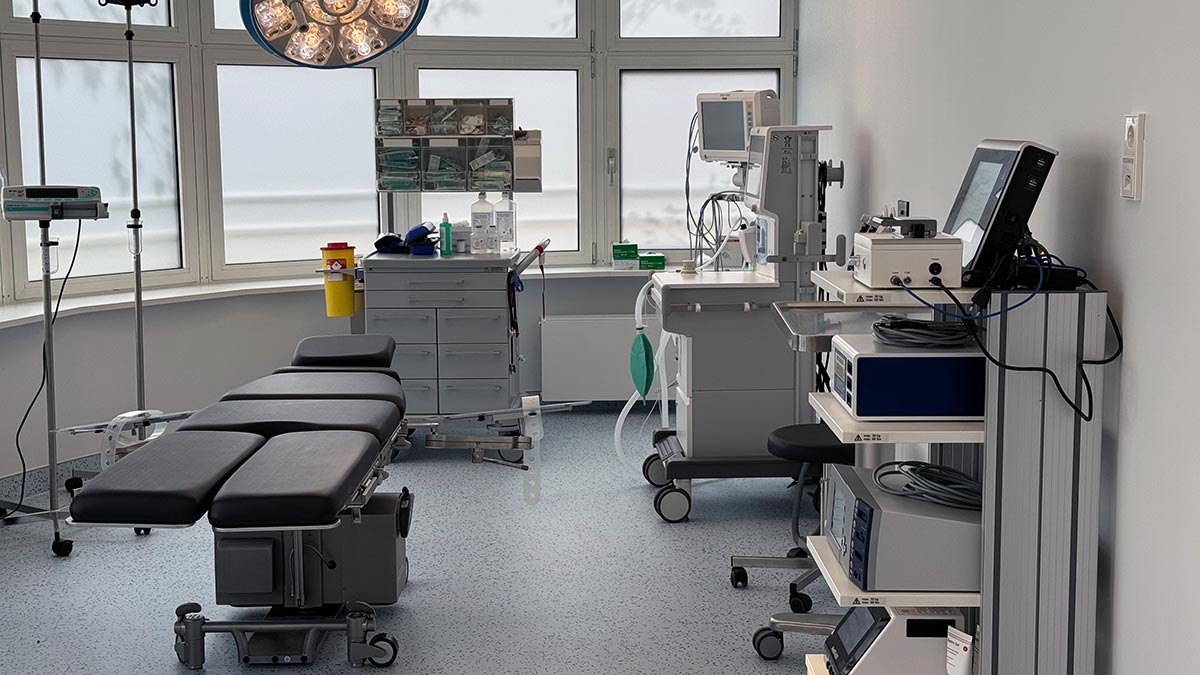
Symptoms
Everyone has hemorrhoids — they only cause symptoms when they enlarge
This is the point where most conversations relax. Hemorrhoids are not foreign bodies or varicose veins, but a vascular cushion in the anal canal that every person has from birth. It helps keep the bowel sealed. Symptoms only arise when this cushion enlarges and no longer slides back into place. The medical term for this is hemorrhoidal disease.
Four types of symptoms bring people to us. Which of these you experience already says a lot about the probable grade — but it’s only certain after the examination.
Bright red blood
On toilet paper, in the water, or on the stool surface — and usually without pain. This is the most common first sign. Dark blood or blood mixed with stool, however, should always be clarified quickly.
Itching and weeping
Enlarged hemorrhoids no longer completely close the anal canal. Some mucus escapes, and the skin reacts with irritation. Ointments help the skin, not the cause — which is why it recurs.
Something protrudes
During bowel movements, later also when walking or lifting. Whether it retracts on its own, can be pushed back, or remains outside is precisely the difference between Grades II, III, and IV — and thus between treatments.
Pain — usually something else
Hemorrhoids are located above the pain-sensitive zone and usually do not hurt. Severe pain is more indicative of an anal fissure, an anal thrombosis, or an abscess. All three are treatable — but differently.
Blood in the stool should always be examined — even if hemorrhoids are already known. Bleeding that was harmless once is not automatically harmless again the next time.
When you should not wait for an appointment
Severe, sudden pain in the anus · bleeding that does not stop · fever with chills · a painful swelling that rapidly increases.
Please call us: (030) 2529 9482, usually staffed 9:00 AM – 3:00 PM, Fridays until 1:00 PM. Outside these hours: medical on-call service 116 117, for severe bleeding, emergency services 112.
The underlying grade cannot be determined from the outside — nor with an ointment from the pharmacy. The examination provides the answer.
Book appointment online Inquire via emailExamination
What happens during the examination
The fear of this appointment keeps people from seeking treatment for years. That’s why we fully explain what to expect here — so you know beforehand, not just when you’re in the room.
You arrive at a normal reception desk. It doesn’t say why you’re there, and in the waiting room, there are people with varicose veins, hernias, and abdominal pain.

-
The Consultation
First, we talk, not examine. How long have the symptoms existed, what do bowel movements look like, has there been bleeding, are there bowel diseases in the family. You sit at the desk, fully clothed.
-
The Visual Inspection
You lie on your left side, knees drawn up, covered. Only the area of concern is visible. Externally, we can identify skin tags, tears, eczema, and prolapsed tissue.
-
The Digital Rectal Examination
The anal canal is palpated with a finger and plenty of lubricant: sphincter tone, tenderness, indurations. This takes less than a minute.
-
The Proctoscopy
A short tube, about the thickness of a finger, shows the anal canal from the inside — only then do internal hemorrhoids become visible and their grade assessable. Unpleasant, usually not painful, over in a few minutes. Bowel preparation is not necessary.
-
The Findings
You will learn what was observed, what grade is present, and which treatment is suitable, all during the same appointment. You won’t leave with a piece of paper and a callback appointment.
Detailed, with all questions about preparation: The proctological examination — procedure and preparation
It takes a few minutes, requires no preparation and no referral — and afterwards, you’ll know where you stand.
Book an appointment online Enquire by emailGrades I to IV
The grade decides, not the symptom
The severity of symptoms says surprisingly little about the extent of the findings. Some people bleed heavily at Grade I, while others barely notice Grade III. Classification is therefore based on what is visible during the examination: whether and how far the tissue prolapses.
| Grade | Findings | Typical symptoms | Typical treatment |
|---|---|---|---|
Grade I not visible externally | Enlarged, remains in the anal canal. Only detectable with a proctoscope. | Bright red bleeding, often without other symptoms | Stool regulation, sclerotherapy |
Grade II prolapses, retracts on its own | Protrudes during straining, then retracts spontaneously | Bleeding, itching, weeping, pressure sensation | Rubber band ligation, sclerotherapy |
Grade III must be pushed back | Prolapses and remains outside, can be pushed back with a finger | Foreign body sensation, weeping, eczema, incomplete emptying | HAL-RAR, laser treatment |
Grade IV permanently prolapsed | Constantly outside, can no longer be pushed back | Persistent weeping, skin irritation, pain if incarcerated | Surgical removal |
Grade IV is the only grade for which the gentle procedures in the next section are not sufficient. Here, there is usually no way around surgery — which one is suitable depends on the findings and will be discussed with you personally.
This classification is a map, not a fixed route. It describes what usually fits which grade — which procedure is right for you also depends on your symptoms, your pre-existing conditions, and what you can imagine.
The grade is revealed by looking through the proctoscope, not by the symptoms. This is clarified in a few minutes; afterwards, we discuss the procedure.
Book appointment online Inquire via emailProcedure
How we treat
Every intervention is preceded by the same thing: regulating bowel movements. Soft, formed stool without straining is not a minor detail, but the foundation — without it, symptoms will return after any treatment. Only then does the question of the procedure arise.
| Procedure | What happens | Suitable for |
|---|---|---|
Sclerotherapy Sclerotherapy | A medication is injected into the tissue, which then shrinks and regains support | Grades I to II |
Rubber band ligation Barron Ligation | A small rubber band is placed over the excess tissue. It falls off on its own after a few days. | Grade II |
HAL-RAR Doppler-guided arterial ligation | The feeding arteries are located with ultrasound and ligated; prolapsed tissue is additionally lifted | Grades II to III |
Laser treatment from inside, without incision | The tissue is sclerosed and shrinks from the inside via a thin probe; the mucous membrane remains intact | Grades II to III |
Rafaelo Radiofrequency ablation | High-frequency current heats the tissue via a fine probe, causing it to shrink. Without incision and without sutures. | Grades II to III |
Sclerotherapy and rubber band ligation take place during the consultation, while seated or in a side-lying position, without anesthesia. You walk home afterwards and can usually continue working.
CHECKPractical information missing here that can only be provided by the clinic: type of anesthesia for HAL-RAR and laser, outpatient or inpatient, duration of the procedure, how long you stay at home afterwards, when sport is possible again — and how many sessions are usual for sclerotherapy and ligation, at what interval.
Which procedure we propose to you will be told after the examination — and we will also say if none of them are necessary. A significant portion of the symptoms presented to us as “hemorrhoids” stems from an anal fissure or anal eczema and does not need any intervention at all.
The table shows what options exist — not what you need. That will be clear in a few minutes, and sometimes the answer is: none of them.
Book appointment online Inquire via emailRisks
Risks we discuss with you
Hemorrhoid treatment is one of the most common proctological procedures, and the gentle methods are well-tolerated. The following points are known — we will discuss them with you beforehand, not just when they occur.
- Post-operative bleeding — typically with rubber band ligation when the band falls off after a few days. Usually minor and self-limiting.
- Pressure or foreign body sensation — normal for a few days after ligation.
- Pain — generally mild with procedures without anesthesia; severe pain is a reason to contact us.
- Recurrence — hemorrhoids can cause symptoms again, especially if stool becomes hard again. Treatment can be repeated.
- Anal thrombosis — a painful lump at the anal margin, which can also occur independently of treatment.
- Wound infection — rare, and usually easy to treat with antibiotics
- Impairment of fine continence — very rare, mainly affects extensive surgical procedures. This is precisely why gentle treatment is used for as long as possible.
Please contact us if bleeding does not stop after treatment, if fever occurs, or if pain increases instead of decreasing. (030) 2529 9482
Costs
What does hemorrhoid treatment cost?
Unlike many surgeries, the answer here is not the same for every procedure. Examination and established procedures are covered by health insurance. For newer, particularly gentle procedures, it depends on your insurance provider — and we will tell you this before you decide, not afterwards.
Statutory health insurance
The proctology consultation with digital rectal examination and proctoscopy is a service covered by health insurance. You do not need a referral for this.
CHECKPlease specify for each procedure which of the four procedures are covered by health insurance and which are not.
Privately insured
For privately insured patients, examination and treatment are reimbursable services. We bill according to the German Schedule of Fees for Medical Services (GOÄ).
Clarify coverage with your insurance beforehand. You will receive the necessary documents from us.
Then we will tell you during the consultation, along with the amount and the alternative that your insurance covers. You will receive a written cost estimate before anything is decided.
CHECKIf fixed self-pay amounts exist for HAL-RAR and laser, enter them here. Otherwise, this paragraph remains without a figure.
And it is the only way to determine the grade. You can calmly decide everything else afterwards.
Book appointment online Inquire via emailWho treats you
Four doctors, one specialization
The doctor who examines you during the consultation will also treat you. For a topic that requires so much overcoming, this is not an organizational matter — you shouldn’t have to tell your story twice.

Dr. med. David Machó

Ahmed Sultan

Aleksandr Parkhomenko

Clarissa Asmussen
No rotating team, no handover. You tell your story once.
Book appointment online Inquire via emailLocation · Kreuzberg · Mitte
Where we treat
Consultation and treatment take place at the same location, on Charlottenstraße — directly at Checkpoint Charlie, on the border between Berlin-Kreuzberg and Mitte.
Reception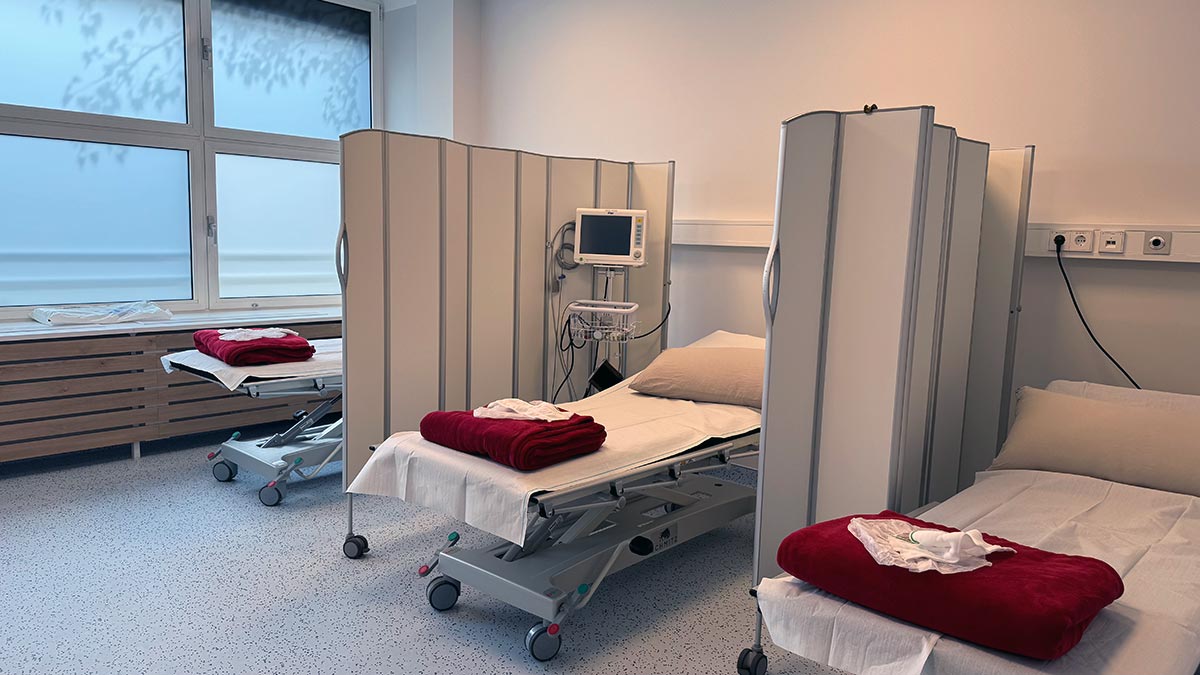 Recovery areaProcedure room
 Exterior view
 Registration
Real photos of our premises — no stock photography.
VenaZiel MVZ
10969 Berlin
Write to us whenever it suits you — no waiting on hold, no lost lunch break. Our team will reply as quickly as possible, and you’ll have the answer in writing for your reference.
For urgent matters and anything that’s difficult to plan.
Usually 9:00 AM – 3:00 PM · Fri until 1:00 PM
Frequently Asked Questions
Frequently Asked Questions about Hemorrhoids
Which doctor treats hemorrhoids?
A proctologist — meaning a doctor specializing in diseases of the rectum and anus. In Germany, proctology is not a separate medical specialty, but a specialization primarily pursued by surgeons. Many affected individuals first go to their family doctor, which is a good first step. However, for the examination with a proctoscope and for the treatment itself, you need a proctology consultation. At our clinic, four doctors specialize in proctology, including one specialist.
Do I need a referral to a proctologist?
No. You can come directly to us, even as a patient with statutory health insurance. A referral is not required. If you already have findings — for example, from a colonoscopy or from your family doctor’s practice — please bring them with you so we don’t have to duplicate anything.
How does the examination proceed?
First the consultation, then the examination — and you’ll know beforehand what will happen. You lie on your side, covered. This is followed by an external visual inspection, then a digital rectal examination with a finger, and finally proctoscopy: a short tube, about the thickness of a finger, used to assess the anal canal from the inside. This is unpleasant, but usually not painful, and it only takes a few minutes. Bowel preparation is not necessary for this. Please let us know at any time if you need a break.
Do hemorrhoids always require surgery?
No. The majority of hemorrhoidal conditions are treated without surgery. In early stages, regulating bowel movements and treatment while seated — such as sclerotherapy or rubber band ligation, both without anesthesia and without downtime — are often sufficient. Surgery is primarily considered if the hemorrhoids are permanently prolapsed or can no longer be pushed back. Which path is right for you depends on the grade — and that can only be seen during the examination.
Then ask us directly. Write to us when it suits you — or book an appointment right away, and we’ll clarify it in person.
Book appointment online Inquire via emailWhy do hemorrhoids itch?
It’s not the hemorrhoids themselves that itch, but the skin around the anus. Enlarged hemorrhoids no longer completely close the anal canal, allowing some mucus and stool residue to escape. The sensitive skin reacts to this with irritation, weeping, and itching — often leading to anal eczema. Vigorous rubbing and moist toilet paper usually worsen the problem instead of solving it. Therefore, both are treated: the skin irritation and the underlying cause in the anal canal.
Do hemorrhoids go away on their own?
Symptoms can subside on their own, especially if bowel movements improve — for example, after pregnancy or a period of hard stool. Enlarged hemorrhoidal tissue, however, usually does not regress on its own. Recurring bleeding or symptoms over several weeks should therefore be examined rather than continuously treated with ointments.
Blood in stool — is it always hemorrhoids?
No, and that is the most important sentence on this page. Hemorrhoids are the most common cause of bright red blood on toilet paper, but by no means the only one. An anal fissure, inflammation, or a tumor of the rectum can cause the same signs. Therefore, blood in the stool should always be examined — even if you are sure it’s hemorrhoids. This is precisely what the examination is for: to distinguish harmless conditions from those requiring treatment.
How can I tell if it is urgent?
By severe, sudden pain in the anus, bleeding that does not stop, as well as fever with chills or a painful swelling that rapidly increases. Hemorrhoids themselves usually do not hurt — severe pain is more indicative of an anal thrombosis, a fissure, or an abscess. In these cases, please call us: (030) 2529 9482.
More on the topic of bleeding: Blood in the stool — when it’s hemorrhoids and when it’s not
The appointment you postpone for years is over in a few minutes
No referral, no bowel preparation. Afterwards, you’ll know what grade is present, whether treatment is necessary — and if it’s even hemorrhoids at all.
Prefer to write? [email protected] — formulated at your leisure, answered in writing.
Urgent or difficult to plan? (030) 2529 9482, usually staffed 9:00 AM – 3:00 PM, Fridays until 1:00 PM.
Open Mon.–Thu. 8:00 AM–4:00 PM · Fri. 8:00 AM–2:00 PM