Proctology · Kreuzberg · Mitte
Treat anal fissure in Berlin — most heal without surgery
Proctology clinic in Berlin-Kreuzberg, on the border with Mitte. A tear in the anal canal hurts far beyond its size. We treat the sphincter muscle first, not the wound.
Relieve first, then decide
The quieter way: no waiting loop, and you have our answer in writing.
For urgent and hard-to-plan matters. Usually staffed 9:00 AM – 3:00 PM, Fridays until 1:00 PM.
Fri. 8:00 AM–2:00 PM
The examination is gentle and brief. A painful fissure is not stretched against your will — if the pain is severe, we first only look at what can be seen without pressure.
Book an appointment online
Symptoms
A small tear that sets a cycle in motion
An anal fissure is an elongated tear in the mucous membrane of the anal canal, usually on the posterior midline. Measured, it’s tiny. What makes it so tormenting is not its size, but what it triggers.
The tear hurts. The pain makes the sphincter muscle cramp. The cramp reduces blood flow. And poorly perfused tissue doesn’t heal. That closes the loop: the wound stays open because it hurts, and it hurts because it stays open.
This also explains why treatment targets the muscle first, not the wound. When the pressure is reduced, blood can reach the area — and the tear often heals on its own.
Pain during bowel movements
Sharp, cutting, often with a burning after-pain that lasts minutes to hours. Many describe it as the most unpleasant thing they know — with a finding you can barely see.
Bright red blood
Usually only a little, on the paper or as a smear on the stool. Dark blood or blood mixed into the stool, on the other hand, should be checked promptly and does not suggest a fissure.
Fear of the next time
The consequence people rarely talk about: you hold back stool, it becomes harder, the next bowel movement injures the area again. That, too, is part of the cycle.
The earlier the cycle is broken, the less often surgery is needed.
Book an appointment online Enquire by emailAcute or chronic
Six weeks is the line
For treatment, one question matters most: how long has the tear been there? Anything under that is considered acute and often still heals on its own. Beyond that, it’s called a chronic fissure — and as a rule, it no longer heals without targeted treatment.
| Acute fissure | Chronic fissure | |
|---|---|---|
Duration | less than six weeks | more than six weeks |
Pain | stabbing, mainly during bowel movements | also between bowel movements |
Healing | usually on its own | delayed or not at all |
Finding | fresh tear, otherwise unremarkable | scarred edges, sentinel tag, thickened anal papilla |
The sentinel tag is the most common reason for a scare. It’s a small skin fold at the outer end of the fissure, part of the chronic course, and is often mistaken for a hemorrhoid. It isn’t.
Without surgery
What we try first — and usually it’s enough
Before we talk about a procedure, the goal is to break the cycle of pain and spasm. This is not a delaying tactic, but the treatment with the best benefit–risk balance.
- Soft stool — a high-fiber diet, enough fluids, and, if needed, a mild bulking agent. The most effective lever — and the one only you can control
- Ointments that relax the sphincter muscle — nitrate or calcium channel blocker ointments lower pressure in the internal sphincter and improve blood flow
- Local pain relief — so bowel movements are no longer feared and the cycle doesn’t keep turning
- Botulinum toxin — relaxes the sphincter muscle for a few months and gives the fissure time to heal. Sits between ointment and surgery
This treatment takes consistency, not patience alone. Ointments only work if they’re applied regularly for weeks, and soft stool has to stay soft even when things are already improving. Most relapses happen right there.
We’ll also discuss what you can do yourself right away.
Book an appointment online Enquire by emailIf that’s not enough
When a procedure becomes sensible
If the fissure persists despite consistent treatment, the pain remains, or complications such as a fistula or an abscess occur — then waiting longer no longer helps. A procedure can allow the fissure to heal permanently.
| Procedure | What happens | Suitable for |
|---|---|---|
Fissurectomy Excision of the edges | The scarred tissue at the edges is removed so the chronic wound becomes a fresh one again that can heal. The sphincter muscle is left untouched | chronic fissure without markedly increased sphincter pressure |
Lateral sphincterotomy LIS | A small portion of the internal sphincter is divided laterally to lower the pressure permanently | persistently high sphincter pressure when other measures haven’t helped |
Laser sphincter-sparing | The base of the fissure is treated in a targeted way without dividing the sphincter muscle | fissures where sphincter function should be preserved |
Sphincterotomy is effective — and that’s exactly why it isn’t the standard for every fissure. It lowers pressure permanently — but it divides muscle, and that can’t be undone. Where pressure isn’t the main problem, we therefore use muscle-preserving approaches.
We’ll also tell you if conservative treatment hasn’t been fully exhausted yet.
Book an appointment online Enquire by emailRisks
What you should know beforehand
Procedures for anal fissure are small and well studied. The points that need to be discussed are still real.
- Impairment of fine continence — the risk that argues against sphincterotomy. Low, but not zero, and the reason not every fissure is treated this way
- Recurrent fissure — especially if the stool becomes hard again. Aftercare matters more here than with most other procedures
- Wound healing disorder — not uncommon in this region because the wound lies in a moist area and is subject to strain
- Pain in the first few days — usually significantly less than the pain from the fissure itself, but present
- Wound infection — rare, and usually easy to treat with antibiotics
Contact us if fever, increasing pain, or redness in the wound area occur after the procedure. (030) 2529 9482
Costs
What the treatment costs
Treatment of an anal fissure is covered by health insurance — statutory and private, conservative and surgical.
Statutory health insurance
Consultation, conservative treatment, and procedures are covered services. You don’t need a referral.
Privately insured
Reimbursable service, billed according to the German Medical Fee Schedule. You will receive the documents for your insurance from us.
Are you a self-payer or not insured in Germany? Then we will discuss the costs during the first examination — and you will receive a written cost estimate before anything is decided.
One number upfront would be misleading: the vast majority of fissures are not operated on at all. What a procedure costs depends on the method — that’s why we only quote it once it’s clear that one is necessary.
Who treats you
Four doctors, one specialization
The doctor who examines you during the consultation will also treat you. For a topic that requires so much overcoming, this is not an organizational matter — you shouldn’t have to tell your story twice.

Dr. med. David Machó

Ahmed Sultan

Aleksandr Parkhomenko

Clarissa Asmussen
No rotating team, no handover. You tell your story once.
Book appointment online Inquire via emailLocation · Kreuzberg · Mitte
Where we treat
Consultation and treatment take place at the same location, on Charlottenstraße — directly at Checkpoint Charlie, on the border between Berlin-Kreuzberg and Mitte.
Reception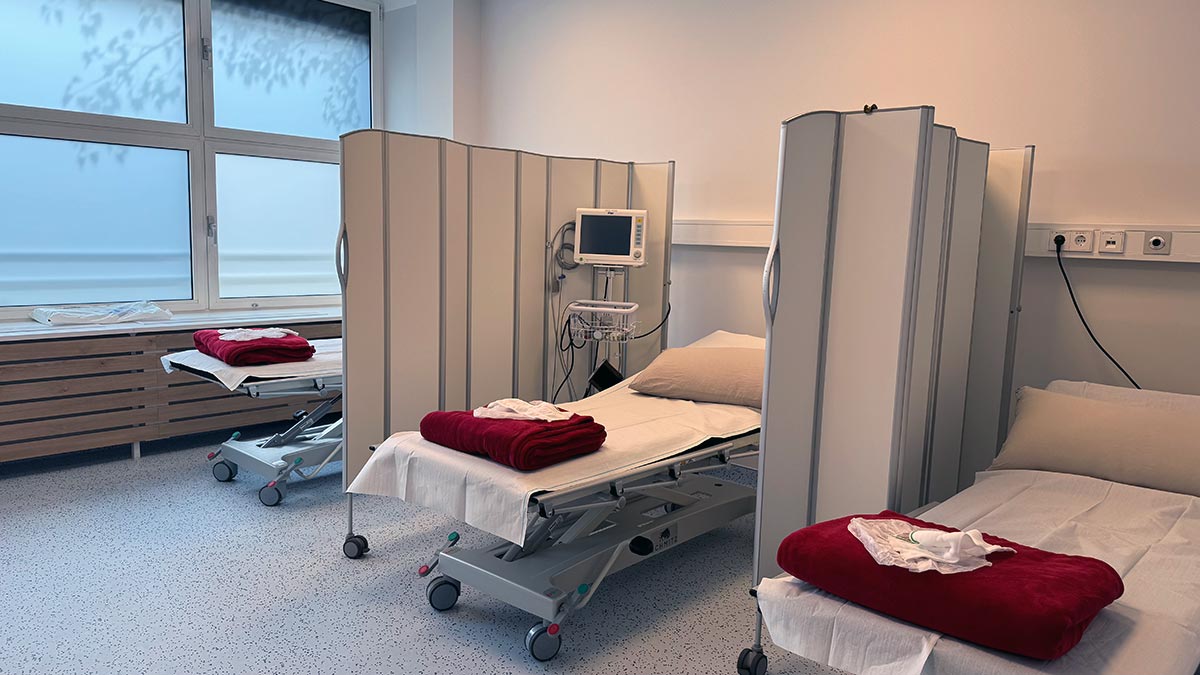 Recovery area
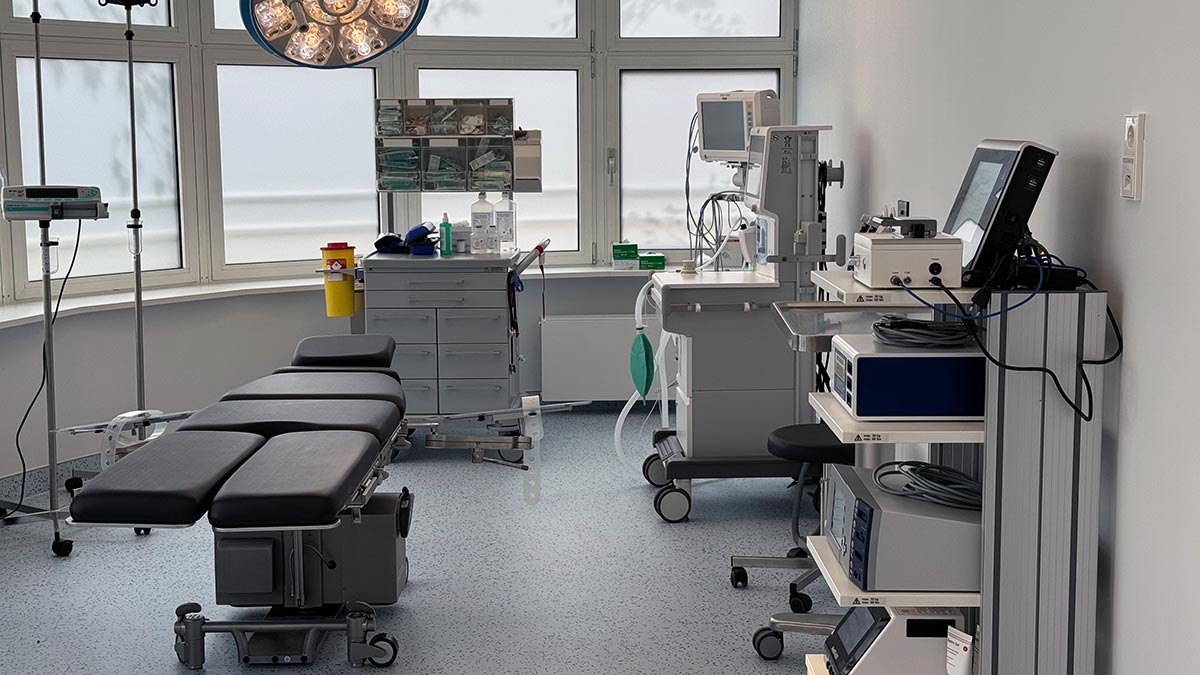 Procedure room
 Exterior view
 Registration
Real photos of our premises — no stock photography.
VenaZiel MVZ
10969 Berlin
Write to us whenever it suits you — no waiting on hold, no lost lunch break. Our team will reply as quickly as possible, and you’ll have the answer in writing for your reference.
For urgent matters and anything that’s difficult to plan.
Usually 9:00 AM – 3:00 PM · Fri until 1:00 PM
Frequently Asked Questions
Frequently asked questions about anal fissure
Does an anal fissure heal on its own?
A fresh fissure often does. In the first weeks, the tear often heals once the stool becomes softer and the sphincter muscle relaxes. If it persists longer than six weeks, it’s called a chronic fissure — and as a rule, it no longer heals without targeted treatment.
Why does it hurt so much even though it’s only a small tear?
Because the pain sets a cycle in motion. The tear hurts, the sphincter muscle cramps reflexively, the cramp reduces blood flow — and poorly perfused tissue doesn’t heal. Treatment breaks exactly this cycle, which is why it targets the muscle first and not the wound.
Do I need surgery?
Usually not. Ointments that lower sphincter pressure, stool regulation, and patience bring a large proportion of fissures to healing. Surgery is only considered if the fissure doesn’t heal despite consistent treatment, the pain persists, or complications occur.
What about Botox?
Botox relaxes the internal sphincter for a few months and gives the fissure time to heal. It sits between ointment and surgery: no cutting of the muscle, but more effective than a cream. Whether it makes sense for you depends on how high the pressure in the sphincter is.
Will there be weakness after surgery?
That’s the key question with sphincterotomy, because part of the internal sphincter is divided. The risk of a mild impairment is low, but it isn’t zero — and that’s why not every fissure is operated on this way. Procedures that don’t divide the muscle are the alternative.
How long will I be off work?
After a fissure procedure, most people are able to work again after a few days—often sooner with desk work than with physical work. It takes a few weeks for the wound to heal completely — but as a rule, you’re symptom-free much earlier.
Six weeks go by quickly — and after that it gets harder
A fresh fissure often heals with little effort. A scarred one needs more. The difference is rarely the finding, but usually the timing.
Prefer to write? [email protected]
By phone at (030) 2529 9482, usually staffed 9:00 AM – 3:00 PM, Fridays until 1:00 PM
Open Mon.–Thu. 8:00 AM–4:00 PM · Fri. 8:00 AM–2:00 PM