Hernia Center · Kreuzberg · Mitte
Umbilical Hernia Surgery in Berlin — Minimally Invasive and Outpatient
Abdominal wall surgery is our specialty, not a sideline. The same surgeons from initial examination to final follow-up.

Examine first, then plan
For non-urgent matters, email is the best way to reach us.
Fri 8:00 AM–2:00 PM
Palpation while standing and lying down, plus ultrasound. Approximately 30 minutes — afterward you will know the size of the hernia defect and which procedure is appropriate.
Book an appointment online
Key Points at a Glance
Not every umbilical hernia requires immediate surgery
In adults, the gap in the umbilical ring does not close on its own — unlike in young children, where it often resolves spontaneously. However, this does not automatically mean surgery is necessary: small hernias that cause no symptoms can be monitored. Surgery is indicated in cases of pain, an enlarging defect, and the risk of tissue becoming trapped in the gap.
More information in the knowledge center: Abdominal Wall Hernia and Modern Meshes · Hernia and Digestive Complaints
- The procedure typically takes approximately 30 minutes
- Outpatient — you will be home the same day
- Covered by health insurance for both statutory and private patients
- Whether suture or mesh is used depends primarily on the size of the hernia defect
- Return to work usually after one to three weeks, depending on occupation
- Avoid heavy lifting for four weeks
Procedure
Suture or mesh — what suits your findings
There is no single standard procedure for umbilical hernias. The decisive factor is primarily the size of the hernia defect. Additional considerations include previous abdominal surgery, body weight, and whether this is a primary repair or a recurrent hernia. We decide this together with you after examining the findings — not beforehand over the phone.

| Procedure | Approach | Particularly suitable for | Anesthesia |
|---|---|---|---|
Direct Suture Closure without foreign material |
small incision at the umbilical margin | small hernia defects under 2 cm | determined during anesthesia consultation |
Open Mesh Reinforcement Sublay or Onlay |
open incision at the umbilicus | larger hernia defects and recurrent hernias | determined during anesthesia consultation |
Laparoscopic Mesh from inside, IPOM |
Keyhole, few small access points | recurrent hernias, strong abdominal wall, multiple hernia defects | general anesthesia |
Unlike inguinal hernias, not every patient with an umbilical hernia receives a mesh. A small defect can be directly sutured. If the hernia defect is larger, a mesh reinforces the abdominal wall and significantly reduces the risk of the hernia recurring at the same location.
We will recommend the appropriate procedure during the consultation — with the rationale behind it, so you can understand the decision and not just accept it.
Procedure
From consultation to home
Consultation
We palpate the umbilical ring while you are standing and lying down, and use ultrasound to assess the size of the defect and its contents. Afterward, we discuss whether surgery is necessary and which procedure is appropriate. Duration: approximately 30 minutes.
Preparation
Information about the procedure, anesthesia consultation, and if needed, blood draw and ECG. We schedule these appointments on the same day whenever possible.
The procedure
Through a small incision at the umbilical margin or — in the laparoscopic approach — through a few millimeter-sized access points. Typically approximately 30 minutes, depending on the procedure and size of the hernia.
Recovery phase
Two to four hours of monitoring at our facility. Afterward, you will go home — accompanied, and with someone available for you during the first hours.
Aftercare
Wound check after one and five days.
During the consultation, we will assess the size of the hernia defect — and whether surgery is necessary at all.
Book an appointment online Enquire by emailRisks
Risks we discuss with you
Umbilical hernia repair is one of the common and well-studied procedures in abdominal wall surgery. Serious complications are rare. The following points are known, and we review them with you before the operation — not only if one of them occurs.
- Bruising — usually harmless, resolves on its own
- Seroma — a fluid collection under the suture, not uncommon after mesh placement. It usually resolves on its own
- Wound infection — rare, and usually easy to treat with antibiotics
- Persistent discomfort in the umbilical area — a pulling or pressure sensation that may persist for weeks
- Altered appearance of the umbilicus — depending on the size of the hernia and the chosen procedure, the shape may change slightly. We will inform you beforehand what to expect
- Recurrence — a new hernia at the same location. Less common with mesh reinforcement, and usually operable again
Please contact us if you develop fever, increasing pain, or redness in the surgical area after the operation. (030) 2529 9482
Costs
What does umbilical hernia surgery cost?
For the vast majority of patients, the answer is brief: health insurance covers the procedure — both statutory and private.
Statutory health insurance
Umbilical hernia surgery is covered by statutory health insurance. You will incur no costs for the procedure itself.
Because we operate on an outpatient basis, there is no statutory co-payment.
A medical indication is required. We will determine whether one exists during the hernia consultation.
Privately insured
For private patients, umbilical hernia surgery is also a reimbursable service. We bill according to the German Medical Fee Schedule (GOÄ).
Clarify coverage with your insurance beforehand. You will receive the necessary documents from us.
Are you paying out of pocket or not insured in Germany? We will discuss costs during the initial examination — and you will receive a written cost estimate before any decision is made.
A figure in advance would be speculative: the cost of the procedure depends on the findings, the chosen method, and whether a mesh is used. Therefore, we only provide it after examining you.
The question remains whether it is necessary. We will clarify this during the consultation — in approximately 30 minutes.
Book an appointment online Enquire by emailSurgeons
Who will operate on you
The surgeon who examines you during the consultation will also perform your surgery. No rotating team, no handover to colleagues you have never met.

Dr. med. David Machó

Dr. med. Charalambos Menenakos, FACS, MHBA


Location · Kreuzberg · Mitte
Where we operate
We also treat umbilical hernias in our own surgery center on Charlottenstraße — right by Checkpoint Charlie, on the border between Berlin-Kreuzberg and Mitte. Consultation, procedure, and follow-up are all under one roof.
 Reception
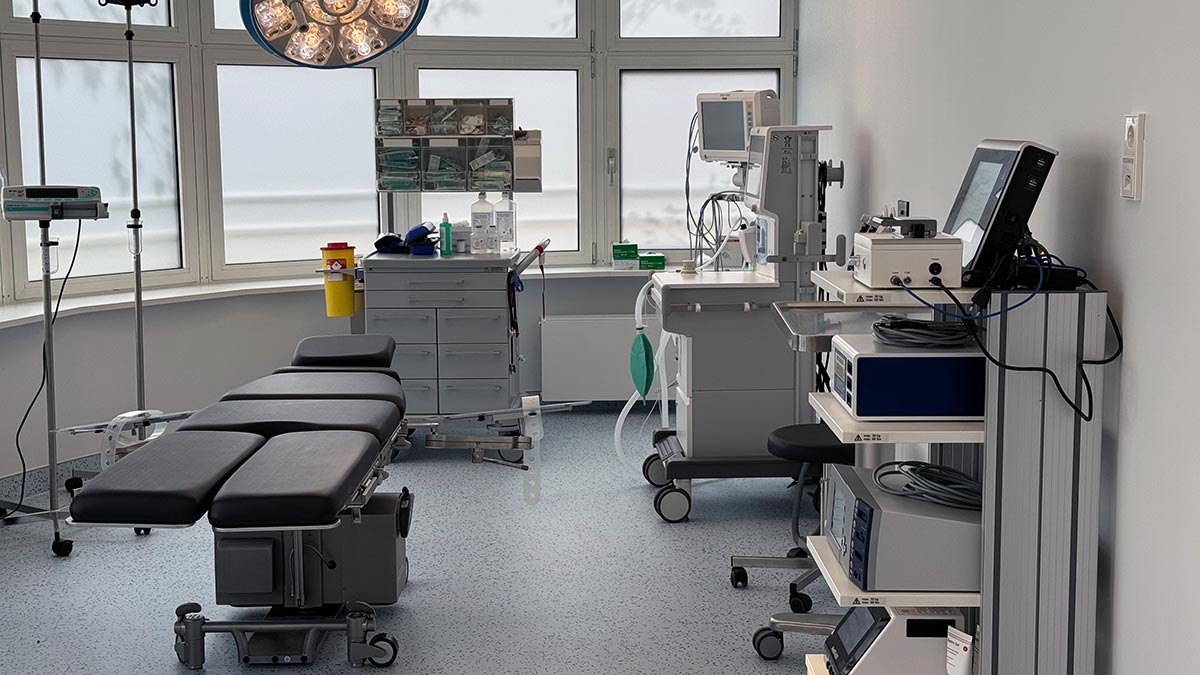 Procedure room
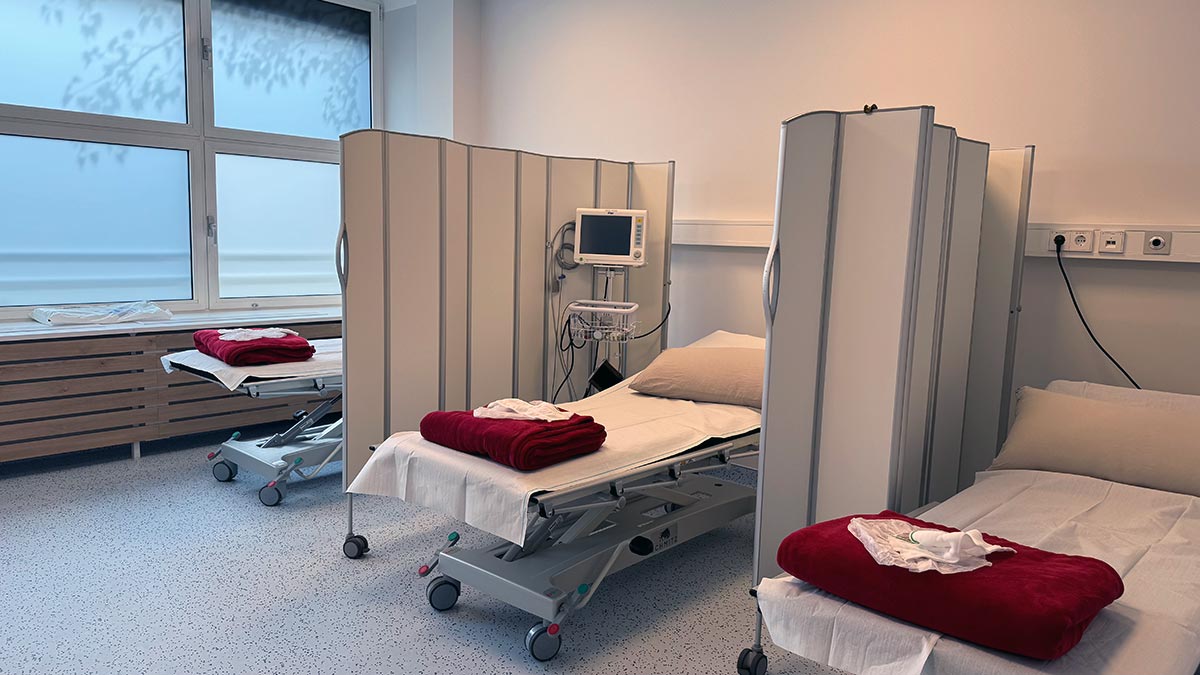 Recovery area
 Exterior view
Real photos from the surgery center — not stock photography.
VenaZiel MVZ — Hernia Center
10969 Berlin
Mon–Thu 8:00 AM–4:00 PM · Fri 8:00 AM–2:00 PM
For non-urgent matters, email is the more convenient option — and you will have our response in writing.
Frequently Asked Questions
Frequently Asked Questions About Umbilical Hernia Surgery
Does every umbilical hernia require surgery?
No. A small umbilical hernia that causes no symptoms can initially be monitored. However, it will not resolve on its own in adults. We recommend surgery if symptoms occur, the defect enlarges, or there is a risk of tissue becoming trapped in the hernia defect.
Will I always receive a mesh?
No. Small hernia defects can be directly sutured without any foreign material. A mesh is used for larger defects and recurrent hernias. Meshes have been used in hernia surgery for decades, are well studied, and are generally well tolerated. We will discuss what is appropriate in your case before the procedure.
Is the operation painful?
You will not feel anything during the procedure, as it is performed under anesthesia. Afterward, a pulling or tightness around the umbilicus is normal; standard pain medication manages this well. Most patients report that discomfort decreases significantly after a few days.
Does the health insurance company cover the costs?
Yes. For statutory insured patients, umbilical hernia surgery is covered by insurance; for privately insured patients, it is a reimbursable service according to GOÄ. Only if you are paying out of pocket or not insured in Germany will we discuss costs during the initial examination.
When can I return to work?
This depends primarily on your occupation. Most office workers are able to return to work after one to three weeks. For physically demanding work involving lifting and carrying, plan for six weeks. We will issue a sick leave certificate appropriate to your occupation.
Do I have to stay overnight?
No. We operate exclusively on an outpatient basis and do not have beds for overnight stays. The prerequisite is that you are accompanied home and are not alone for the first few hours. If pre-existing conditions or extensive findings argue against an outpatient procedure, we will tell you so during the consultation and plan the surgery together with a clinic.
Can the hernia recur?
This is possible, as with any hernia surgery. Mesh reinforcement significantly reduces the risk. A recurrence is favored by persistent pressure on the abdominal wall — severe obesity, chronic cough, or regular heavy lifting. If it does recur, the hernia can usually be repaired again.
How can I tell if it is urgent?
Sudden onset of severe pain, a bulge that cannot be pushed back, and nausea or vomiting. These may be signs of incarceration and require immediate medical evaluation — not waiting until the next business day.
Do you also operate on children?
No, we operate exclusively on adults. In infants and young children, an umbilical hernia often resolves on its own. If surgery is necessary, it belongs in the hands of pediatric surgeons — your child is better cared for there than with us.
First, determine what is actually necessary
During the hernia consultation, we will clarify whether surgery is required and what the cost of waiting is. You will receive a clear assessment — and then decide at your own pace.
Prefer to write? [email protected]
By phone at (030) 2529 9482
Mon–Thu 8:00 AM–4:00 PM · Fri 8:00 AM–2:00 PM