Visceral Surgery · Kreuzberg/Mitte
Gallstone Surgery in Berlin — Minimally Invasive and Outpatient
Gallbladder surgery in Berlin-Mitte, as part of our visceral surgery services. Keyhole technique, transparent costs.
Examine first, then decide
For anything that isn’t urgent, feel free to write to us.
Fri. 8:00 AM–2:30 PM
Medical history and previous findings, followed by ultrasound of the gallbladder and bile ducts. This allows us to determine whether and when surgery is advisable.
Book an appointment online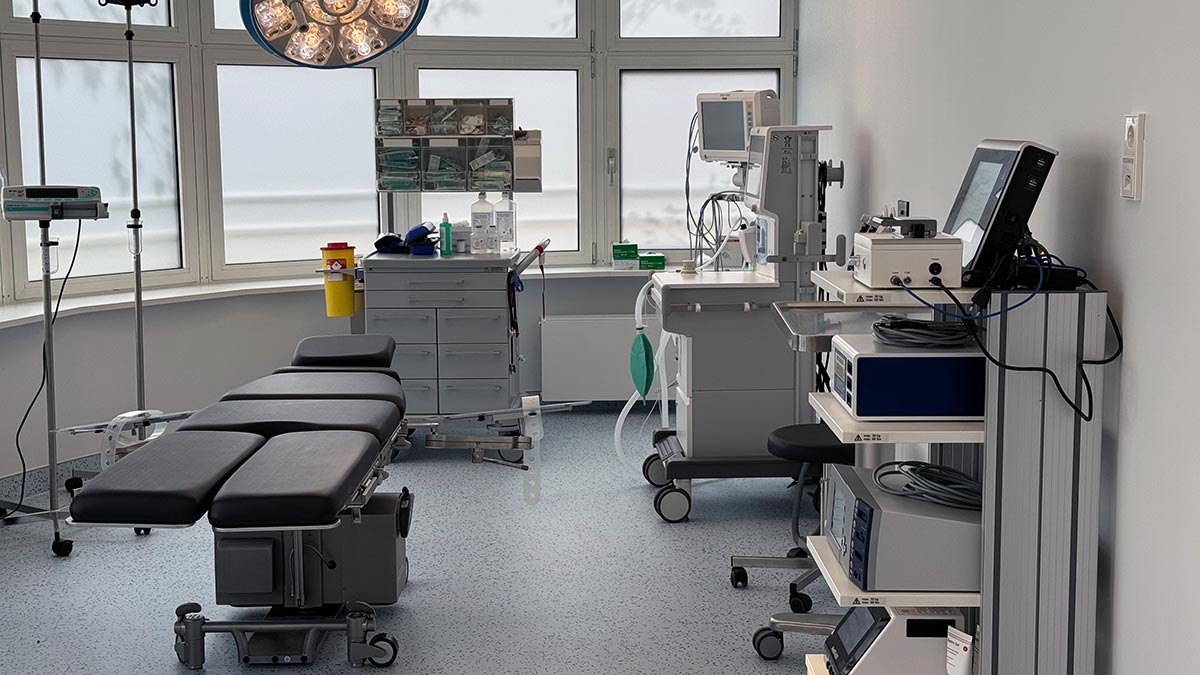
Key Points at a Glance
The gallbladder is removed, not just the stones
This surprises many during the first consultation. Gallstones form in the gallbladder itself—if only the stones are removed, the cause remains and new ones form. That is why, when gallstones cause symptoms, the entire gallbladder is removed. The bile ducts remain intact, and the liver continues to produce bile as before.
- The procedure is usually performed minimally invasively through small incisions
- The operation usually takes 30 to 60 minutes
- Outpatient — you go home the same day
- You should avoid heavy lifting for two to four weeks
- Asymptomatic gallstones do not always require surgery
- For those with statutory health insurance, gallbladder removal is a covered service
- Most people can eat normally without a gallbladder
Procedure
How we remove the gallbladder
In the vast majority of cases, we perform the operation using keyhole surgery. The gallbladder is detached and completely removed via three to four small incisions without opening the abdomen. This is the standard procedure for gallstones.
| Procedure | Access | Particularly suitable for | Anesthesia |
|---|---|---|---|
Laparoscopic cholecystectomy in-house standard Keyhole technique | three to four small incisions in the abdominal wall | gallstones that cause symptoms — the standard procedure | general anesthesia |
Open Cholecystectomy conventional approach | incision below the right costal arch | severely inflamed gallbladder, extensive adhesions from previous surgeries | general anesthesia |
Sometimes it only becomes clear during surgery that the anatomy is unclear—for example, with a severely inflamed gallbladder. In such cases, we switch to the open approach. This is not a complication but a safety decision: where the bile ducts cannot be clearly identified, we do not continue with keyhole technique. We discuss this possibility with you before every procedure so that it is not a surprise if it occurs.
Procedure
From consultation to home
Consultation
Medical history and previous findings, followed by ultrasound of the gallbladder and bile ducts. We assess whether the stones are the cause of your symptoms and discuss with you whether and when surgery is advisable.
Preparation
Informed consent consultation, anesthesia consultation, and, if necessary, blood draw and ECG. These appointments can usually be combined.
The procedure
Under general anesthesia, usually 30 to 60 minutes. The gallbladder is detached and completely removed via small incisions; the bile ducts remain intact. The removed tissue is then examined histologically.
Recovery phase
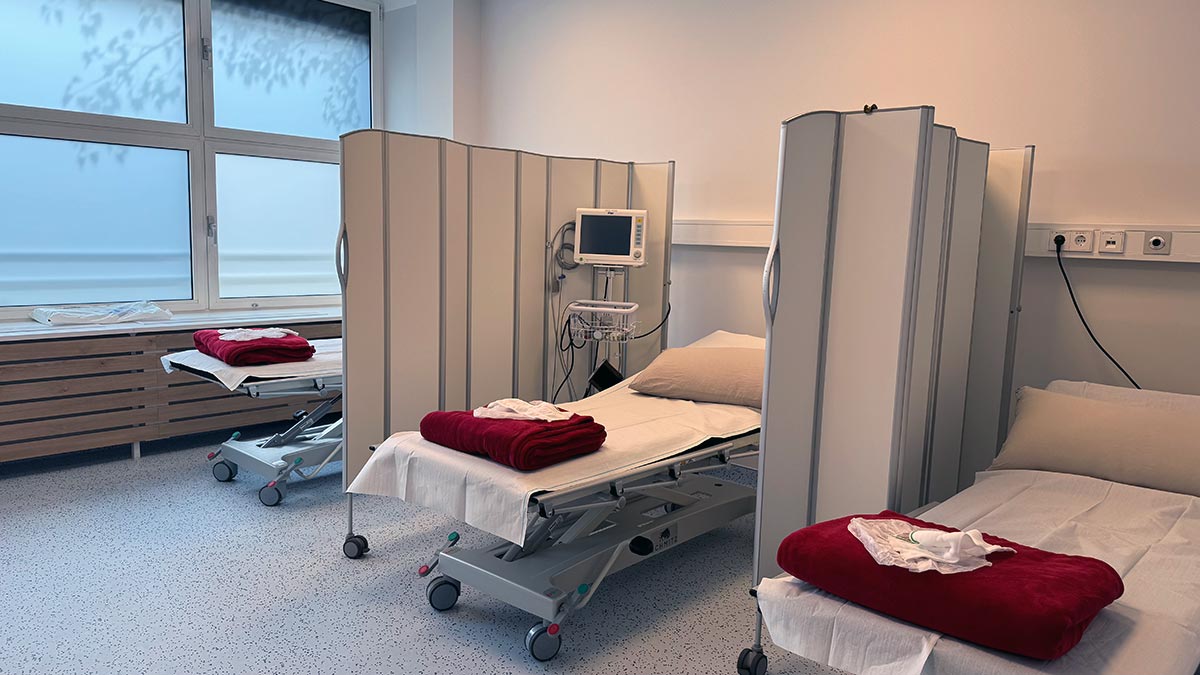
Monitoring in the recovery area until circulation and pain are stable. Afterward, you go home—accompanied, and provided someone is available at home.
Aftercare
Wound check in our consultation. You will receive the appointment for this on the day of surgery, along with the histology report once it is available.
In the consultation, we examine the gallbladder with ultrasound—and determine whether the stones are really the cause.
Book an appointment online Enquire by emailRisks
Risks we discuss with you
Gallbladder removal is one of the most common and best-studied procedures in abdominal surgery. Serious complications are rare. The following are known—and we discuss them with you before the procedure, not only if they occur.
- Bruising — usually harmless, resolves on its own
- Wound infection — rare, and usually easy to treat with antibiotics
- Bile duct injury — the most important complication of this procedure. It is rare but may require further intervention. This is precisely why we prefer to switch to the open approach once too early rather than once too late
- Bile leakage — manifests in the days after surgery through pain and discomfort and must be treated
- Retained stones in the bile duct — they can cause symptoms even after surgery and are then treated specifically
- Conversion to open approach — not a complication but a decision for safety during surgery
- Altered digestion — softer stool or reduced tolerance of very fatty foods. In some patients, usually temporary
Contact us if fever, increasing pain, redness in the surgical area, or yellowing of the skin or eyes occur after surgery. (030) 2529 9482
Costs
What does gallbladder surgery cost?
For the vast majority of patients, the answer is brief: Gallbladder removal is covered by health insurance—both statutory and private.
Statutory health insurance
Gallbladder removal is a covered service under statutory health insurance. You incur no costs for the procedure itself.
As we operate on an outpatient basis, there is no statutory co-payment for you.
A medical indication is required. We determine this in the consultation.
Privately insured
For privately insured patients, gallbladder removal is also a reimbursable service. We bill according to the German Medical Fee Schedule (GOÄ).
Clarify coverage with your insurance beforehand. You will receive the necessary documents from us.
Are you a self-payer or not insured in Germany? We will discuss the costs during the initial examination — and you will receive a written cost estimate before any decision is made.
A figure in advance would be advisable: What the procedure costs depends on the findings and the chosen approach. That is why we only provide it after we have examined you.
The question remains whether it is necessary. We clarify this in the consultation—with ultrasound and without rush.
Book appointment online Inquire via emailSurgeons
Who will operate on you
The doctor who examines you in the consultation will also operate on you. No rotating team, no handover to unknown colleagues.

Dr. med. David Machó

Dr. med. Charalambos Menenakos, FACS, MHBA

Aleksandr Parkhomenko

Clarissa Asmussen
Whoever examines you in the consultation will also be at the operating table. Get to know us first.
Book appointment online Inquire via emailLocation · Berlin-Mitte
Where we operate
We perform all procedures at our Surgery Center on Charlottenstraße in Berlin-Mitte. Consultation and surgery take place at the same location.
 ReceptionProcedure room
 Recovery area
 Exterior view
Actual images from the surgical center.
VenaZiel MVZ
10969 Berlin
Mon.–Thu. 8:00 AM–4:30 PM · Fri. 8:00 AM–2:30 PM
For anything that isn’t urgent, feel free to write to us — then you will have our answer in writing.
Frequently Asked Questions
Frequently Asked Questions About Gallstone Surgery
Does every gallstone need to be operated on?
No. Gallstones that cause no symptoms are usually monitored initially. Surgery is indicated for recurrent colics, inflammation of the gallbladder, or stones that have migrated into the bile ducts. Whether surgery makes sense in your case is something we discuss after the examination—not beforehand over the phone.
Why is the entire gallbladder removed and not just the stones?
Because otherwise the stones will regrow. They form in the gallbladder itself—if only the stones are removed, the cause remains. That is why complete removal of the gallbladder is the standard for gallstones that cause symptoms. The bile ducts remain intact.
Can I eat normally without a gallbladder?
As a rule, yes. The gallbladder stores bile—it is produced in the liver, which continues to function unchanged after the procedure. Some people tolerate very fatty foods less well in the first few weeks or have softer stool. This usually resolves. A permanent diet is not required after gallbladder removal.
Is the operation painful?
During the procedure, you feel nothing—it is performed under general anesthesia. Afterward, mild pain in the surgical area is normal and can be well controlled with standard painkillers. After a keyhole procedure, pressure in the upper abdomen or pulling in the shoulder may additionally occur in the first few days. This is caused by the gas used to expand the abdominal cavity during surgery and resolves on its own.
Does the health insurance company cover the costs?
Yes. For those with statutory health insurance, gallbladder removal is a covered service; for privately insured patients, it is a reimbursable service under GOÄ. Only if you are a self-payer or not insured in Germany do we discuss costs at the first examination.
Do I have to stay overnight?
No. We operate exclusively on an outpatient basis and do not have beds for overnight stays. The prerequisite is that you are accompanied home and are not alone for the first few hours. If pre-existing conditions or extensive findings argue against an outpatient procedure, we will tell you so during the consultation and plan the surgery together with a clinic.
When can I return to work?
This depends primarily on your occupation. With predominantly sedentary work, you will be fit for duty much sooner than with physical work involving lifting and carrying. We issue the certificate of incapacity for work individually and discuss the timeframe during the wound check.
How can I tell if it is urgent?
By severe, persistent pain in the right upper abdomen, fever with chills, and yellowing of the skin or eyes, often together with dark urine and pale stool. These can be signs of gallbladder inflammation or a stone in the bile duct and require immediate medical evaluation. In this case, please call us: (030) 2529 9482.
Let us first assess what is actually necessary
In the consultation, we determine whether the stones are causing your symptoms and whether surgery makes sense. You receive a clear assessment—and then decide at your own pace.
Prefer to write? [email protected]
By phone at (030) 2529 9482
Mon.–Thu. 8:00 AM–4:30 PM · Fri. 8:00 AM–2:30 PM