Proctology · Kreuzberg · Mitte
Treating Pilonidal Sinus in Berlin — as gently as possible, as thoroughly as necessary
Proctology consultation in Berlin-Kreuzberg, bordering Mitte. Not every Pilonidal Sinus requires major surgery — the findings determine the appropriate procedure.
First examine, then decide
The quieter way: no waiting loop, and you have our answer in writing.
For urgent and hard-to-plan matters. Usually staffed 9:00 AM – 3:00 PM, Fridays until 1:00 PM.
Fri. 8:00 AM–2:00 PM
Pilonidal Sinus is usually a visual diagnosis. Within a few minutes, you will know the extent of the findings and which procedures are suitable.
Book an appointment online
Symptoms
Three courses, three very different urgencies
A Pilonidal Sinus is an inflammation in the subcutaneous fatty tissue of the gluteal fold. Hair, dead skin cells, and dirt accumulate in a small cavity under the skin; the body treats them as foreign bodies. The Latin name Sinus pilonidalis translates to “hair nest cavity” — and thus names the cause.
Which treatment is suitable depends less on how uncomfortable it feels, and more on which of these three courses you are currently experiencing.
Without symptoms
One or more small pits in the gluteal fold, nothing else. Often an incidental finding. Immediate surgery is not necessary here — waiting, removing hair, and keeping the fold dry is a legitimate first approach.
Acute Abscess
A reddened, warm swelling that grows larger and significantly more painful within days. Sitting becomes agony. This is the urgent course — here, relief counts, not planning.
Chronic Course
Repeated small amounts of secretion or pus from one or more openings, with quieter weeks in between. The inflammation remains active in the tissue. This course does not heal on its own.
The chronic course is the most common reason people come to us — and the one where waiting is least worthwhile. Every new flare-up enlarges the tract system, and the more branched it becomes, the less effective gentle procedures are.
When you should not wait for an appointment
Rapidly increasing pain in the coccyx · a reddened swelling that quickly grows larger · fever with chills.
Please call us: (030) 2529 9482, usually staffed 9:00 AM – 3:00 PM, Fridays until 1:00 PM. Outside these hours: medical on-call service 116 117, for severe pain or high fever, emergency services 112.
Which one it is determines everything else — and can be clarified in minutes.
Book an appointment online Enquire by emailExamination
Often a glance is enough
Pilonidal Sinus is one of the few proctological findings that doesn’t require equipment. The typical pits in the gluteal fold are visible to the naked eye; we check how many there are, how deep they extend, and if they are connected.
You will lie on your stomach for this, and the area will only be exposed as much as necessary. No preparation is required, no diet, no laxatives. Anyone presenting with acute swelling will first be examined to see if pus has already accumulated.
In the end, there is no assumption, but a classification: how extensive the tract system is, whether it is a first intervention or a recurrence — and which procedures are therefore available.
What to bring to a proctology appointment and how it proceeds: The proctological examination — procedure and preparation
Procedure
Not every fistula requires major surgery
For a long time, complete excision was the standard: an oval area around the tract system is cut out, and the wound heals openly over weeks. This procedure is proven and has the lowest recurrence rate — but it requires four to eight weeks of wound care.
Meanwhile, there are procedures that manage with cuts of just a few millimeters. They spare tissue and time, but are somewhat more frequently repeated. Which group is suitable for you is not determined by desire, but by the findings: how extensive and branched the tract system is, and whether surgery has already been performed.
| Procedure | What happens | Suitable for | Wound healing |
|---|---|---|---|
Pit-Picking according to Bascom | Only the visible openings and the tract behind them are punched out, under local anesthesia. Incisions of about five millimeters | few, superficial openings without extensive branching | one to two weeks |
Endoscopic EPSiT | A fine endoscope is inserted into the tract. Hair and inflamed tissue are removed under direct vision, and the tract wall is cauterized from the inside. | branched tracts, if all branches are reachable | a few days to weeks |
Laser FiLaC / SiLaC | A laser fiber is guided into the tract and slowly withdrawn. The inner wall scars and closes. | narrow tracts, also as a supplement to other procedures | one to two weeks |
Excision, open Excision, secondary healing | The entire tract system is removed, the wound remains open and heals from the bottom up. Daily wound care. | extensive findings and recurrences | four to eight weeks |
Plastic closure Karydakis, Limberg | Excision with closure outside the gluteal fold, so that the scar is not in the stressed groove | large findings and repeated recurrences | shorter than open, with suture |
CHECKWhich of the three minimally invasive techniques the clinic offers is not yet documented anywhere — the existing page only generally speaks of “modern minimally invasive techniques that we offer”. Please specify for each procedure whether it is offered, as well as the type of anesthesia, duration of the procedure, and usual downtime.
A suture in the middle of the gluteal fold is now considered unfavorable. There, tension and moisture prevail, which promote healing disorders — the guidelines advise against it. If closed, then laterally offset.
We will also tell you if waiting is the better option.
Book an appointment online Enquire by emailRisks
What you should know beforehand
The procedure for a Pilonidal Sinus is well-researched and, in experienced hands, has few complications. Nevertheless, the following points belong in the discussion beforehand — not just when they occur.
- Wound healing disorder — the most common difficulty, especially with sutures in the gluteal fold. Therefore, closure is avoided there if possible.
- Recurrence — after complete excision, less than ten percent; after gentle procedures, somewhat more frequently. A recurrence can be treated again.
- Wound infection — rare, and usually easy to treat with antibiotics
- Hematoma — usually resolves on its own.
- Long wound care — daily for weeks with open healing. This is not a complication, but the point that weighs most heavily in everyday life.
Contact us if fever, increasing pain, or redness in the wound area occur after the procedure. (030) 2529 9482
Costs
What the treatment costs
The treatment of Pilonidal Sinus is a service covered by health insurance — both statutory and private. It is not a cosmetic treatment or an optional service: if left untreated, the inflammation progresses.
Statutory health insurance
Consultation and procedure are covered by health insurance. You do not need a referral for this.
CHECKIf individual minimally invasive procedures are not covered by health insurance, please specify for each procedure here.
Privately insured
Reimbursable service, billed according to the German Medical Fee Schedule. You will receive the documents for your insurance from us.
Are you a self-payer or not insured in Germany? Then we will discuss the costs during the first examination — and you will receive a written cost estimate before anything is decided.
A number beforehand would be advisable: What the procedure costs depends on the method and the extent of the findings. Therefore, we will only tell you after we have examined you.
Even if surgery is not ultimately necessary.
Book an appointment online Enquire by emailWho treats you
Four doctors, one specialization
The doctor who examines you during the consultation will also treat you. For a topic that requires so much overcoming, this is not an organizational matter — you shouldn’t have to tell your story twice.

Dr. med. David Machó

Ahmed Sultan

Aleksandr Parkhomenko

Clarissa Asmussen
No rotating team, no handover. You tell your story once.
Book appointment online Inquire via emailLocation · Kreuzberg · Mitte
Where we treat
Consultation and treatment take place at the same location, on Charlottenstraße — directly at Checkpoint Charlie, on the border between Berlin-Kreuzberg and Mitte.
Reception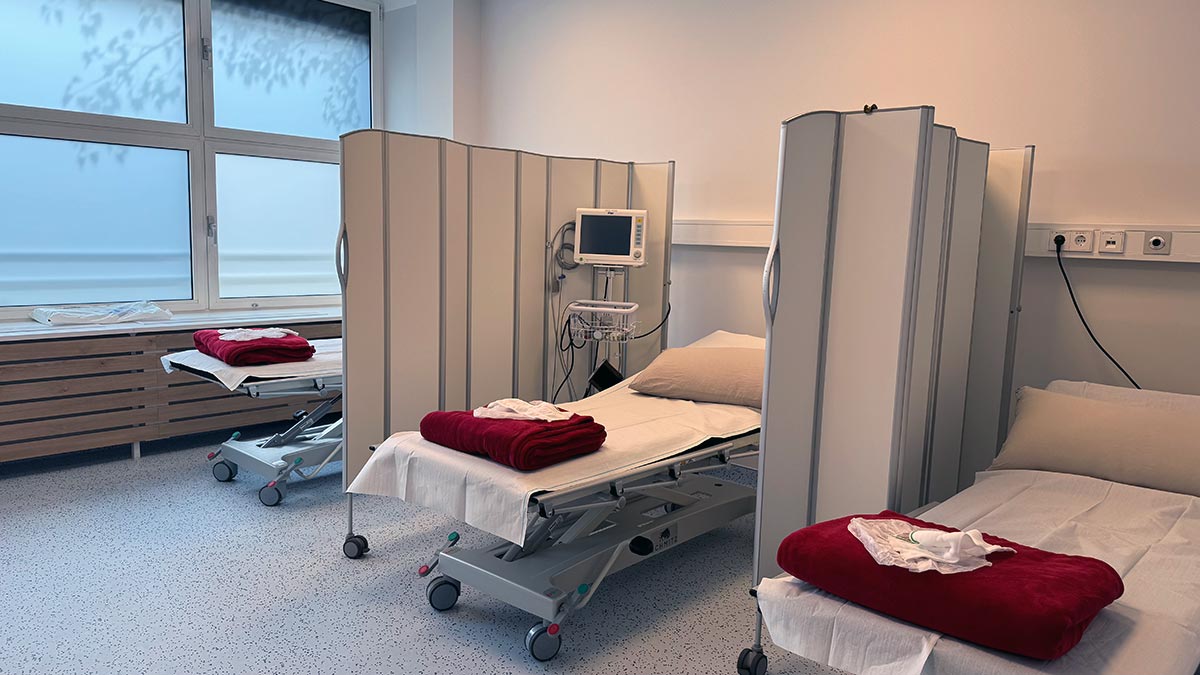 Recovery area
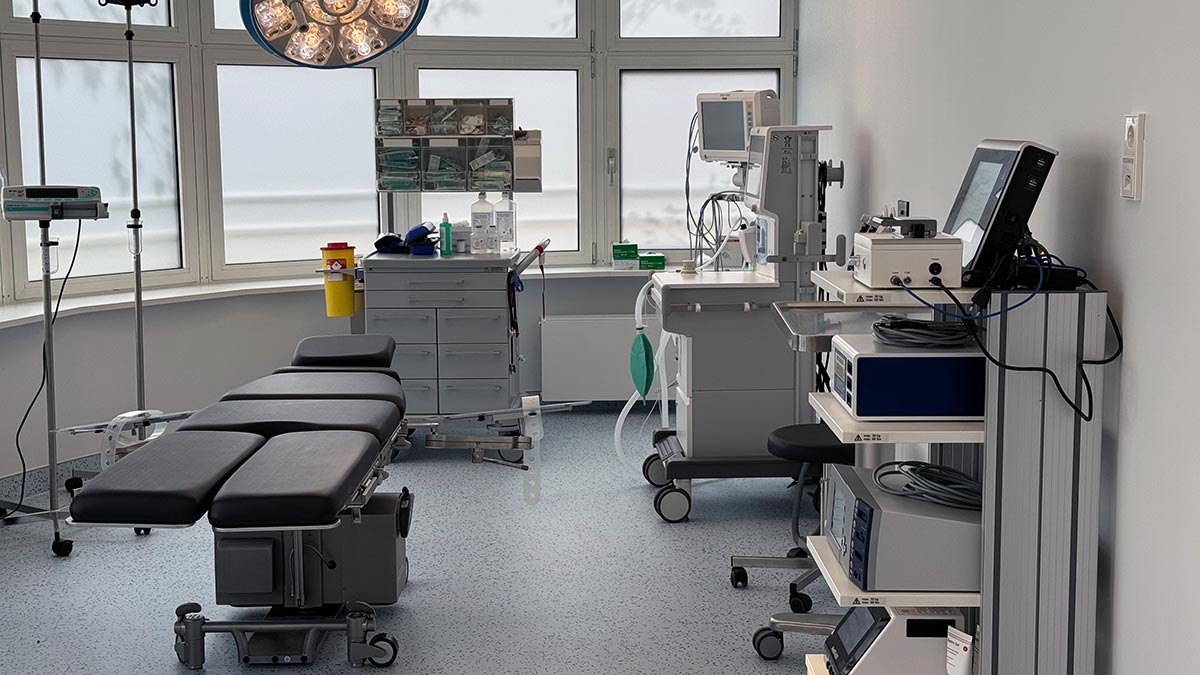 Procedure room
 Exterior view
 Registration
Real photos of our premises — no stock photography.
VenaZiel MVZ
10969 Berlin
Write to us whenever it suits you — no waiting on hold, no lost lunch break. Our team will reply as quickly as possible, and you’ll have the answer in writing for your reference.
For urgent matters and anything that’s difficult to plan.
Usually 9:00 AM – 3:00 PM · Fri until 1:00 PM
Frequently Asked Questions
Frequently Asked Questions about Pilonidal Sinus
Does a Pilonidal Sinus always require surgery?
A symptomatic fistula does not heal on its own — the inflammation remains active, and new abscesses repeatedly form. A incidentally discovered fistula without symptoms, however, can initially be observed and treated with thorough hair removal and hygiene in the gluteal fold. We will tell you during the consultation whether your findings can be treated expectantly.
Can it be done without major surgery?
For small, first-time fistulas with few superficial openings, often yes. Minimally invasive procedures use incisions of just a few millimeters, and the wounds heal in one to two weeks. For extensive, highly branched, or recurrent fistulas, however, they are often not sufficient. The examination will determine which group your findings belong to.
How long does wound healing take?
This is the biggest difference between the procedures. After a minimally invasive procedure, the small wounds usually heal in one to two weeks. After an open excision, it takes four to eight weeks because the wound must heal from the bottom up and requires daily care. A plastic closure outside the gluteal fold falls in between.
I have an acute abscess — what now?
A tense, full abscess is first drained, usually under local anesthesia. This immediately relieves pressure and pain. The actual fistula treatment follows later, once the inflammation has subsided — performing both in one procedure is not advisable in acute inflammation. In such cases, please call us.
Does the fistula recur?
That depends on the procedure. After complete excision with open wound healing, the recurrence rate is under ten percent; after a plastic closure outside the gluteal fold, it is usually under five to ten percent. Minimally invasive procedures spare more tissue but are somewhat more frequently repeated — however, they can be repeated because hardly any scars form.
How can I tell if it is urgent?
By rapidly increasing pain in the coccyx, a reddened, warm swelling that quickly grows larger, and fever with chills. These are signs of an abscess and should be treated quickly, not waited out. In these cases, please call us: (030) 2529 9482.
The sooner we look, the smaller the intervention
A tract system grows with each flare-up. What could be treated with a few millimeters today might require major excision in a year.
Prefer to write? [email protected]
By phone at (030) 2529 9482, usually staffed 9:00 AM – 3:00 PM, Fridays until 1:00 PM
Open Mon – Thu 8:00 AM – 4:00 PM · Fri 8:00 AM – 2:00 PM