Proctology · Kreuzberg · Mitte
Treating anal fistulas in Berlin — closing the fistula and preserving the sphincter
Proctology consultation in Berlin-Kreuzberg, on the border of Mitte. How an anal fistula is treated is determined by its course relative to the sphincter — not by the desire for the fastest solution.
First, clarify the course
The quieter way: no waiting loop, and you have our answer in writing.
For urgent and hard-to-plan matters. Usually staffed 9:00 AM – 3:00 PM, Fridays until 1:00 PM.
Fri. 8:00 AM–2:00 PM
Palpation and proctoscopy, supplemented by imaging if necessary. Afterward, you will know where the tract runs — and which procedures are even an option.
Book an appointment online
Symptoms
It usually starts with an abscess
An anal fistula is a tract that connects the anal canal with the adjacent skin. It rarely appears out of nowhere: it almost always starts with an inflamed gland in the anal canal. The pus seeks a way out — and the channel it leaves behind remains, even long after the abscess has been drained.
This is why many people only learn about their fistula after an abscess has been treated. This is not a complication or a medical error, but the usual progression.
Oozing and secretion
A small opening near the anus from which secretion or pus repeatedly escapes. Often the complaint that remains once the acute pain has passed.
Recurrent abscesses
It swells up, becomes painful, empties itself — and a few weeks or months later, it starts all over again. This is the typical sign that a tract is present.
Pressure and soreness
Dull pressure when sitting, irritated skin, sometimes itching. Much of this can be explained in other ways — which is why it needs to be looked at, not just interpreted.
An anal fistula does not heal on its own. Secretion and inflammation may subside, making it seem better in the meantime. However, the tract remains — and with it, the tendency for new abscesses.
When you should not wait for an appointment
Rapidly increasing pain at the anus · a reddened, pressure-sensitive swelling · fever with chills.
Please call us: (030) 2529 9482, usually staffed 9:00 AM – 3:00 PM, Fridays until 1:00 PM. Outside these hours: medical on-call service 116 117, for severe pain or high fever, emergency services 112.
Whether a tract is behind it can be clarified during a consultation.
Book an appointment online Enquire by emailCourse
Where the tract runs determines everything else
The sphincter muscle surrounds the anal canal — more precisely two, an internal and an external one. A fistula can run past, between, or right through them. This is not an academic classification. It determines whether the tract can simply be laid open (fistulotomy) or whether that would jeopardize continence.
| Course | Where the tract lies | What it means |
|---|---|---|
Intersphincteric the most common form | Between the internal and external sphincter, without crossing the external one | Usually easy to lay open because hardly any muscle tissue is affected |
Transsphincteric through both muscles | Crosses the internal and external sphincter | The higher the portion crossed, the less likely a fistulotomy becomes |
Suprasphincteric above the muscle | Runs above the external sphincter | Muscle-preserving, often in several steps |
Extrasphincteric rare, usually complex | Outside the sphincter apparatus, often associated with another underlying disease | Requires its own clarification, not just a procedure |
The conflict of objectives is real, and we address it proactively. The procedure with the highest success rate is often the one that costs the most muscle. The gentlest one sometimes requires several steps or a second attempt. What is right for you depends on the course — and on your current state of continence.
This classification is a map, not a schedule. You cannot see or feel which course is present from the outside: that is what the examination is for.
Examination
How we determine the course
The external opening is usually found quickly. What is more interesting is where the tract leads from there — and that is exactly what cannot be seen from the outside.
We palpate the area, look into the anal canal with a proctoscope, and search for the internal opening. It is almost always located where the inflamed gland was. If the course is unclear or branched, additional imaging is used.
You will lie on your side, covered, and the area will only be exposed as much as necessary. The result is not a guess, but a classification — which of the four courses is present and what follows from it.
What to bring to a proctology appointment and how it proceeds: The proctological examination — procedure and preparation
Procedure
Lay open where possible — preserve where necessary
With a superficial course, the matter is relatively simple: the tract is laid open (fistulotomy) and heals from the inside out. As soon as relevant parts of the sphincter are affected, this is not an option — then the goal is to close the fistula without cutting the muscle.
| Procedure | What happens | Suitable for |
|---|---|---|
Fistulotomy Fistulotomy | The tract is opened and remains open so that it heals from the inside out | superficial course with minimal muscle involvement |
Seton drainage Seton | A soft thread is placed through the tract to keep it open, allowing secretion to drain and the inflammation to subside | inflamed findings as preparation, not as a final step |
Advancement flap Advancement Flap | The internal opening is covered with the body’s own tissue, preserving the muscle | courses through a larger portion of the muscle |
Video-assisted VAAFT | A fine camera is inserted into the tract; it is cleaned under vision and closed from the inside | branched courses, if all branches are accessible |
Laser FiLaC | A laser fiber closes the tract from the inside as it is slowly withdrawn | narrow tracts, muscle-sparing |
A seton drainage is not a step backward. It seems like an interim solution, and it is — but a deliberate one: an inflamed tract does not heal well with any procedure. Calming it first, then closing it, is often the shorter path, even if it looks longer.
We will also tell you what that means for your sphincter muscle.
Book an appointment online Enquire by emailRisks
What you should know beforehand
With an anal fistula, there are two risks that stand against each other. We address both beforehand because otherwise, the decision is not yours.
- Impairment of continence — the risk that speaks against fistulotomy. How high it is depends on how much muscle lies in the course. This is exactly why not every fistula is laid open
- Recurrence — the risk that speaks against muscle-preserving procedures. They preserve the muscle but more frequently require a second attempt
- Wound healing disorder — not uncommon in this region because the wound lies in a moist area and is subject to strain
- Wound infection — rare, and usually easy to treat with antibiotics
- New abscess — as long as the tract exists, the tendency for it remains. This is a reason to treat rather than a risk of treatment
Contact us if fever, increasing pain, or redness in the wound area occur after the procedure. (030) 2529 9482
Costs
What the treatment costs
The treatment of an anal fistula is covered by health insurance — both statutory and private. It is medically necessary: if left untreated, the tract remains, and with it, the tendency for abscesses.
Statutory health insurance
Consultation and procedure are covered by health insurance. You do not need a referral for this.
Privately insured
Reimbursable service, billed according to the German Medical Fee Schedule. You will receive the documents for your insurance from us.
Are you a self-payer or not insured in Germany? Then we will discuss the costs during the first examination — and you will receive a written cost estimate before anything is decided.
A figure in advance would be guesswork: what the procedure costs depends on the course and the chosen method. Therefore, we only name it once we have examined you.
Even if, in the end, only drainage is initially necessary.
Book an appointment online Enquire by emailWho treats you
Four doctors, one specialization
The doctor who examines you during the consultation will also treat you. For a topic that requires so much overcoming, this is not an organizational matter — you shouldn’t have to tell your story twice.

Dr. med. David Machó

Ahmed Sultan

Aleksandr Parkhomenko

Clarissa Asmussen
No rotating team, no handover. You tell your story once.
Book appointment online Inquire via emailLocation · Kreuzberg · Mitte
Where we treat
Consultation and treatment take place at the same location, on Charlottenstraße — directly at Checkpoint Charlie, on the border between Berlin-Kreuzberg and Mitte.
Reception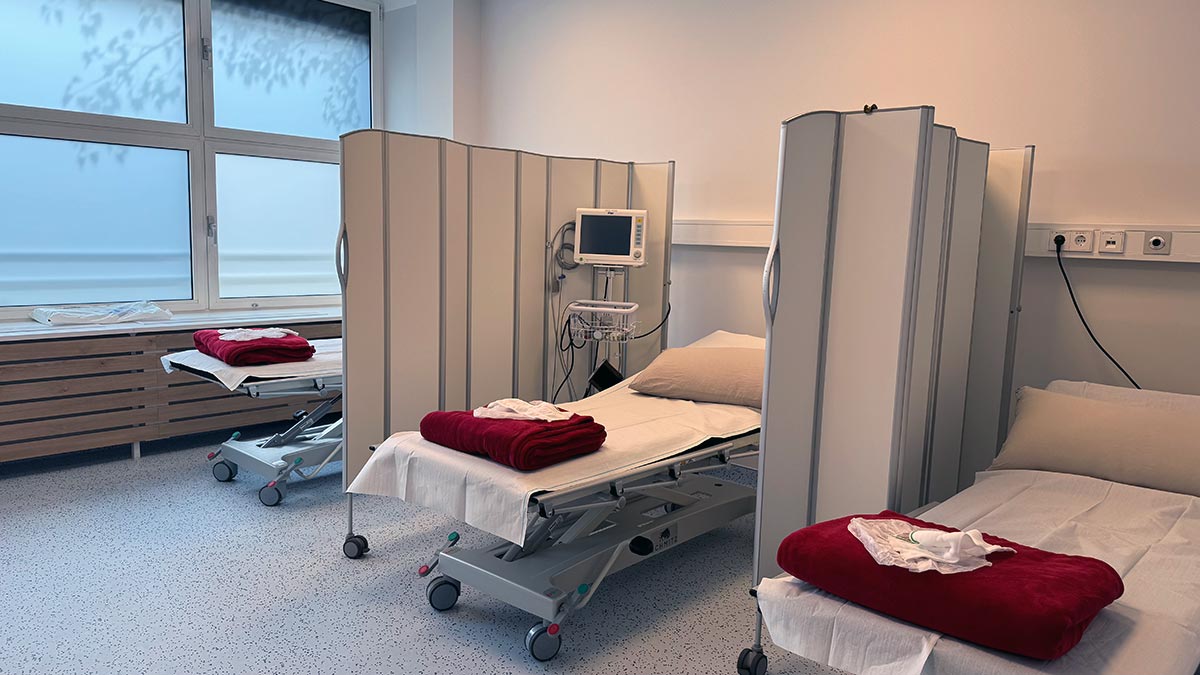 Recovery area
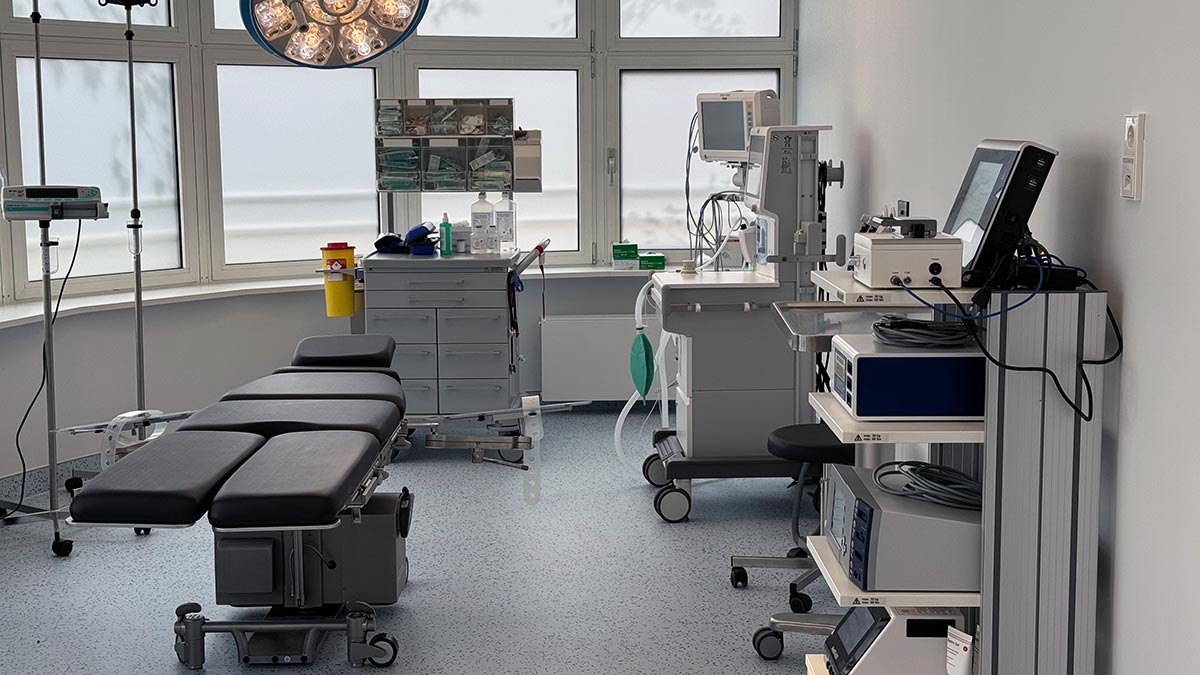 Procedure room
 Exterior view
 Registration
Real photos of our premises — no stock photography.
VenaZiel MVZ
10969 Berlin
Write to us whenever it suits you — no waiting on hold, no lost lunch break. Our team will reply as quickly as possible, and you’ll have the answer in writing for your reference.
For urgent matters and anything that’s difficult to plan.
Usually 9:00 AM – 3:00 PM · Fri until 1:00 PM
Frequently Asked Questions
Frequently asked questions about anal fistulas
Does an anal fistula heal on its own?
No. An anal fistula is a tract that has formed between the anal canal and the skin — it does not close by itself. Secretion and inflammation may temporarily subside, making it seem better, but the tract remains. If left untreated, abscesses will keep recurring.
What does the abscess have to do with it?
It is usually at the beginning. A small gland in the anal canal becomes inflamed, the pus seeks a way out — and the channel it leaves behind is the fistula. This is why many people only discover their fistula after an abscess has been drained.
Will I be incontinent afterward?
This is the most important question for this procedure, and that is why we address it proactively. The sphincter muscle determines the choice of procedure: if the fistula only runs through a small portion, it can be laid open without continence suffering. If it runs through a larger portion, it will not be laid open — then procedures that preserve the muscle are considered. The decision is made after the examination, not before.
How long does it take to heal?
After a fistulotomy, the wound heals from the inside out and remains open for a few weeks — it is cared for during this time. Muscle-preserving procedures have smaller wounds but sometimes require several steps. A seton drainage remains in place for weeks and is not a final procedure, but a preparation.
Does the fistula recur?
This is the second honest question. Recurrence is not uncommon with anal fistulas, especially with complex courses. This is exactly why the procedure with the highest success rate is not chosen in every case — it is often also the one with the greatest risk to the sphincter. What we propose to you weighs both.
How can I tell if it is urgent?
By rapidly increasing pain at the anus, a reddened, pressure-sensitive swelling, and fever with chills. This suggests an abscess, and it should be drained quickly — not waited out. In these cases, please call us: (030) 2529 9482.
The tract does not disappear on its own — the next abscess will come
Between two flare-ups, it often seems as if the problem has resolved itself. That is exactly the moment when the course can be clarified best: without inflammation, without time pressure.
Prefer to write? [email protected]
By phone at (030) 2529 9482, usually staffed 9:00 AM – 3:00 PM, Fridays until 1:00 PM
Open Mon.–Thu. 8:00 AM–4:00 PM · Fri. 8:00 AM–2:00 PM