

Center for Spinal Medicine and Orthopedics | VenaZiel Berlin MVZ
Back pain is the most common complaint in German medical practices — and is still too often associated with surgery, which in most cases is not necessary at all. This article explains why back pain occurs, what modern treatment options are available, and when minimally invasive therapy is the better choice.
Key points at a glance:
-
Back pain has many causes — muscle tension, herniated discs, spinal stenosis, or facet joint wear. Only an accurate diagnosis reveals what’s really behind it.
-
Most back pain can be treated without surgery — with conservative measures or targeted minimally invasive procedures.
-
Procedures such as periradicular therapy (PRT) or facet infiltration work precisely, are performed on an outpatient basis, and do not require general anesthesia.
-
There are warning signs that require immediate action — you’ll recognize them below.
Read on if you want to understand where your back pain really comes from — and which treatment might specifically be right for you.
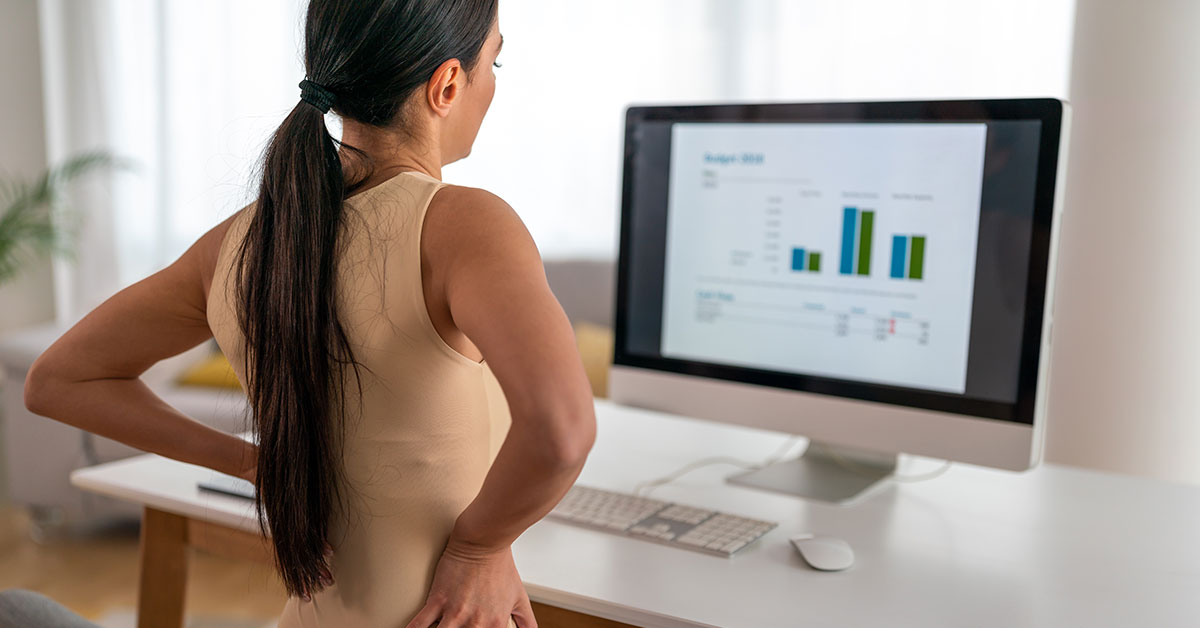
When back pain dominates daily life — you are not alone
It often starts harmlessly. A pulling sensation in the lower back after getting up. A stabbing pain when you bend down to tie your shoes. A tingling that radiates into your leg and won’t go away.
What began as occasional tension suddenly determines your entire daily life: you sleep worse, you avoid movement, you cancel appointments. And perhaps you’ve already had the unpleasant experience of someone saying: “In the end, only surgery will help.”
If this sounds familiar, you’re in good company. Back pain is one of the most common reasons why people in Germany see a doctor, are signed off work, or even retire early from working life.¹ The majority of all people experience at least one painful episode of back pain in their lifetime.
The good news: The vast majority of back pain can now be treated gently and specifically — without major surgery. Modern, minimally invasive spinal therapy has fundamentally changed treatment in recent years. Instead of a large incision, long hospital stay, and uncertain outcome, precisely controlled procedures are now available that work exactly where the pain originates, guided to the millimeter.
In this article, you’ll learn why your back hurts, what treatment options really exist, and when surgery is actually necessary — and when it’s not.
Why does the back hurt? The anatomy behind the pain
The spine is a masterpiece of structural engineering. It carries our entire body weight, protects the delicate spinal cord, and at the same time enables us to move in all directions.
For this system to function, many structures work closely together: 33 vertebrae, intervertebral discs in between as shock absorbers, small vertebral joints (facet joints), ligaments, muscles, and a dense network of nerves. Pain always occurs when one of these structures becomes unbalanced, inflamed, or irritates a nerve.
Often several causes play a role simultaneously — one of the reasons why careful diagnostics are so crucial.
The most common causes of back pain
Muscle tension and muscular imbalances
By far the most common cause. Prolonged sitting, lack of movement, one-sided strain, and stress lead to tense, hardened muscles.
This so-called nonspecific back pain is extremely unpleasant but rarely dangerous — and responds very well to conservative therapy.
Herniated disc (disc prolapse)
The intervertebral disc consists of a firm fibrous ring with a soft, gel-like core. Through wear or overload, the fibrous ring can tear and parts of the core protrude — the herniated disc (medically: disc prolapse).
If this protruding tissue presses on a nerve root, the typical radiating pain occurs — often into the leg (sciatica) or into the arm. Research shows that most herniations resolve on their own and do not require surgery.² Anyone who wants to have a herniated disc treated now has numerous minimally invasive options in Berlin.
Spinal stenosis (spinal canal narrowing)
With increasing age, discs and joints wear out, ligaments thicken. The canal in which the spinal cord and nerves run becomes narrower ( spinal stenosis). ). The typical picture: after a short walking distance, the legs hurt and weaken; when bending forward or sitting down, the pain subsides. Spinal stenosis treatment in Berlin is a common reason for consultation at our center.
Facet syndrome
The small vertebral joints — the facet joints — enable the mobility of the spine. Like any joint, they can wear out (facet joint arthritis) and become inflamed. Typical is a deep-seated, load-dependent back pain that intensifies when bending backward.
Facet syndrome is often overlooked — yet it can be treated specifically and effectively.
SI joint syndrome (sacroiliac joint dysfunction)
The sacroiliac joint (SI joint) connects the spine and pelvis. A dysfunction or irritation of this joint causes pain deep in the lower back, often on one side, which can radiate into the buttock or thigh. SI joint syndrome is not infrequently confused with a herniated disc — which is why accurate diagnostics are crucial.
Spondylolisthesis and degenerative changes
In spondylolisthesis (vertebral slippage), one vertebra shifts relative to the one below it. Symptoms range from symptom-free to severely painful — depending on the extent of the shift and the involvement of surrounding nerves.
Acute, subacute, or chronic? Why the time factor is crucial
Not all back pain is the same. Physicians distinguish according to duration:
- Acute back pain (under six weeks): Here, rapid pain relief and maintaining mobility are the priority.
- Subacute back pain (six to twelve weeks): A critical phase — this is often when it’s decided whether the pain heals or becomes chronic.
- Chronic back pain (longer than twelve weeks): The pain has often become “independent,” the nervous system has become hypersensitive. This requires a well-thought-out, multi-track treatment concept.
That’s exactly why: don’t wait too long. The earlier chronic back pain is professionally addressed, the better the chances of breaking the pain memory before it becomes established.
Attention: Warning signs — when you must act immediately
Most back pain is not life-threatening in the clinical sense. However, there are so-called red flags — warning signs that require immediate medical action:
- Sudden loss of bladder or bowel control
- Numbness in the saddle area (inner thighs, genital area)
- Rapidly increasing paralysis or loss of strength in a leg or arm
- Severe nocturnal pain without an apparent trigger, accompanied by fever or unintended weight loss
- Back pain after a fall or accident — especially with known osteoporosis
These signs may indicate cauda equina syndrome (compression of the nerve roots below the spinal cord) or another serious cause — and constitute a medical emergency. When in doubt, always: better to have it checked once too often than once too little.
The first step for back pain: precise diagnosis
Successful treatment does not begin with therapy — it begins with understanding. At the Center for Spinal Medicine and Orthopedics at VenaZiel Berlin , we therefore take time for a thorough examination. The crucial question is never just “Where does it hurt?” but: “Why does it hurt — and which structure is the true source of pain?”
Comprehensive diagnostics include:
- The detailed consultation (medical history): When, where, how severe? What improves it, what worsens it? These seemingly simple questions often provide the most valuable clues.
- Physical and neurological examination: Mobility, reflexes, strength, and sensation show whether and which nerves are affected.
- Imaging procedures: X-ray, magnetic resonance imaging (MRI), or computed tomography (CT) make the structures of the spine visible.
An important note that relieves many patients’ concerns: not every finding on an MRI image is also the cause of the symptoms. Many symptom-free people show disc bulges or signs of wear on imaging. The art lies in bringing the image into alignment with the actual symptoms. That’s exactly what distinguishes a true cause analysis from a mere image report.
Conservative therapy first: what comes before any procedure
Before we consider minimally invasive procedures or even surgery, we exhaust the possibilities of conservative therapy . For a large proportion of patients, this path alone leads to freedom from symptoms.
These include:
- Exercise and physiotherapy: Perhaps the most important component. Rest is counterproductive in most cases of back pain. Targeted exercise strengthens the supporting muscles and sustainably relieves the spine.
- Medication-based pain therapy: Used temporarily to break the vicious cycle of pain, protective posture, and tension.
- Manual therapy and osteopathy: Releasing blockages and improving mobility through targeted manual techniques.
- Heat, cold, and electrotherapy: Supportive for relieving acute tension.
- Back school and ergonomics advice: So that the pain does not return.
If these measures do not work sufficiently over an appropriate period of time or the symptoms are too severe, modern, minimally invasive procedures come into play.
Minimally invasive spinal therapy in Berlin: precision instead of large incision
This is the heart of modern pain therapy for the spine. The basic idea is strikingly simple: deliver the active ingredient exactly where the pain originates — via a fine needle, to the millimeter, under imaging guidance.
No large incision, no general anesthesia. In the vast majority of cases, performed on an outpatient basis, with short recovery time. These procedures are performed under fluoroscopy or CT guidance — the treating physician sees in real time where the needle tip is located and can place the active ingredient precisely. This increases both effectiveness and safety.
Periradicular therapy (PRT) — back injection with precision
Periradicular therapy (PRT) is one of the most established procedures for pain originating from an irritated nerve root — for example, in a herniated disc with sciatica symptoms. Under imaging guidance, a fine needle is guided directly to the affected nerve root. There, an anti-inflammatory medication, often combined with a local anesthetic, is administered.
The goal: to calm the inflammation around the nerve, reduce swelling, and break the pain cycle. Often several sessions are performed at intervals of a few days or weeks.
Epidural infiltration
In epidural infiltration , the active ingredient is introduced into the space surrounding the spinal cord and nerve roots (epidural space). This procedure is particularly suitable for widespread irritations, such as spinal stenosis or an extensive herniated disc.
Facet infiltration and facet joint denervation
When the small vertebral joints are the source of pain, the joint itself or the associated pain nerve can be specifically treated. In facet infiltration, an anti-inflammatory medication is delivered directly to the joint.
If relief is only temporary, facet joint denervation (thermal denervation / radiofrequency therapy) may be useful: the pain-conducting nerve is specifically disabled using controlled heat so that it no longer transmits pain. The effect can last many months.
SI joint infiltration
For pain from the sacroiliac joint, the active ingredient is introduced precisely into this joint — also under imaging guidance to ensure maximum precision.
The advantages of minimally invasive procedures at a glance
- Gentle: only a fine needle prick instead of a large incision
- Usually outpatient, without general anesthesia
- Targeted: the active ingredient acts exactly where the pain originates
- Short recovery time and rapid return to daily life
- Low risk of complications when performed professionally
- Often the decisive bridge to avoid surgery
When is surgery really necessary for back pain?
As much as we prefer gentle approaches — there are situations where surgical intervention is the right and sometimes even the urgently required path. These include:
- Cauda equina syndrome with bladder or bowel dysfunction — a medical emergency
- Rapidly progressing, significant paralysis
- Unmanageable pain despite consistent conservative and minimally invasive therapy
- Pronounced spinal stenosis with severely limited walking distance and high level of suffering
What’s crucial: The question “operate or not?” should never be answered hastily, but always within the framework of a graduated, individualized treatment strategy. Serious spinal medicine does not see surgery as a standard solution, but as a targeted option for clearly defined situations. For many patients, major surgery can be avoided through consistent therapy.
What you can do yourself for your back
The best therapy is the one you don’t need. Even though not all back pain is preventable, you can significantly reduce the risk and actively support your recovery:
- Stay active. Regular, moderate activity — walking, swimming, cycling — keeps the discs nourished and the muscles strong.
- Strengthen your core muscles. A stable corset of abdominal and back muscles noticeably relieves the spine.
- Avoid prolonged, rigid sitting. Change position frequently and stand up in between.
- Lift properly. Lift from the legs, not from the back — carry heavy loads close to the body.
- Watch your weight. Every kilogram less permanently relieves the spine.
- Take stress seriously. Mental tension literally affects the back — relaxation techniques such as progressive muscle relaxation or yoga can help effectively.
Why VenaZiel Berlin for your back pain?
At VenaZiel Berlin MVZ, we pursue a clear standard: we treat people, not just images. For you, this means:
- Careful cause analysis instead of hasty conclusions — we search for the true trigger of your pain.
- A graduated treatment concept — from conservative to minimally invasive to, if necessary, surgical recommendation. Always as gentle as possible, as intensive as necessary.
- Modern, precisely controlled procedures by experienced specialists.
- Understandable explanation at eye level — you should be able to understand and support every treatment decision.
- Multiple [LINK: locations in Berlin and Frankfurt am Main → Contact/Locations page VenaZiel] for local, easily accessible care.
Our goal is not to rush you through the consultation, but to open a path back to a mobile, low-pain life for you.
Frequently asked questions (FAQ) about back pain and spinal therapy
When should I see a doctor for back pain?
Occasional, mild back pain without accompanying symptoms often resolves on its own. Seek medical help if the pain persists for more than one to two weeks, keeps recurring, radiates into the arm or leg, or is accompanied by numbness, tingling, or loss of strength.
Warning signs such as bladder or bowel dysfunction, numbness in the saddle area, or rapidly increasing paralysis constitute an emergency — immediate medical attention is required here.
What is periradicular therapy (PRT) and how does it work?
PRT is a minimally invasive procedure in which a fine needle is guided precisely to the irritated nerve root under imaging guidance. There, an anti-inflammatory medication is administered that calms the inflammation and relieves pain. The procedure usually takes only a few minutes, is performed on an outpatient basis, and without general anesthesia. Often several sessions are recommended.
Can a herniated disc heal without surgery?
Yes. The vast majority of herniated discs resolve on their own under conservative and minimally invasive therapy within weeks to months.² Surgery is only required for a small proportion of patients — mainly in cases of increasing paralysis or emergency symptoms.
Is minimally invasive spinal treatment painful?
The procedure itself is generally well tolerated. Many patients describe it as significantly less unpleasant than expected. After treatment, there may be a temporary feeling of pressure or a brief intensification of symptoms, which subsides quickly.
How quickly does a PRT or infiltration work?
This varies individually. The local anesthetic contained can bring immediate noticeable relief, which may initially subside again. The actual, sustained effect of the anti-inflammatory component usually sets in within a few days and can build up over several sessions.
How long does recovery take after a minimally invasive procedure?
In most cases, you can return to your normal daily routine on the same day or the next day. You should avoid intensive physical exertion for a short time. We will discuss the exact recommendations with you individually.
What is the difference between a herniated disc and spinal stenosis?
In a herniated disc (disc prolapse), protruding disc tissue presses on a nerve root — often with radiating pain into the leg. In spinal stenosis (spinal canal narrowing), the entire spinal canal is narrowed due to wear; typical is a decreasing walking distance that improves when bending forward or sitting down. Both conditions can often be treated minimally invasively.
Does health insurance cover the costs for back injections or infiltrations?
This depends on the procedure, the medical indication, and your insurance status. Many established procedures are covered by insurance with appropriate indication, others are classified as individual health services (IGeL). We will inform you transparently about the expected costs and coverage before each treatment.
When is surgery unavoidable for back pain?
Surgery is mandatory in emergencies such as cauda equina syndrome with bladder or bowel dysfunction, as well as in cases of rapidly progressing paralysis. Beyond that, it may be useful if all conservative and minimally invasive measures have been exhausted over a longer period and the level of suffering remains high. For many patients, major surgery can be avoided through consistent therapy.
I have had back pain for years — is treatment still worth it?
Yes — even with long-standing, chronic symptoms, significant improvement can often be achieved. Especially with long-term suffering, a well-thought-out, multi-track concept is crucial that specifically addresses the source of pain and gradually calms the hypersensitive nervous system. The first step is always a careful new cause analysis.
What distinguishes the Center for Spinal Medicine and Orthopedics at VenaZiel from a general orthopedic practice?
At the Center for Spinal Medicine and Orthopedics at VenaZiel Berlin MVZ, we combine specialized spinal diagnostics with a broad spectrum of modern minimally invasive procedures — from PRT to radiofrequency therapy — which in this combination are often not available in a general orthopedic practice. We consistently follow the principle “as gentle as possible, as intensive as necessary” and accompany patients through the entire treatment process — from diagnosis to aftercare — at multiple locations in Berlin and Frankfurt am Main.
Your path back to a pain-free life begins here
Back pain does not have to be a permanent condition you must accept. With a precise diagnosis and a modern, graduated treatment concept, significant relief can be achieved in the vast majority of cases — gently, specifically, and usually without major surgery.
At the Center for Spinal Medicine and Orthopedics at VenaZiel Berlin MVZ , we accompany you on this path. Schedule your appointment now for individual consultation and examination — so that movement can become easier again.
Schedule an appointment now — your back deserves the best possible care.
References
- Robert Koch Institute (Federal Health Reporting — Back Pain in Germany); DAK Health Report (current edition)
- AWMF S2k Guideline “Lumbar Radiculopathy”; Zhong M. et al. (2017): “Incidence of spontaneous resorption of lumbar disc herniation”, PubMed