Vein Biometry & Modern Varicose Vein Treatment with VenaSeal in Berlin
How modern phlebology at VenaZiel combines precision medicine with empathy—at our locations in Berlin-Mitte (Friedrichstraße), Kreuzberg, and Frankfurt am Main.
Varicose veins and venous insufficiency affect a large part of the population—and are far more than a cosmetic issue. Because each person’s venous system is as individual as a fingerprint, modern varicose vein treatment today relies on tailored diagnostics and gentle procedures such as VenaSeal™.
Medically tested by:
Dr. Hamidreza Mahoozi, FEBTS, FCCP, F.Z. Phlebologie
Updated:
July 20, 2026
In short:
- Varicose veins develop when the venous valves no longer close properly and blood pools in the legs.
- Not every varicose vein needs to be treated — however, many patients benefit significantly from therapy.
- Minimally invasive procedures such as VenaSeal™, laser and radiofrequency are now the standard — usually outpatient and with little downtime.
- The choice of procedure is based on the individual ultrasound findings (vein mapping).
In the following, you will learn why every vein tells its own story — and how we at VenaZiel derive the appropriate treatment for you from it.
Human anatomy, on closer inspection, is far more complex than schematic diagrams in textbooks can convey. In phlebology, the study of venous diseases, one insight has solidified over decades: A person’s venous system is as individual as their fingerprint.
This biological uniqueness is more than a fascinating natural phenomenon. It forms the foundation for modern, tailored varicose vein treatment. When patients come to us, they bring a very personal map of their life — rooted in their connective tissue, their hormones and their genetic history. Learn more about our vein treatments at the vein center here.
The Science of Uniqueness: Biometry and Vascular Patterns
The arrangement of veins beneath the skin is a distinctive identifying feature. While fingerprints can be altered by injury or wear, vein patterns lie protected inside the body.
Biometric systems already use this fact today. Infrared sensors capture the hemoglobin-rich blood in the vessels and create a digital image — which shows clear differences even in identical twins.
This individuality begins early in embryonic development. The major main trunk veins such as the great saphenous vein or the small saphenous vein run similarly in most people. However, the fine branches, valve spacing and side branches are the result of a highly complex interplay of genetics and environmental factors.
Scientific studies show: Even the transition of the superficial veins into the deep system — the so-called saphenofemoral junction — exhibits its own characteristics in every person. This variance is precisely why standardized treatment is no longer appropriate in modern phlebology.
| Biometric Feature | Individuality | Security Against Imitation | Medical Relevance |
|---|---|---|---|
| Fingerprint | High (surface structure) | Medium (silicone impressions possible) | Low |
| Vein Pattern | Extremely high (subcutaneous structure) | Very high (liveness detection required) | Fundamental for surgical planning |
| Iris Scan | High (pigmentation) | High | Low |
| Facial Recognition | Medium to high (geometry) | Variable (AI susceptibility) | Low |
For medical practice, this has far-reaching consequences. In diagnostics, we make this uniqueness visible with high-resolution ultrasound — the so-called color Doppler ultrasound (duplex sonography).
This creates a vein mapping: a detailed map that documents the course of the vessels, the direction of blood flow and the function of each individual venous valve. Each valve acts like a valve in a complex piping system. If it no longer closes correctly, the hydrostatic balance of the leg gets out of sync. [1][2][3][4][5]
The Emotional Dimension: When Legs Become a Burden
Behind every diagnosis is a person with their own history of suffering. Venous diseases are not purely cosmetic flaws — even though they are often mistakenly classified as such.
The burden of visible spider veins or bulging varicose veins is profound and often underestimated. Many sufferers are ashamed of the appearance of their legs. Especially in summer, this leads to social withdrawal.
Hiding legs under long clothing in the heat is doubly burdensome. The warmth further dilates the vessels and intensifies the symptoms — and the feeling of reduced quality of life grows.
The suffering often develops gradually. It begins with a feeling of heaviness in the evening, throbbing in the calves or nocturnal leg cramps. Many describe their legs as “heavy as lead,” which significantly reduces the joy of movement.
Studies on quality of life in varicosis show something remarkable: For many, the psychological relief after successful treatment outweighs the optical improvement. Being able to wear short clothing again, walking pain-free again — this is often experienced as liberating.
Psychosomatics and Chronic Stress
An often overlooked factor is the influence of chronic stress on the venous system. Stress increases blood pressure and puts additional strain on already weakened vein walls. This can increase the risk of venous insufficiency.
In addition, stress promotes inflammatory processes that can attack the inner vascular lining (endothelium). This creates a cycle: The visible signs of venous weakness burden the psyche, and the resulting stress worsens the physical situation.
That’s why at VenaZiel we view vein health holistically — including relaxation techniques and psychosocial support to break this cycle.
| Symptom | Physical Impact | Emotional Impact |
|---|---|---|
| Heavy Legs | Restricted mobility | Frustration, loss of vitality |
| Spider Veins | Cosmetic blemish | Shame, hiding legs |
| Nocturnal Cramps | Sleep disturbances | Exhaustion, irritability |
| Skin Changes | Risk of inflammation | Fear of chronic wounds |
Pathophysiology: Why Veins Fail
To understand why individualized therapy is so important, it’s worth looking at the processes in the body. The venous system performs heavy-duty work daily: It transports blood from the legs back to the heart against gravity. This is made possible by the interplay of venous valves and the calf muscle pump.
If the valves no longer close correctly — due to hereditary connective tissue weakness, hormonal influences or prolonged standing — reflux occurs. Blood flows back into the legs following gravity. [1][2]
[Image placement 3: Illustration — Cross-section of a healthy vein compared to a varicose vein with defective venous valve (reflux)] [Alt text: Healthy vein vs. varicose vein with defective venous valve — cause of venous insufficiency]
The permanently elevated pressure causes the superficial veins to expand, twist and eventually become visible as varicose veins. This is far more than an aesthetic problem.
Pronounced chronic venous insufficiency (CVI) affects a significant portion of the population. It is associated with an increased risk of complications — from phlebitis to thrombosis to venous leg ulcers ( Ulcus cruris) in the late stage. A large population study from Mainz (Gutenberg Health Study) also showed an association between the severity of venous weakness and cardiovascular risk — this is an observed association, not a proven causal relationship. [1][2][9]
The Role of Hormones and Lifestyle
Women are more frequently affected due to hormonal factors. The sex hormones estrogen and progesterone loosen connective tissue — necessary for pregnancy, but at the same time a disadvantage because the vein walls become more compliant and susceptible to dilation.
During pregnancy, blood volume also increases significantly to supply the child. This increases the load on the venous valves. In addition, the pressure of the growing uterus on the pelvic veins further impedes drainage from the legs.
Modern lifestyle also takes its toll. Lack of exercise, obesity and hours of sitting or standing disable the natural muscle pump. Nicotine directly damages vessel walls and disrupts microcirculation.
Even diet plays a role: Too few dietary fibers promote chronic constipation. This increases pressure in the abdomen and impedes venous return.
Diagnostics: Precision Through Technology
Modern phlebological diagnostics resembles detective work. It always begins with a detailed conversation — the Medical history. Here we capture not only current symptoms, but also family predisposition and life circumstances.
The physical examination is ideally performed while standing. Under the influence of gravity, varicose veins show their maximum extent.
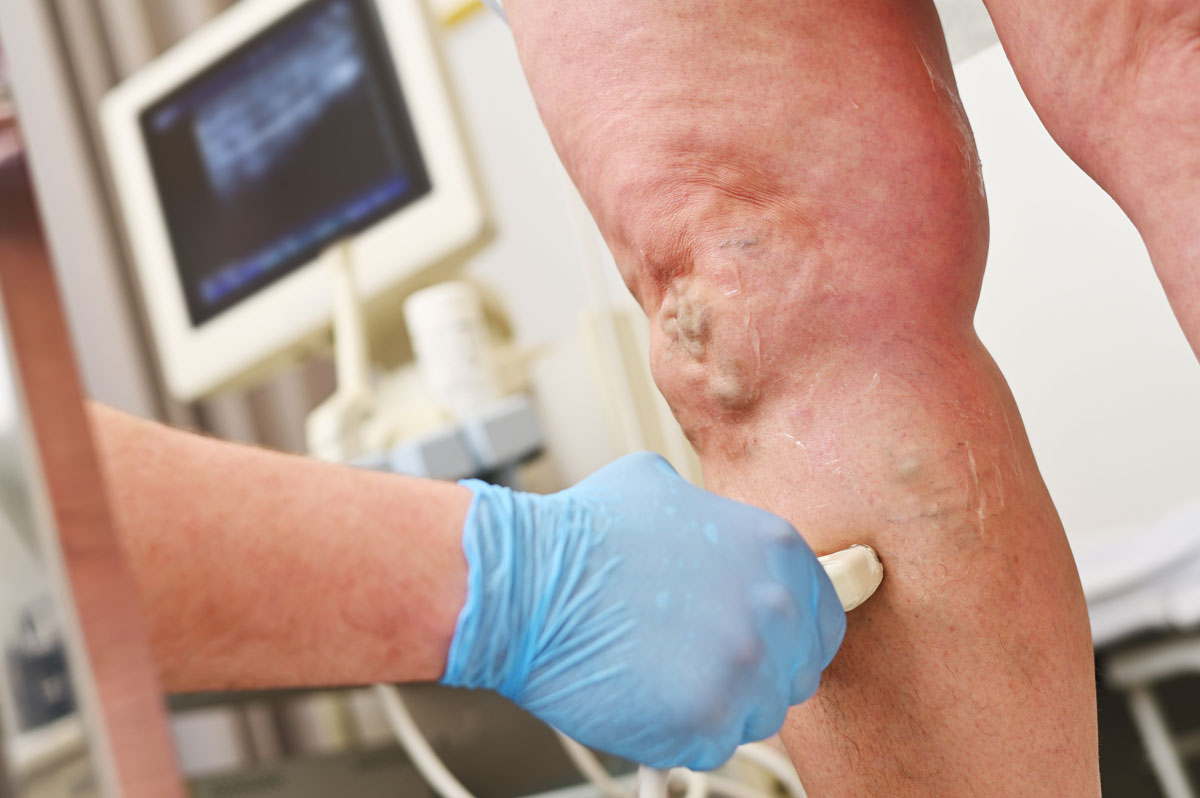
The gold standard is high-resolution duplex sonography. It combines the classic ultrasound image with a color representation of blood flow — completely painless, without contrast agents and without radiation exposure.
This way we see in real time exactly where a valve is defective, how large the vessel diameter is and whether deeper vein sections are affected. This mapping is the basis for deciding which procedure best fits the individual “fingerprint” of the veins.
[Image placement 4: Photo — Doctor performing a color Doppler ultrasound examination (duplex sonography) on a patient’s leg] [Alt text: Color Doppler ultrasound of leg veins — vein mapping before varicose vein treatment]
| Diagnostic Step | Method | Goal |
|---|---|---|
| Medical History | Consultation | Capture symptoms, genetics & lifestyle |
| Inspection | Examination while standing | Visible varices, edema, skin changes |
| Duplex Sonography | Ultrasound (color) | Localize reflux, vein mapping |
| Functional Test | Muscle pump test | Measure efficiency of venous pump |
Treatment Procedures Compared: Tailored Instead of Standard
Varicose vein treatment in Berlin and Frankfurt — from VenaSeal™ to sclerotherapy.
The days when surgical removal of veins — stripping — was the only option are over. Today, minimally invasive procedures are at the forefront, barely restricting daily life. Which procedure we recommend results from the mapping data.
VenaSeal™: The Biological Adhesive Closure
VenaSeal™ is the most modern form of vein therapy. We permanently close the diseased vein with a biocompatible medical adhesive ( cyanoacrylate). Learn more about VenaSeal™ treatment at VenaZiel. The fundamentals of modern phlebology are summarized by the German Society for Phlebology and Lymphology.
Through a tiny puncture, a catheter is inserted into the vein under ultrasound guidance. As the catheter is withdrawn, the adhesive is distributed step by step, and the vein closes under gentle external pressure.
The advantages are remarkable. Since no heat is used, no extensive anesthesia ( tumescent anesthesia) is necessary. The risk of thermal nerve irritation is significantly lower compared to thermal procedures — this makes VenaSeal™ particularly suitable for vein sections close to cutaneous nerves, such as on the lower leg.
Also, compression stockings are not required after the procedure in many cases. Your treating physician will determine individual aftercare based on your findings. Especially in summer, this is a great relief for many.
Endovenous Laser Therapy (EVLT) and Radiofrequency
These thermal procedures use light or high-frequency current to heat the vein wall from the inside. Radiofrequency works in a controlled manner at about 120°C; with laser, even higher temperatures occur locally at the fiber tip. In both cases, the collagen in the wall shrinks and the vessel closes. [8]
Both methods are very effective and have been well documented scientifically for decades. To protect the surrounding tissue from heat, however, a tumescent fluid is injected around the vein — this requires multiple punctures. After the procedure, compression stockings are usual for one to two weeks. [1][2][3][4][5]
Sclerotherapy: The Power of Foam
For spider veins and smaller side branches, sclerotherapy is the treatment of choice. A sclerosing agent is injected into the vein and triggers a reaction that causes the vessel wall to adhere.
In foam sclerotherapy the agent is foamed. This increases the contact surface with the vein wall, which enhances effectiveness for larger side branches.
[Image placement 5: Infographic — Comparison of the four procedures (VenaSeal, laser/radiofrequency, sclerotherapy, stripping) by invasiveness and aftercare] [Alt text: Comparison of VenaSeal, laser, radiofrequency and stripping for varicose vein treatment at a glance]
| Criterion | VenaSeal™ | Laser / Radiofrequency | Stripping (classic) |
|---|---|---|---|
| Invasiveness | Minimal (1 puncture) | Minimal (1 puncture + tumescence) | High (multiple incisions) |
| Anesthesia | Punctual | Tumescent (local) | General / spinal |
| Heat Generation | No | Yes | No |
| Nerve Risk | Very low | Low (heat) | Medium (mechanical) |
| Compression Stocking | Usually not necessary | Yes (1–2 weeks) | Yes (4–6 weeks) |
| Immediate Activity | Yes | Yes | Limited |
Scientific Evidence and Long-Term Results
The effectiveness of modern procedures is well documented. The VeClose study showed, for example, that the closure rate of VenaSeal™ after five years was around 94% — comparable to the values of radiofrequency ablation. [10]
A significant advantage of minimally invasive methods is the significantly lower rate of complications such as infections or deep vein thrombosis (DVT). Independent patient information is provided by Gesundheitsinformation.de (IQWiG). While classic stripping can involve hematomas and longer downtimes, endovenous procedures often allow return to work the next day.
Especially for older people or patients with increased thrombosis risk, a procedure like VenaSeal™ is a gentle alternative. It barely strains the cardiovascular system and does not require general anesthesia. It is also aesthetically convincing: Without incisions, no scars form and the skin remains intact.
Clinical note: The mentioned closure rates and comparison values refer to published study data (including VeClose). The individual suitability of a procedure always depends on the duplex findings, vessel diameter and course of the affected vein.
Prevention: Caring for Your Vascular Fingerprint
Even after successful treatment, caring for the veins remains an ongoing task. A healthy lifestyle is the best protection against recurrence of varicose veins ( recurrence).
Movement as Basic Therapy
Regular movement is crucial. Walking is the simplest and most effective exercise because it rhythmically activates the calf muscle pump.
These activities are particularly recommended:
- Swimming — cools the legs and acts like natural compression through water pressure.
- Cycling — keeps the calf pump moving without straining the joints.
- Yoga — especially inverted poses like shoulder stand or simply elevating the legs promote venous return.
Nutrition and Fluids for Strong Vessels
A vein-healthy diet is rich in antioxidants — found in berries, citrus fruits and green leafy vegetables, they protect the vascular lining from free radicals. Omega-3 fatty acids from fatty fish or nuts have anti-inflammatory effects.
Adequate fluid intake is equally important: At least 1.5 to 2 liters of water per day supports healthy circulation and venous return.
| Nutrient Group | Examples | Benefits for Veins |
|---|---|---|
| Antioxidants | Vitamin C, E, flavonoids | Protection of vessel walls |
| Dietary Fiber | Whole grains, vegetables, legumes | Pressure relief (digestion) |
| Omega-3 | Salmon, flaxseed oil, walnuts | Anti-inflammatory |
| Magnesium | Bananas, almonds | Prevention of leg cramps |
Proper Interaction with the Environment
Vein patients should avoid extreme heat. Extensive sauna sessions or sunbathing dilate vessels (vasodilation) and intensify congestion.
Cold, on the other hand, is good for veins. A cold shower over the calves in the morning or after a long day causes vessels to contract briefly and is perceived as soothing by many.
Shoe choice also matters: Flat shoes allow complete foot roll-off and really get the calf pump going. High heels, on the other hand, almost completely disable it.
Economics and Insurance Aspects
The decision for modern therapy is often also a financial question. In Germany, the cost structure is complex and depends heavily on individual insurance situation.
The costs for VenaSeal™ treatment range from approximately €2,300 to €3,700 per leg, depending on the extent. Laser or radiofrequency therapies often range between €1,200 and €2,500. In a personal consultation, we clarify individual reimbursement options in advance so that financial security exists from the start.
Clinical note: The mentioned price ranges are guideline values and do not replace a binding cost estimate. Reimbursements by private and statutory health insurance vary depending on tariff, indication and findings. Individual clarification takes place during the consultation.
Summary and outlook
The realization that veins are as individual as a fingerprint has fundamentally changed phlebology. Today, we no longer treat vessels according to a rigid scheme; instead, we develop a dedicated strategy for each person—tailored to medical necessity, aesthetic wishes, and individual life circumstances.
The combination of precise color Doppler diagnostics and minimally invasive methods such as VenaSeal™ allows us to treat venous disease more gently than ever before.
Looking ahead promises further refinement. Artificial intelligence in ultrasound diagnostics will help identify reflux patterns even faster and more accurately in the future. Yet despite all the technology, one thing remains unchanged: the person is at the center.
The real reward of our work is the relief someone feels when, after years of shame and pain, they can move through life with a light step again.
Vein health is an essential part of our vitality. Preserving or restoring it requires experience and a deep understanding of the uniqueness of each case. Anyone who invests in their veins today secures mobility and quality of life for the decades to come—this is not a question of vanity, but a decision for an active, pain-free life.
Our message to those affected is clear: Don’t wait until symptoms dictate your everyday life. Modern phlebology offers solutions that are as individual as your own fingerprint. A consultation and expert mapping are the first step back to light legs—for veins that carry you safely and healthily through your life.
Book your appointment for a vein consultation in Berlin-Mitte (Friedrichstraße), Kreuzberg, or Frankfurt am Main. Everything about our Phlebology department can be found on our department page.
[Image placement 6: Photo — Active middle-aged person taking a relaxed walk in sunshine, focus on healthy, light legs] [Alt text: Active person with light, healthy legs after successful vein treatment]
Frequently asked questions (FAQ)
Is varicose vein treatment with VenaSeal™ painful?
Most modern procedures are minimally invasive and require only a tiny puncture. With VenaSeal™, no extensive anesthesia is needed because no heat is used. Most patients report only a slight feeling of pressure during the procedure.
Does health insurance cover the costs of vein treatment?
That depends on the procedure, findings, and your insurance situation. If medically necessary, established procedures are often covered in part or in full, while some modern methods may need to be paid privately depending on your plan. In a personal consultation, we clarify your individual reimbursement options (statutory and private health insurance) in advance.
How long does recovery take after the procedure?
Minimally invasive procedures are usually performed on an outpatient basis. Many people can return to their everyday routine the very next day. Whether and for how long compression stockings are needed depends on the chosen procedure and your findings— with VenaSeal™, they are not required in many cases.
Does every varicose vein need to be treated?
No. Not every varicose vein requires a procedure. Whether treatment makes sense depends on symptoms, findings, and the risk of possible secondary conditions. A color Doppler ultrasound (vein mapping) shows whether—and which—therapy is appropriate in your case.
What makes vein treatment at VenaZiel special?
We don’t treat according to a rigid scheme; instead, we create a tailored strategy for each person based on detailed vein mapping. This allows us to choose from the full spectrum of modern procedures—from VenaSeal™ to laser and radiofrequency to sclerotherapy—the option that best fits your individual findings. You can find us in Berlin-Mitte (Friedrichstraße), Kreuzberg, and Frankfurt am Main.
Sources
- Biometric identification systems – ITAS-KIT
- Special topographical relations between small arteries and the vena saphena magna at the junction with the vena femoralis – PubMed
- Why women are more often affected by spider veins and varicose veins – Hautzentrum Innenstadt Stuttgart
- Improve vein health naturally: Comprehensive guide – VenaZiel
- Preliminary review “Varicose vein surgery”, Rapid Report – IQWiG
- When legs feel heavy: Venous disease in summer – Venendiagnostik Bad Homburg
- Remove spider veins Dortmund – Westfalenklinik.de
- van den Bos R.R. et al.: Temperature profiles of endovenous laser, radiofrequency and steam ablation – PubMed
- Prochaska J.H. et al.: Chronic venous insufficiency, cardiovascular disease, and mortality (Gutenberg Health Study), Eur Heart J 2021 – Oxford Academic
- Morrison N. et al.: Five-year extension study (VeClose), cyanoacrylate closure vs. radiofrequency ablation – PubMed