
Procedures at the Vein Center
Microfoam therapy
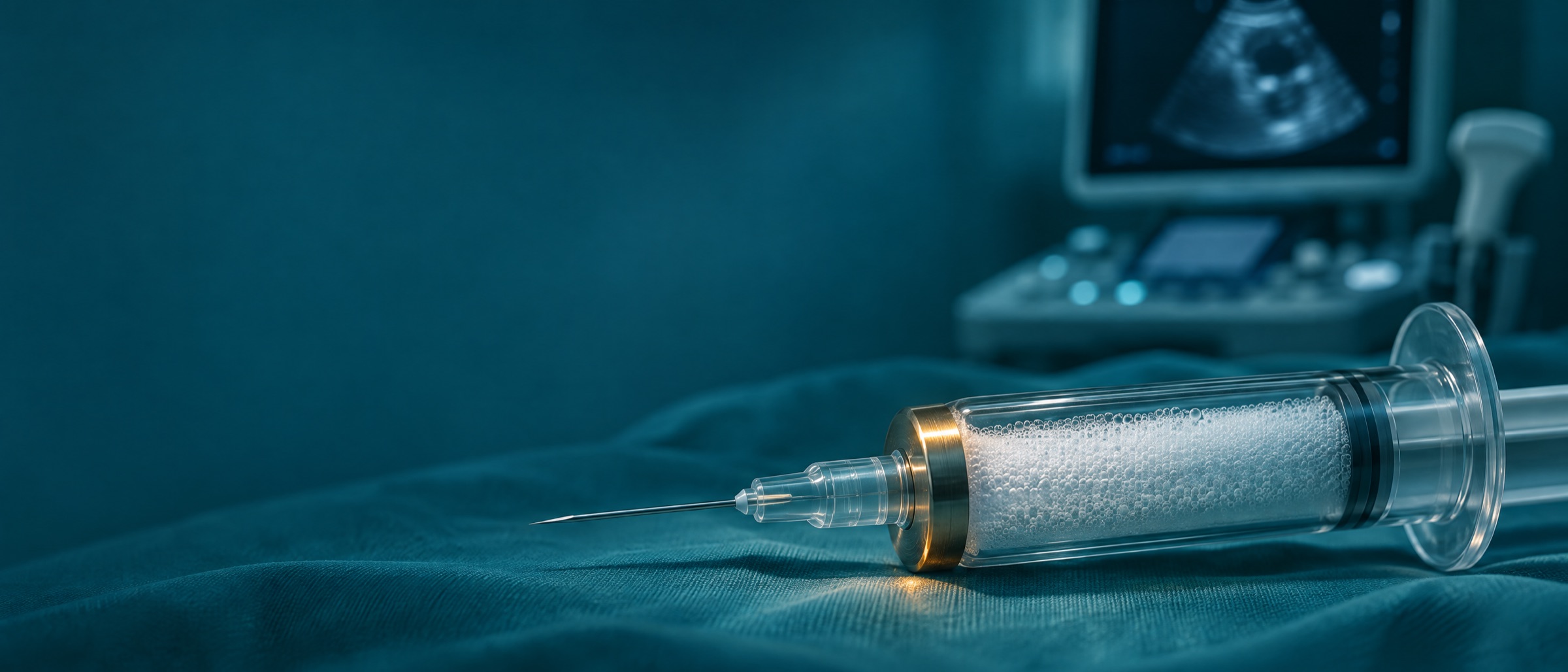
A foamed sclerosing agent is injected into the diseased vein under ultrasound guidance. The vein walls stick together, and the vein is broken down by the body — without incisions and without anesthesia.
Heat
without heat
Anesthesia
Without anesthesia, only the puncture
Compression stockings afterward
usually none
Back to everyday life
Showering, sports, and work without restrictions
Who it’s for
When this procedure is suitable
An ultrasound examination shows which procedure is right for you. This page tells you in advance what matters most.
-
What it’s intended for
- Smaller side branches and spider veins.
- When neither an incision nor anesthesia is desired: sclerotherapy leaves no scars.
- Sclerotherapy is also possible while taking anticoagulant medication.
-
When another procedure is a better fit
- We close leaking trunk veins from the inside — with vein glue, radiofrequency, or laser. To vein glue
- We do not perform foam sclerotherapy during pregnancy.
- In cases of migraines and a shunt between the left and right atrium, we plan particularly carefully and strictly adhere to the prescribed foam quantities.
Procedure
How the treatment works

01
Ultrasound and consultation
Using duplex ultrasound, we see which veins should be treated. We then discuss the procedure, the process, and the costs.
02
Without anesthesia
Anesthesia is not necessary, and neither is an incision. Only the puncture of the fine cannula can be felt.
03
Foam under ultrasound control
The sclerosing agent is foamed with air and introduced into the diseased vein under ultrasound guidance. This allows the amount to be precisely controlled.
04
The vein sticks together
The agent irritates the vein wall, causing the walls to stick together. The closed vein is broken down by the body over time.
05
Follow-up
We check the result using ultrasound. We then recommend follow-up examinations at intervals of one to two years.
Afterward
What to expect after treatment

Compression stockings
Compression stockings are usually not necessary after sclerotherapy.
Everyday life and work
Daily showering, sports, and all work activities are possible without restriction. In most cases, no inability to work is expected.
Follow-up and prevention
Even after sclerotherapy, check-ups at intervals of one to two years are important — along with sufficient exercise and endurance sports such as jogging, cycling, or swimming.
Risks
Risks and side effects
Every procedure carries risks. We will explain these to you in detail before treatment.
- Brownish spots and hardeningOne of the most common consequences of sclerotherapy: brownish spots and hardening along the course of the treated vein. They can last for several weeks.
- InflammationInflammation can occur in the area of the treated vein.
- Deep vein thrombosisPossible as a rare consequence; the risk is less than one percent.
- Scintillating scotomata and bronchospasmsShort-term visual disturbances or spasms of the bronchi occurred in 0.21 percent of cases. For this reason, we plan particularly carefully in cases of migraines and a shunt between the atria.
- Recurring varicose veinsVaricose veins can recur after any treatment (recurrent varices). This is why follow-up examinations at intervals of one to two years are important.
- What else is possibleWe will discuss everything else during the consultation before the procedure — there’s also room for your questions there.
For comparison
The other procedures
We offer all four procedures at every location.

VenaSeal™ vein adhesive
A medical adhesive is used via a catheter to close the vein, without heat. Suitable for leaky truncal veins.
Learn moreRadiofrequency
A catheter heats the vein wall from the inside until it closes. Suitable for leaky truncal veins when a heat-based procedure is appropriate.
Learn moreLaser
A probe emits laser light around the vein wall and closes the vein as it is withdrawn. Also suitable for varicose veins following a previous surgery.
Learn more



Costs
What the treatment costs
Statutory and private health insurers cover the examination and medically necessary treatment of varicose veins. Removing spider veins is usually a cosmetic treatment that you pay for yourself. We clarify coverage with you in advance.
Statutory health insurance
Ultrasound and medically necessary vein treatments are covered by statutory health insurance. We will clarify with you before treatment whether your insurer covers a specific procedure such as VenaSeal.
Privately insured
A reimbursable service, billed according to the official fee schedule for physicians. You will receive a cost estimate before the procedure.
Without insurance coverage
Are you self-paying or not insured in Germany? Then we discuss the costs at the first examination, and you will receive a written cost estimate before anything is decided.
Is sclerotherapy painful?
Apart from a short puncture, it is almost painless. An incision and anesthesia are not necessary.
Will scars remain?
No. Unlike a surgical procedure, microfoam therapy leaves no scars.
Which agent is used?
An approved alcohol-based sclerosing agent, in concentrations from 0.25% to 3%. The larger the diameter of the vein to be treated, the higher the chosen concentration.
Will I need compression stockings afterward?
Usually not. Showering, sports, and work are possible without restriction.
Does the health insurance company cover the costs?
Statutory and private health insurance companies cover medically necessary treatments. In contrast, the removal of spider veins is usually an aesthetic treatment that you pay for yourself. We will clarify the coverage of costs with you in advance.
Who and where
Treatment is available at all locations
Specialists in vascular surgery, phlebology, and angiology treat you at four locations in Berlin — Friedrichstraße 95, Charlottenstraße 13, Schicklerstraße 5-7, and Marburger Straße 17 — as well as at Bockenheimer Landstraße 33-35 in Frankfurt am Main. You can find out who works where and opening hours at the Vein Center.

Date
Let’s take a look at your veins first
Ultrasound shows us whether and how treatment should proceed.