Vein check before hip and knee surgery: Why varicose veins should be evaluated before joint replacement
Varicose veins more than double the risk of thrombosis after joint replacement. When a vein check before hip and knee surgery is useful and how it works.
Medically tested by:
Bahmann
Updated:
October 30, 2026
Anyone planning a new hip or knee joint thinks about the surgery date, rehab, and finally being able to walk pain-free – but rarely about their own leg veins. Yet a vein check before hip and knee surgery is a simple way to identify a well-documented additional risk: varicose veins more than double the risk of thrombosis after joint replacement.
In brief:
- After hip and knee replacement, the risk of thrombosis is as high as after almost any other procedure.
- According to a meta-analysis of over 265,000 patients, pre-existing varicose veins more than double this risk.
- A painless ultrasound examination (duplex ultrasound) shows in about 20 to 30 minutes whether your veins are healthy.
- A diseased main vein can be closed beforehand on an outpatient basis – for example with VenaSeal™, without heat and usually without compression stockings.
Ideally, you should plan your vein check before hip or knee surgery as soon as the decision for a prosthesis has been made. Read on to find out exactly what the studies show, what applies to foot surgeries like hallux correction, and how the process works at VenaZiel on Friedrichstraße in Berlin-Mitte.
Joint replacement: The procedure with the highest risk of thrombosis
Hip and knee replacement surgery are among the most successful procedures in modern medicine. However, they also fall into the highest risk category for venous thromboembolism (VTE) – meaning deep vein thrombosis and pulmonary embolism.
The reasons are well understood:
- During surgery, the leg is held in an unusual position for an extended period.
- Bone and marrow cavity are opened, and tissue is stretched.
- Blood pools in the leg veins.
- This is followed by days of limited mobility.
Without medication-based thrombosis prevention, the medical literature describes rates of deep vein thrombosis after hip or knee replacement of 40 to 60 percent, and even up to 70 percent in older studies. Only consistent prevention drastically reduces this risk – with low-molecular-weight heparin, direct oral anticoagulants, or, under certain conditions, acetylsalicylic acid (aspirin, ASA).
The aspirin option is new: it was added with the S3 guideline “Prevention of Venous Thromboembolism” (AWMF 003-001), updated in January 2026. However, the guideline explicitly recommends aspirin-based prevention only for patients without an elevated risk of thrombosis. And this is exactly where veins come into play.
Even with prevention, some residual risk remains
A US database analysis of 988,675 hip and knee replacements (PearlDiver) found that in routine care – where prevention is standard – 1.5 percent of patients developed an acute venous thromboembolism within three months of the procedure. A prospective study of 499 patients in Belgrade found a rate of symptomatic thromboembolism of 2.6 percent – occurring during the hospital stay alone.
In Germany alone, around 400,000 hip and knee replacements are implanted every year. These percentages therefore represent not abstract statistics, but thousands of real patients.
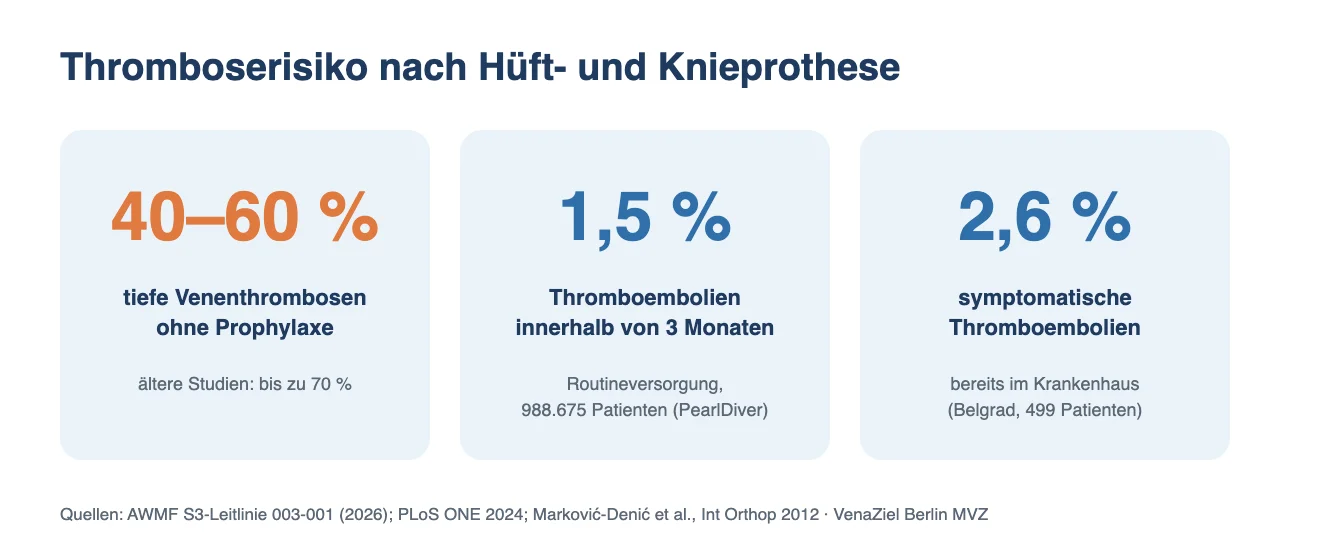
Risk of thrombosis after hip and knee replacement with and without prevention. Graphic: VenaZiel Berlin MVZ · Data: AWMF S3 Guideline 003-001, PLoS ONE 2024, Marković-Denić et al. 2012
Varicose veins double the risk of thrombosis after knee and hip surgery
That varicose veins (varicosity) are a risk factor for thrombosis is textbook knowledge. How large this effect actually is has long remained unquantified. Reliable data is now available.
Large cohort study: fivefold increased risk of thrombosis
A cohort study from Taiwan, published in 2018 in the Journal of the American Medical Association (JAMA), compared 212,984 adults with varicose veins to an equal number of control subjects without varicose veins. The average observation period was more than seven years.
The result: people with varicose veins had a 5.3-fold increased risk of deep vein thrombosis (hazard ratio 5.30) and a 1.7-fold increased risk of pulmonary embolism (hazard ratio 1.73). The authors emphasize that the association is clearly pronounced for thrombosis – whether it is causal remains an open question. For pulmonary embolism, the evidence is less clear.
Meta-analysis specifically for joint replacement
The University of Galway specifically examined this question for joint replacement patients in a systematic review with meta-analysis. Eleven observational studies involving a total of 265,194 patients after hip or knee replacement were evaluated. Of these, 2,188 had varicose veins at the time of surgery.
Patients with pre-existing varicose veins had a significantly increased risk of venous thromboembolism after joint replacement. The odds ratio was 2.37 (95% confidence interval 1.54 to 3.63) – meaning the risk was more than doubled (Westby et al., Phlebology 2023).
In the Belgrade study, varicosity was in fact the most common risk factor in the patient group, present in 27.9 percent of patients. It was associated with more than three times the likelihood of in-hospital thrombosis (odds ratio 3.13).
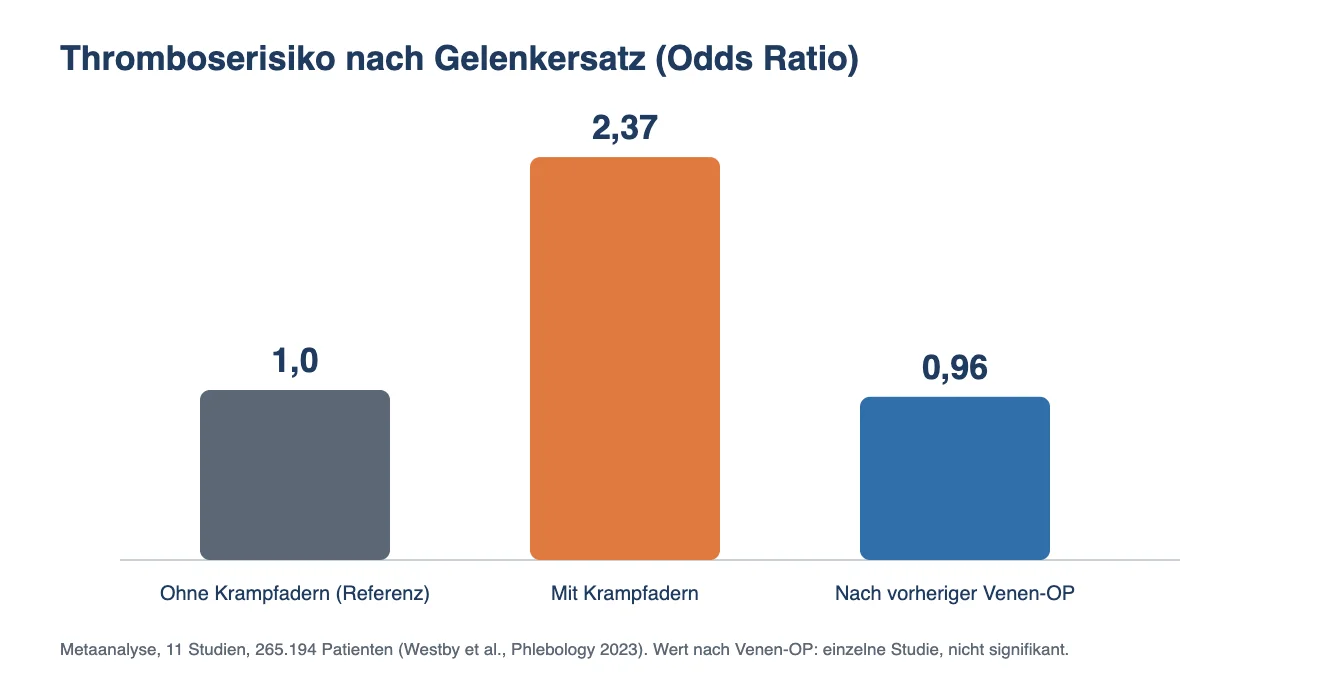
Varicose veins more than double the risk of thrombosis after joint replacement (odds ratio 2.37). Graphic: VenaZiel Berlin MVZ · Data: Westby et al., Phlebology 2023
Treated varicose veins: The added risk seems to disappear
A particularly revealing Scottish registry study, included in the meta-analysis, evaluated more than 100,000 hip and knee replacements. It compared patients whose varicose veins had already been treated surgically before joint replacement with patients who had no varicose veins at all.
The thrombosis risk of the group that had previously undergone vein surgery no longer differed from that of patients without varicose veins (odds ratio 0.96). This is so far the only study addressing this specific question, and the authors of the meta-analysis rightly point out the limited amount of data. Still, the signal clearly points in one direction: treating truncal varicose veins appears to neutralize the additional risk.
Why a diseased main vein increases the risk of thrombosis during joint surgery
The basic mechanism was already described by Rudolf Virchow in the 19th century: thrombosis occurs when blood flow is slowed, the vessel wall is damaged, and blood clots more readily (Virchow’s triad). We explain in detail how varicose veins and thrombosis are generally connected in our guide Understanding and Preventing Venous Thrombosis.
A joint replacement practically always meets the last two conditions: the surgery injures tissue, and the body responds with increased clotting tendency. In a healthy vein, the slowed blood flow is no longer a problem after a few days of mobilization.
In a leaking great saphenous vein (insufficient vena saphena magna), things look different. Its valves don’t close properly, so blood pools and stagnates. Through its junction in the groin, it is also directly connected to the deep venous system. A clot in the varicose vein (thrombophlebitis) can extend into the deep vein through this junction.
With knee replacement, there’s an additional factor: the main vein runs directly next to the surgical site. Swelling, bleeding, positioning, and the tourniquet applied to the thigh put direct strain on it.
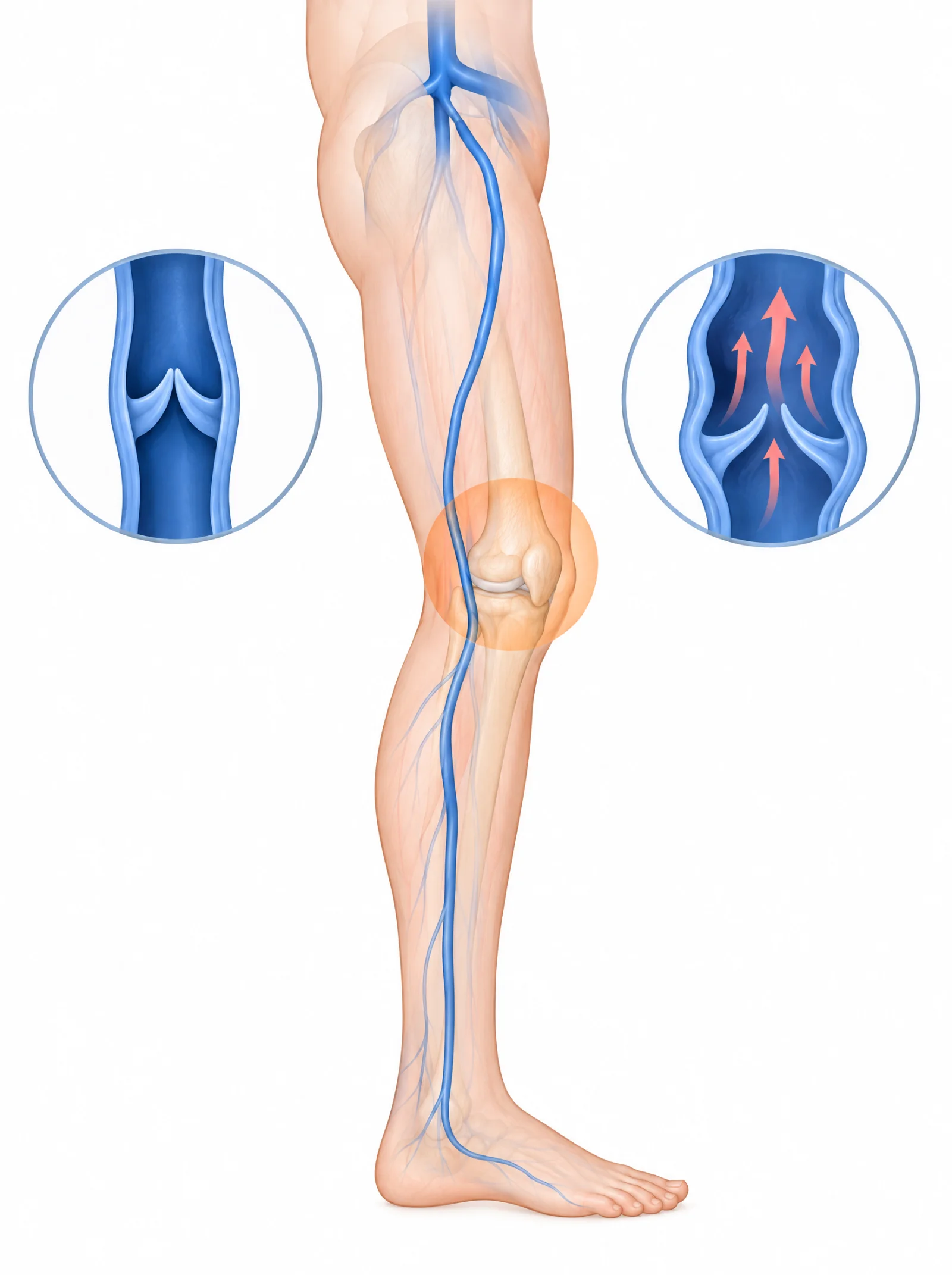
The great saphenous vein runs from the ankle to the groin – close to the knee replacement surgical site. Left: a closing valve; right: a leaking valve with backflow. Illustration: VenaZiel Berlin MVZ
Wound healing and infection: The second reason for a vein check
Besides thrombosis, there is a second aspect that matters especially for knee replacement: wound healing. Chronic venous insufficiency (chronic venous insufficiency, CVI) increases pressure in the small blood vessels of the lower leg’s skin. The result is swelling, skin hardening, and poorer oxygen supply to the tissue.
A cohort study on skin cancer surgery on the lower leg, published in 2025, shows that these changes impair the healing of surgical wounds on the leg. Patients with chronic venous insufficiency had a 2.7-fold increased risk of non-healing wounds, a 1.9-fold increased risk of infection, and a 2.5-fold increased risk of wound dehiscence (suture rupture).
What this means for knee replacement
For knee replacement surgery specifically, the data is more nuanced. An analysis of 7,665 knee replacements at the Ochsner Medical Center (2011 to 2021) found that CVI overall did not significantly increase the complication rate after statistical adjustment. However, in cases of complex CVI – involving pain, inflammation, or ulcers – the complication rate was nearly twice as high as in simple CVI (16.7 versus 9.3 percent).
A prospective study examining the impact of ultrasound-confirmed venous insufficiency on wound healing after knee replacement is currently registered (NCT07577141). The practical takeaway is: the more pronounced the venous disease, the more important it is to identify and treat it before joint replacement.
Ankle replacement: Smaller joint, same logic
Ankle joint replacement is performed less frequently than hip or knee replacement. However, the same logic applies. The procedure requires several weeks of immobilization and non-weight-bearing on the leg. And the surgical site is located exactly where chronic venous insufficiency causes its most severe effects: the lower leg and ankle.
In their 2013 review of thromboembolic complications after ankle replacement, Barg and colleagues explicitly pointed out that the risk factors known from hip and knee replacement also apply here. In our view, a vein check before ankle replacement is therefore equally advisable.
Hallux surgery and other foot procedures: Low baseline risk – except with immobilization
For isolated foot surgeries, the risk of thrombosis is significantly lower than for joint replacement:
- The British multicenter UK-FATE study found a rate of symptomatic thromboembolism of 0.87 percent within 90 days among over 11,000 patients following foot and ankle surgery. Thromboembolism-related deaths were very rare, at 0.03 percent.
- An Australian analysis of 4,238 podiatric surgical procedures found a rate of 0.2 percent.
- A meta-analysis of foot and ankle surgery concluded that routine medication-based prevention is not justified for all patients – but an individual risk assessment is warranted.
The decisive factor: immobilization
A prospective study compared two groups. One group was treated after hallux surgery without a cast and with immediate weight-bearing. The other group was non-weight-bearing in a lower-leg cast for at least four weeks after foot or ankle surgery.
In the hallux group, not a single thromboembolism occurred, compared to 8.46 percent in the cast-immobilization group. A modern correction of hallux valgus with a forefoot offloading shoe and immediate partial weight-bearing is therefore a comparatively safe procedure in terms of thrombosis risk.
When a vein check before foot surgery still makes sense
The situation is different if additional risk factors are present. This applies especially to:
- known truncal varicose veins,
- prolonged immobilization after surgery,
- other risk factors such as previous thrombosis, excess weight, hormone therapy, smoking, or older age.
The ultrasound examination (duplex ultrasound) determines within about 20 to 30 minutes whether the leg being operated on is venously healthy. It also helps answer the question of whether medication-based prevention after foot surgery makes sense on an individual basis – even though it is not routinely recommended for hallux surgery.
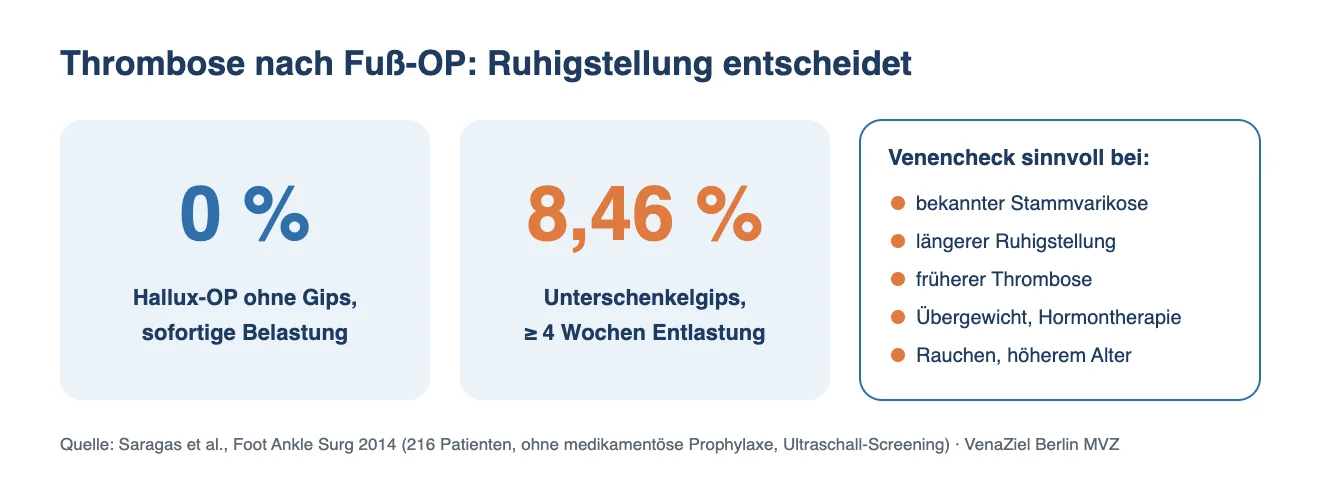
In foot surgery, immobilization is the main factor determining thrombosis risk. Graphic: VenaZiel Berlin MVZ · Data: Saragas et al., Foot Ankle Surg 2014
Heel spur and plantar fasciitis: When heel pain doesn’t just come from the foot
For heel spurs and plantar fasciitis – irritation of the plantar fascia on the sole of the foot – there is no direct study evidence that varicose veins worsen treatment outcomes. Honesty matters here: anyone claiming otherwise is overstating the evidence.
However, there are three practical reasons why a vein check can still make sense in cases of persistent heel and lower leg pain.
1. Differential diagnosis
Pain and a feeling of heaviness in the lower leg, swelling at the ankle, nighttime calf cramps, and a “tired leg” in the evening are classic signs of venous insufficiency. Patients often attribute these to the foot – and clinicians to the heel spur. If orthotics, stretching exercises, and shockwave therapy don’t help, it’s worth asking whether the underlying cause is even orthopedic in nature.
2. Treatment
Some plantar fasciitis treatments involve immobilization: a night splint, a walking boot, or, in stubborn cases, surgical fasciotomy followed by offloading. As the data from foot surgery shows, immobilization is the decisive thrombosis risk factor in the lower leg. This is relevant in patients with existing truncal varicose veins.
3. Compression
Patients with heel spurs and additional varicose veins often benefit when the venous component of their symptoms – swelling, a feeling of pressure, and evening heaviness – is also treated. Only once both causes are identified can a treatment plan be developed that actually improves symptoms.
Vein check before hip and knee surgery: How it works at VenaZiel
A vein check before hip and knee surgery, before ankle replacement, or before foot surgery takes about 20 to 30 minutes at VenaZiel and is painless. At its core is color duplex ultrasound of the leg veins – in both legs.
The specialist physician checks:
- whether the valves of the main veins close properly,
- whether there is backflow (reflux),
- how dilated the veins are,
- whether the deep venous system is patent – also to rule out an old, unnoticed thrombosis.
The findings are classified according to the CEAP classification and documented in writing. This allows you to present them to your orthopedic surgeon and anesthesiologist.
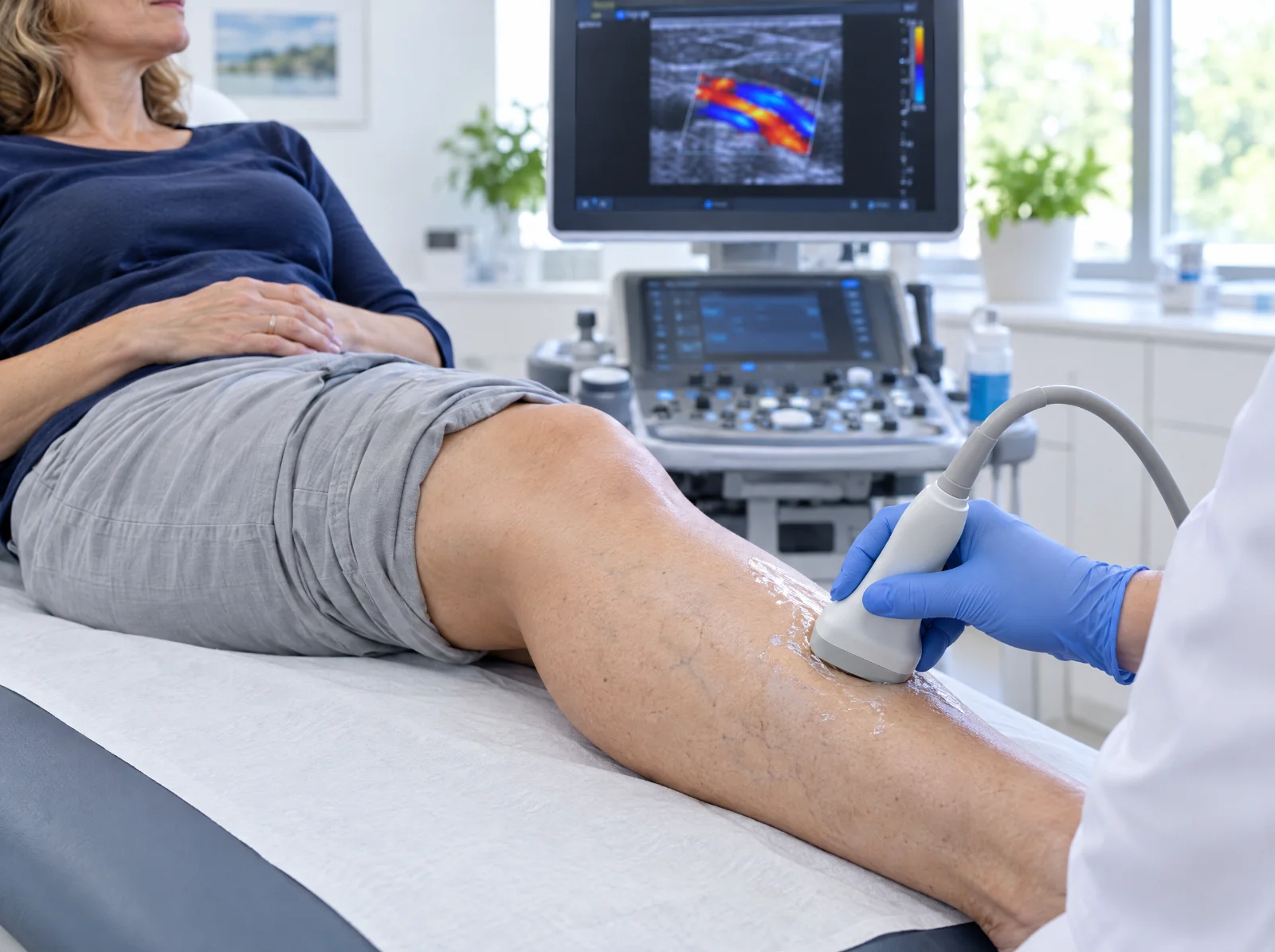
Color-coded duplex ultrasound of the leg veins: painless, no radiation, in about 20 to 30 minutes. AI-generated symbolic image · VenaZiel Berlin MVZ
Three possible outcomes
- The veins are healthy: You will receive phlebological clearance. The joint replacement can take place as planned.
- There are only spider veins or small reticular varicose veins: No pre-treatment is necessary.
- There is truncal varicose vein disease or pronounced side-branch varicosities: We recommend treating these before the orthopedic procedure. At the same time, we inform the surgeon of the findings so that thrombosis prevention can be individually adjusted.
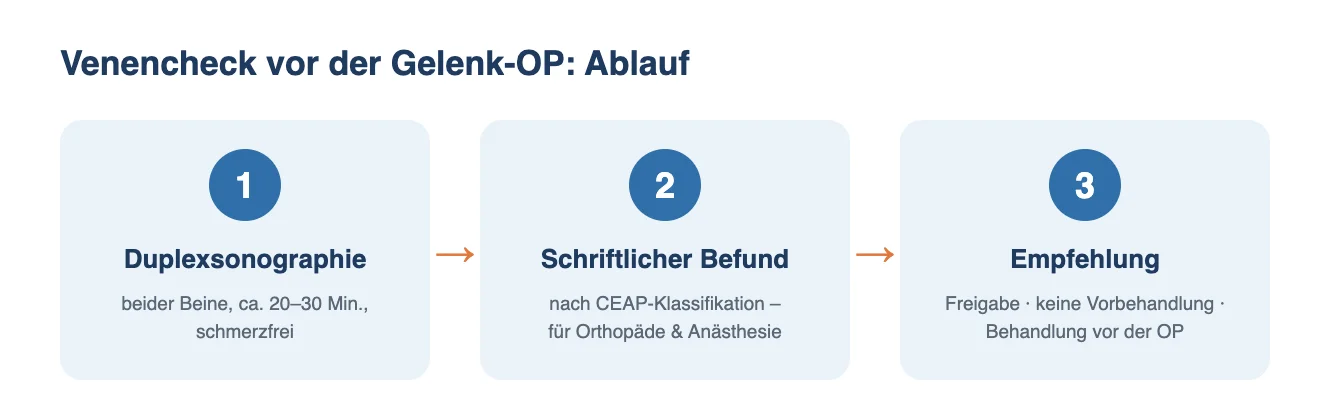
The vein check before joint surgery in three steps. Graphic: VenaZiel Berlin MVZ
Treating varicose veins before joint replacement: The procedures
The S2k guideline on the Diagnosis and Treatment of Varicose Veins (AWMF 037-018) recommends endovenous procedures – that is, treatments performed from inside the vein – over classic vein stripping surgery for symptomatic truncal vein insufficiency. At VenaZiel, three methods are available, all performed on an outpatient basis and all without general anesthesia. You can find an overview of all options under Varicose Vein Treatment at VenaZiel.
VenaSeal™ (Vein Glue)
VenaSeal™ closes the main vein using a medical cyanoacrylate adhesive – without heat, without tumescent anesthesia, and usually without compression stockings afterward. The treatment takes 30 to 60 minutes. You can read more about this procedure on our page VenaSeal – Vein Glue Treatment.
The evidence is strong:
- In the randomized VeClose study, the closure rate of the great saphenous vein after 36 months was 94.4 percent (compared to 91.9 percent after radiofrequency ablation). After five years, the complete closure rate was 91.4 percent (compared to 85.2 percent after radiofrequency ablation).
- Between the 36- and 60-month follow-ups, no deep vein thrombosis or pulmonary embolisms were reported in the VeClose study.
- In the WAVES study, the closure rate after twelve months was 98 percent – even with vein diameters up to 20 mm and without compression after the procedure.
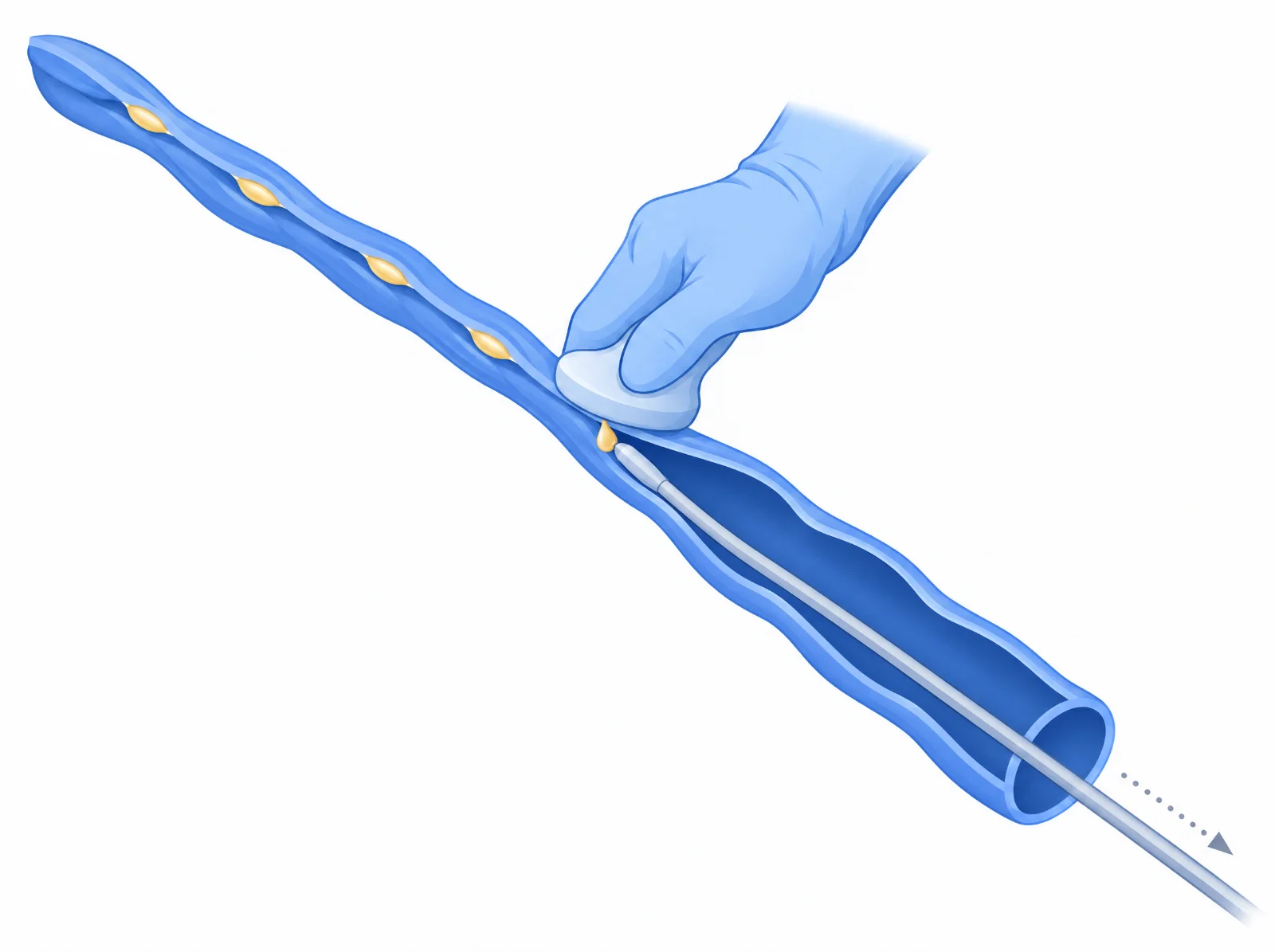
VenaSeal™: The catheter is withdrawn step by step. Behind the catheter tip, the vein is sealed section by section and compressed with the ultrasound probe. Illustration: VenaZiel Berlin MVZ
Radiofrequency ablation (RFA) and endovenous laser therapy (EVLA)
Radiofrequency ablation and endovenous laser therapy close the diseased main vein using heat from the inside. The procedure is performed under local anesthesia along the vein (tumescent local anesthesia) and takes 30 to 60 minutes.
Why VenaSeal™ fits well into surgical preparation
For patients facing joint replacement, VenaSeal offers a particular advantage. Because no compression stockings are required and recovery time is short, the vein treatment can be easily integrated into the ongoing surgical preparation. After the follow-up ultrasound, which confirms permanent closure – usually after a few weeks – the orthopedic procedure can be scheduled.
The right time: At least a few weeks before joint replacement
There is no fixed deadline between vein treatment and joint replacement. It depends on the procedure and the individual healing process. It has proven effective to schedule the orthopedic surgery only after the ultrasound check confirms the closure of the treated vein.
It is ideal to plan the vein check early – as soon as the decision for a prosthesis has been made, not just the week before the operation. This avoids time pressure. And if necessary, there is room for vein treatment without having to postpone the surgery date. The same principle applies, by the way, if you have your veins checked before liposuction.
Costs and reimbursement
Duplex sonography of the leg veins and endovenous treatment of trunk varicose veins are services that, when medically indicated, are generally covered by private health insurance and Beihilfe. Billing is based on the German Medical Fee Schedule (GOÄ). Before each treatment, you will receive a written cost estimate for your insurance. You can find an overview of what varicose vein treatment costs in our guide.
For those with statutory insurance, VenaZiel has supply contracts with several health insurance funds for endovenous varix treatment. We are happy to clarify in advance whether your insurance provider participates. You can find more on this under VenaSeal for statutory health insurance patients.
Why VenaZiel Berlin MVZ
VenaZiel is one of the leading centers for minimally invasive vein medicine in Germany. At several locations in Berlin, a team of specialists in phlebology, vascular medicine, and surgery works exclusively with the endovenous procedures recommended by current guidelines. VenaZiel is a Medtronic training and observation center for the VenaSeal procedure.
In our internal quality data, over 15,000 endovenous procedures have been documented to date without a single pulmonary embolism occurring (as of 2026). The vein check before orthopedic surgery is a well-established process for us: written findings, clear recommendations, short-term treatment if needed, and close coordination with your orthopedist – also for patients of our own Orthopedics at VenaZiel.
The medical management is led by Dr. med. Hamidreza Mahoozi, surgeon and founder of the VenaZiel Group. His guiding principle, “Hardly a scar. But a trust that remains,” describes the standard for every treatment: minimally invasive, guideline-compliant, and honest advice.
Frequently asked questions (FAQ)
Is a vein check mandatory before a hip or knee replacement?
No. It is not legally required and is not part of the standard at every orthopedic clinic. However, the study situation clearly supports it: patients with varicose veins have a more than twice as high risk of thrombosis after joint replacement (odds ratio 2.37 in a meta-analysis with 265,194 patients). The examination provides your surgeon with important information for thrombosis prophylaxis.
Is the vein examination painful?
No. Duplex sonography is a pure ultrasound examination without needles, contrast agents, or radiation. It takes about 20 to 30 minutes, and you can go about your daily routine immediately afterward.
I have varicose veins. Do I have to postpone my knee surgery?
Not necessarily – the ultrasound findings are decisive. Spider veins and small reticular varices do not require pre-treatment. In the case of a leaking trunk vein, we recommend closing it endovenously beforehand. With VenaSeal or radiofrequency, this is an outpatient procedure of 30 to 60 minutes, after which the surgery date usually only needs to be postponed by a few weeks – or not at all if the vein check is done early enough.
Isn’t thrombosis prophylaxis after surgery enough?
Medication-based prophylaxis significantly reduces the risk of thrombosis but does not eliminate it. In routine care, around 1.5 percent of joint replacement patients develop thromboembolism. The S3 guideline in effect since January 2026 allows for simpler prophylaxis with ASA for patients without increased risk. However, varicose veins are considered an individual risk factor and therefore argue against this simplified prophylaxis – the decision is made by your surgeon. The vein check provides the basis for this.
What applies to hallux surgery?
The risk of thrombosis after isolated foot surgery is low (about 0.2 to just under 1 percent depending on the study). However, it increases significantly if the leg is relieved in a cast after surgery. If there is an existing trunk varicosis, prolonged immobilization, or other risk factors, a vein check before hallux surgery is useful to determine prophylaxis individually.
Does my heel spur have anything to do with my veins?
A direct connection has not been proven. However, symptoms of venous insufficiency – heaviness, swelling at the ankle, calf cramps – are often attributed to the foot. If heel spur treatment is not effective or if there is additional swelling, duplex sonography can clarify whether a venous component is involved.
Does my insurance cover the vein check?
When medically indicated, private health insurance and Beihilfe usually reimburse duplex sonography and endovenous treatment according to the GOÄ. Those with statutory insurance can be treated via existing supply contracts with participating health insurance funds. You will receive a transparent cost estimate in advance.
How does VenaZiel work with my orthopedist?
You will receive a written report according to the CEAP classification, which you can present to your surgeon and the anesthesiologist. If vein treatment is necessary, we coordinate the timing with your surgery date and inform your orthopedist about the result of the follow-up examination.
Arrange a vein check before your surgery now
Are you planning a hip, knee, or ankle replacement, hallux surgery, or treatment for your heel spur? Have your veins checked beforehand – pain-free, in about 20 to 30 minutes, with a written report for your orthopedist. We provide appointments at short notice at all Berlin locations. Book appointment online
VenaZiel Berlin MVZ GmbH
Friedrichstraße 95, 10117 Berlin
Phone: 030 25299482
Email: [email protected]
Online appointment booking at venaziel.de
Note: This article is for general information purposes and does not replace medical advice. Every treatment decision is made after an individual examination and consultation.
Sources
- Westby D, Ghoneim BM, Nolan F, Elsharkawi M, Maguire S, Walsh SR. Varicose veins as a risk factor for venous thromboembolism in arthroplasty patients: Meta-analysis. Phlebology. 2023;38(3):150–156. doi:10.1177/02683555221150563
- Chang SL, Huang YL, Lee MC, et al. Association of varicose veins with incident venous thromboembolism and peripheral artery disease. JAMA. 2018;319(8):807–817. doi:10.1001/jama.2018.0246
- Marković-Denić L, Zivković K, Lesić A, et al. Risk factors and distribution of symptomatic venous thromboembolism in total hip and knee replacements: prospective study. Int Orthop. 2012. doi:10.1007/s00264-011-1466-5
- Multiple risk factors are associated with an incremental increase in acute venous thromboembolism risk after total joint arthroplasty: a PearlDiver cohort study. PLoS ONE. 2024.
- AWMF S3 Guideline 003-001 “Prophylaxis of Venous Thromboembolism (VTE)”, Version 01/2026.
- Robin KJ, Maier MA, Leslie LJ, et al. Severity of chronic venous insufficiency on primary total knee arthroplasty outcomes. J Arthroplasty. 2023. doi:10.1016/j.arth.2023.05.040
- Talasila S, Nadir U, Jeha GM, Tolkachjov SN. Chronic venous insufficiency increases postoperative complications after Mohs micrographic surgery for lower extremity nonmelanoma skin cancer. JAAD Int. 2026;24:87–89. doi:10.1016/j.jdin.2025.09.008
- ClinicalTrials.gov NCT07577141: Impact of Chronic Venous Insufficiency on Outcomes After Total Knee Arthroplasty.
- Barg A, et al. Thromboembolic complications after ankle prosthesis implantation. Orthopäde. 2013. doi:10.1007/s00132-013-2173-2
- Mangwani J, Houchen-Wolloff L, Malhotra K, et al.; UK-FATE Collaborative. UK Foot and Ankle Thromboembolism (UK-FATE). Bone Joint J. 2024;106-B(11). doi:10.1302/0301-620X.106B11.BJJ-2024-0128.R1
- The impact of risk assessment on the implementation of venous thromboembolism prophylaxis in foot and ankle surgery. Foot Ankle Surg. 2014;20(2):85–89.
- Venous thromboembolism in podiatric foot and ankle surgery. Foot Ankle Spec. 2018.
- Meta-analysis and suggested guidelines for prevention of venous thromboembolism (VTE) in foot and ankle surgery. PMC4823373.
- AWMF S2k Guideline 037-018 “Diagnosis and Therapy of Varicosis”.
- Morrison N, et al. VeClose randomized trial: 36-month and 60-month outcomes. J Vasc Surg Venous Lymphat Disord.
- Gibson K, et al. WAVES study: 12-month outcomes. J Vasc Surg Venous Lymphat Disord.
- German Arthroplasty Registry (EPRD). Annual Report 2025.
- Howie C, Hughes H, Watts AC. Venous thromboembolism associated with hip and knee replacement over a ten-year period: a population-based study. J Bone Joint Surg Br. 2005;87(12).